Explore our flagship OEM/ODM fixed point-type combustible gas monitoring modules engineered for extreme industrial environments and commercial infrastructure isolation loops.
A rigorous examine of safety standards, regulatory mandates, market evolution, and real-time gas leakage defense infrastructure.
According to global industrial safety market benchmarks, the worldwide combustible gas detection device market is projected to surpass USD 3.8 Billion by 2030, expanding at a CAGR of 6.2%. The driving velocity is accelerated by stringent regulatory frameworks (such as OSHA 1910, ATEX Directive 2014/34/EU, and NFPA 54/59A), rapid expansion of green hydrogen supply chains, and mandatory commercial gas linkage mandates across Asia-Pacific and EMEA markets.
In modern industrial facilities, process plants, and commercial complexes, the unintentional release of volatile hydrocarbon vapors, natural gas (methane), liquefied petroleum gas (LPG), or specialized industrial gases poses severe catastrophic risks—including vapor cloud explosions (VCE), flash fires, structural destruction, and loss of human life. As a premier Industrial and Commercial Use Point-type Combustible Gas Detector Manufacturer, Sichuan Shield Technology Co., Ltd. architects mission-critical instrumentation designed to operate continuously within hazardous environments classified as Zone 1, Zone 2, Class I Division 1, and Class I Division 2 locations.
Point-type combustible gas detectors serve as the fundamental sensory frontline of plant safety automation systems. Unlike open-path optical line-of-sight detectors that monitor vast perimeters, point-type detectors are strategically positioned directly at potential leakage points—such as pump seals, valve manifolds, gas metering skids, storage vessel flanges, and burner trains. By delivering continuous, localized concentration measurement in percentage of Lower Explosive Limit (%LEL), point-type sensors enable immediate, automated safety action before gas accumulations reach flammable or explosive thresholds.
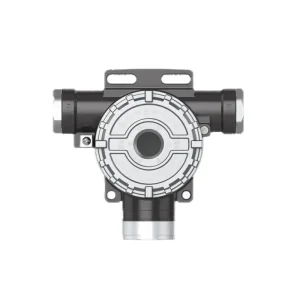
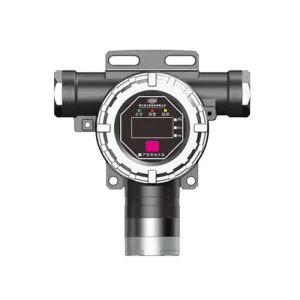
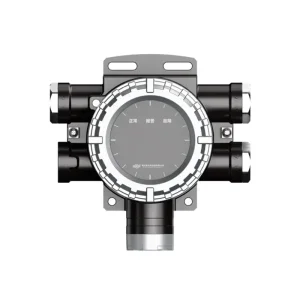
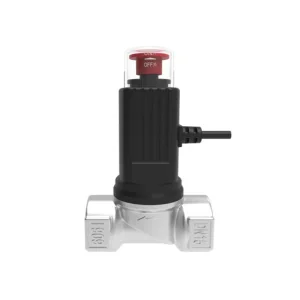
To establish true Information Gain for industrial procurement officers, system integrators, and EPC safety engineers, gas detection technology must be evaluated not merely as standalone sensors, but as integrated safety loops. A complete system links point-type detection nodes (such as the Shield SD2100A, SD2100E, and SD2130 series) with multi-channel central alarm controllers (Shield SD8001AB series) and heavy-duty, fast-acting solenoid emergency shut-off valves (Shield JYFJS-011 series). This triadic synergy forms a fail-safe active containment net: Detect, Alarm, and Isolate.
Understanding the fundamental trade-offs between Catalytic Bead (Pellistor) and Non-Dispersive Infrared (NDIR) sensing technologies for target gas optimization.
The operational integrity of an industrial fixed gas detector depends fundamentally on matching the transducer element to the chemical composition, atmospheric conditions, and cross-sensitivity profile of the target environment. Shield Technology manufactures point-type detectors integrating both Catalytic Bead (Pellistor) elements and advanced Dual-Beam NDIR optical sensors within cast-aluminum or stainless-steel explosion-proof enclosures rated Ex d IIC T6 Gb / IP66.
| Evaluation Metric | Pellistor Catalytic Bead Sensing | Non-Dispersive Infrared (NDIR) Sensing | Electrochemical Sensing (Trace Gas) |
|---|---|---|---|
| Primary Target Gases | Methane, LPG, Propane, Hydrogen, Hydrocarbons | Methane, Propane, Butane, Hydrocarbons (No H₂) | Toxic combustion byproducts, H₂S, CO, O₂ deficiency |
| Measurement Range | 0 – 100% LEL | 0 – 100% LEL or 0 – 100% Vol | 0 – 500 PPM or % Vol |
| Oxygen Requirement | Mandatory (> 10% O₂ required for combustion) | None (Operates in inert atmospheres / 100% N₂) | Requires trace oxygen depending on electrolyte |
| Susceptibility to Poisons | High (Vulnerable to Silicones, H₂S, Lead, Halogens) | Immune to chemical poisoning & contamination | Moderate (Vulnerable to cross-gas saturation) |
| Calibration Interval | 3 to 6 Months (Baseline Drift Check) | 12 to 24 Months (Zero-Drift Compensation) | 6 Months (Sensor degradation check) |
| Cost Profile & Life Expectancy | Low initial cost; 3–5 years sensor life | Higher initial cost; 10+ years optical lifespan | Moderate cost; 2–3 years consumable cell life |
Industrial point-type gas detectors manufactured by Shield (e.g., SD2100E and SD2130) utilize heavy-duty flameproof housings designed to withstand internal gas explosions without allowing flame propagation into the surrounding explosive atmosphere. Key structural elements include:
Die-cast ADC12 aluminum alloy or 316 stainless steel casing with precision-machined threaded flame-paths, certified for harsh Zone 1 and Zone 2 hazardous areas.
Plug-and-play digital sensor heads embedded with temperature-compensated EEPROM memory storing calibration curves, factory serials, and alarm thresholds.
Simultaneous 4-20mA analog current loop output for legacy DCS connectivity combined with RS485 Modbus RTU bus for digital PLC networking.
Non-intrusive calibration interface permitting field service technicians to execute zero adjustments and span calibration without opening the explosion-proof enclosure in hazardous zones.
In-depth technical blueprints for deploying fixed point-type gas monitoring systems across mission-critical commercial and industrial installations.
Primary Hazards: Methane (Natural Gas) and Propane/Butane (LPG) leaks from pipeline connections, commercial cooking burners, and gas water heaters.
Deployment Engineering: Point-type detectors are mounted 0.3m below ceiling level for Natural Gas (since CH₄ is lighter than air, relative density 0.55) or 0.3m above floor level for LPG (since propane is heavier than air, relative density 1.55). Detectors directly link to the Shield JYFJS-011 solenoid shut-off valve installed on the main gas intake line, ensuring automatic pipeline cutoff upon 15% LEL detection.
Primary Hazards: Volatile organic compounds (VOCs), benzene derivatives, ethylene, and heavy hydrocarbon vapor accumulation near storage pumps and flanges.
Deployment Engineering: Explosion-proof SD2100E bus-type point detectors are deployed in a grid array surrounding pump seals and loading arms. Operating on RS485 Modbus digital loops connected to a central SD8001AB Gas Controller, the system triggers secondary ventilation fans at 20% LEL and initiates emergency shut-down (ESD) protocols at 40% LEL.
Primary Hazards: Ultra-rapid hydrogen dispersion, wide flammability range (4% to 75% Vol), low ignition energy (0.017 mJ), and potential hydrogen embrittlement.
Deployment Engineering: Specialized pellistor or high-speed NDIR point-type H₂ detectors equipped with gold-plated pin leads and anti-corrosive sintered steel flame arrestors. Positioned at high apex points in refueling bays to catch buoyant hydrogen clouds immediately upon leak onset.
Primary Hazards: Biogas off-gassing (Methane, H₂S) in humid, corrosive wet wells, digester domes, and subterranean pipe networks.
Deployment Engineering: IP66/IP67 weather-sealed point detectors featuring hydrophobic membrane filters. The devices continuously monitor digester gas composition, transmitting telemetry back to SCADA systems while triggering explosion-proof extraction fans upon threshold breach.
Primary Hazards: Lithium-ion battery thermal runaway off-gassing producing flammable electrolyte vapors (Ethylene carbonate, Carbon monoxide, Hydrogen).
Deployment Engineering: Ultra-fast response point-type detectors integrated inside containerized battery racks. Operates as an early-stage off-gas detector prior to thermal breakdown, allowing fire suppression system pre-venting.
Inside Sichuan Shield Technology’s Chengdu manufacturing ecosystem: How vertical integration and automated production drive competitive cost leadership and quality precision.
Situated within the Haolang Technology Park in Chengdu’s Southwest Airport Economic Development Zone, Sichuan Shield Technology Co., Ltd. operates a high-capacity production center spanning thousands of square meters. As a certified National High-Tech Enterprise and a designated "Specialized, Refined, Distinctive and Innovative" manufacturing specialist, Shield delivers an unparalleled combination of engineering agility, scale efficiency, and quality assurance.
From raw aluminum alloy casting, CNC flame-path machining, and SMT circuit board assembly to automated gas calibration chambers and final burn-in testing—Shield controls 100% of the manufacturing value chain in-house, eliminating middleman distributor markups.
Every point-type detector unit undergoes multi-point target gas calibration (Methane/Isobutane/Propane standard gases) inside automated climatic test chambers. Thermal compensation curves are written directly into sensor EEPROM over a temperature spectrum from -40°C to +70°C.
Certified under ISO9001 Quality Management, ISO14001 Environmental Management, and ISO45001 Occupational Health & Safety systems. Products hold China’s mandatory 3C certification, explosion-proof CNEx approval, and SIL-2 functional safety assessments.
By leveraging Sichuan's advanced electronics manufacturing ecosystem, raw material buffer stocks, and direct access to international freight corridors (including the Chengdu-Europe Express Rail and global maritime networks from Shenzhen/Shanghai ports), Shield guarantees baseline lead times of 7–14 days for standard OEM batches and immediate dispatch for inventory replacement contracts.
How AI Edge Computing, MEMS Sensing, and Wireless Mesh Networks are reshaping the next generation of industrial safety infrastructure.
Next-generation Shield detectors incorporate edge-AI algorithms capable of analyzing gas concentration rate-of-rise (dC/dt) metrics. This filters out false alarms caused by temporary background solvent fumes while instantly mapping the directional dispersion vector of real gas releases.
Integrating micro-electro-mechanical system (MEMS) gas sensors with low-power NB-IoT, LoRaWAN, and WirelessHART protocols allows installation of point-type detectors in remote pipeline corridors without costly explosion-proof cabling conduit infrastructure.
Embedded internal self-test routines simulate target gas exposure on optical elements or catalytic beads, automatically warning operators of sensor poisoning, optics contamination, or baseline drift before a functional failure occurs.
Tailored engineering services for international safety distributors, system integrators, and brand label buyers.
Sichuan Shield Technology provides comprehensive OEM and ODM solutions tailored to meet national electrical safety regulations and brand guidelines for buyers across North America, Europe, South America, the Middle East, and Southeast Asia. Our turnkey ODM engineering program covers:
Custom Modbus register mapping, customized alarm delay timers, tailored relay latching logic, and multi-language menu displays (English, Spanish, French, Russian, Arabic).
Custom powder-coating finishes (Safety Yellow, Flame Red, Signal Blue), silk-screen laser etching of private brand logos, and customized compliance label plates.
Provision of complete engineering design dossiers, schematics, and test reports to assist international distributors in obtaining localized ATEX, IECEx, UL 2075, or EAC safety certifications.
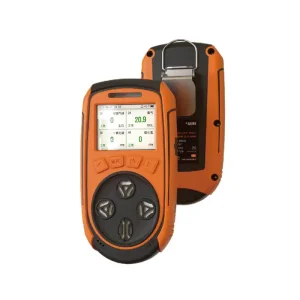
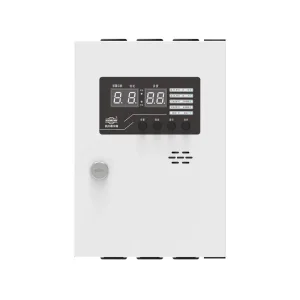
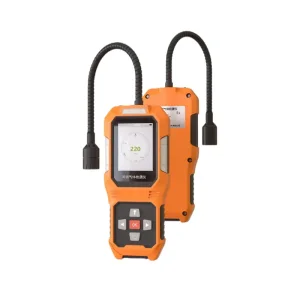
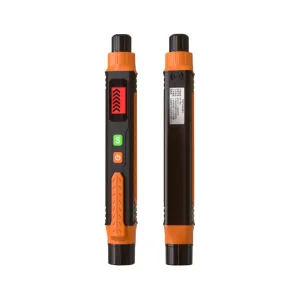
Explore our complete ecosystem including portable patrol meters, emergency shut-off valves, and centralized multi-node gas controllers.
Expert engineering answers to common procurement, compliance, calibration, and installation queries.
%LEL (Lower Explosive Limit) measures the ratio of gas present relative to the minimum concentration required for that gas to ignite in air. For example, Methane has an LEL of 5.0% by Volume. Therefore, 100% LEL Methane equals 5.0% VOL Methane. A reading of 20% LEL means the atmosphere contains 1.0% Methane by volume. Standard industrial safety point-type detectors measure in 0–100% LEL to warn operators long before an explosive mixture is created. %VOL (Percentage by Volume) measures absolute gas concentration regardless of flammability limits and is typically used for inerting applications, biogas purity monitoring, or oxygen deficiency analysis.
Mounting height is directly determined by the relative vapor density of the target gas compared to ambient air (Air = 1.0):
When the point-type detector (or central SD8001AB controller) measures concentration exceeding the programmed High-Alarm set point (e.g., 25% LEL), its onboard SPDT dry relay contact closes. This sends a high-current DC24V electrical pulse (or cuts a continuous voltage signal) to the coil of the Shield JYFJS-011 Solenoid Shut-off Valve. The valve trips instantaneously (< 1 second) via mechanical latch, isolating the pipeline gas supply. For absolute safety, Shield valves require manual human intervention on site to pull the reset knob, ensuring gas cannot resume flowing until the leak is investigated and cleared.
Under standard operating conditions, Shield recommends a full span and zero bump-test calibration every 6 months using certified span gas (e.g., 50% LEL Methane balanced in air). In harsh environments containing trace silicone vapors, sulfur compounds (H₂S), or heavy dust, monthly bump testing is recommended due to potential catalytic poisoning. NDIR infrared detectors require less frequent calibration—typically every 12 to 24 months—due to their immune optical architecture.
Yes. Shield point-type gas detectors (SD2100E and SD2130 series) are engineered for ambient operating temperatures ranging from -40°C to +70°C and relative humidity levels up to 95% RH (non-condensing). Housings feature IP66 weatherproofing with sintered stainless-steel flame arrestors and internal PCB conformal coating to protect electronics against tropical salt spray and sub-zero ice buildup.
Shield provides a complete engineering compliance packet for every batch, including ISO 9001 quality certificates, 3C mandatory certificates, CNEx explosion-proof qualification certificates, SIL-2 functional safety assessments, factory routine calibration reports, and technical CAD installation drawings for seamless integration into EPC submittal packages.
Standard product samples are dispatched within 3 business days. Customized OEM production orders (incorporating customer-branded packaging, localized firmware, custom gas calibration ranges, and private labelling) feature a standard manufacturing cycle of 10 to 15 business days from final engineering sign-off.