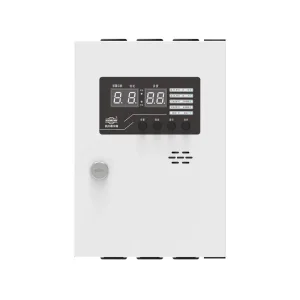
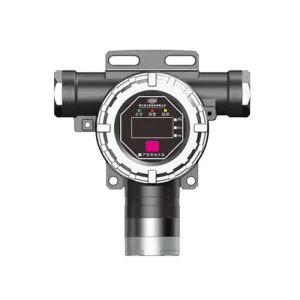
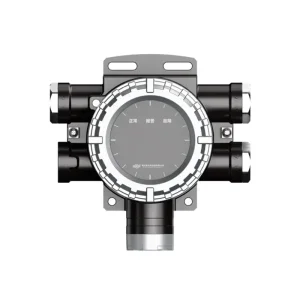
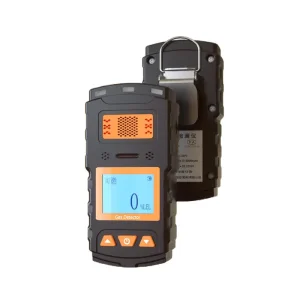
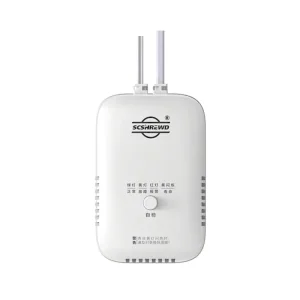
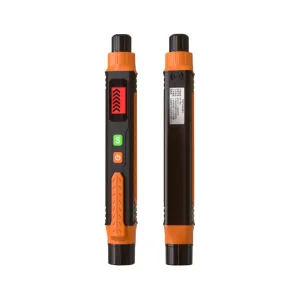
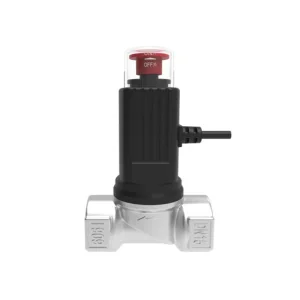
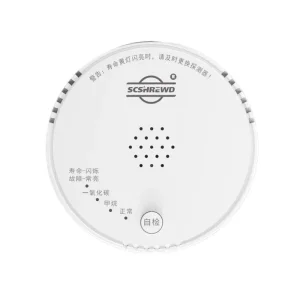
Factory-direct gas alarm controllers, point-type combustible gas detectors, and emergency shutdown equipment engineered for global deployment.
An authoritative analysis of Gas Alarm Control Units (GCUs), architectural topology, and supplier evaluation criteria for B2B system integrators and EPC contractors.
In the contemporary landscape of process safety management (PSM), hazardous material storage, and municipal gas utility operation, the Gas Alarm Controller serves as the central neural hub of life-safety mitigation. Operating at the intersection of sensor telemetry, automated process isolation, and real-time alarms, a Gas Alarm Controller evaluates continuous input signals from field-mounted point detectors—including catalytic bead, infrared (NDIR), electrochemical, and photoionization (PID) sensors—and executes deterministic relay control actions to prevent catastrophe.
Selecting a competent Gas Alarm Controller manufacturer or factory goes far beyond simple component sourcing. Global engineering procurement, construction (EPC) companies, gas utilities, and industrial distributors require OEM/ODM partners capable of delivering high-density channel scalability, robust fault diagnostics, SIL-2/SIL-3 compliance capabilities, and seamless integration into Distributed Control Systems (DCS) or Supervisory Control and Data Acquisition (SCADA) networks. This document provides a comprehensive whitepaper overview covering technical architecture, supply chain advantages, international certification standards, and OEM procurement workflows.
Comparing RS-485 Modbus RTU M-Bus protocols with traditional 4-20mA current loop configurations to optimize industrial system design.
Modern industrial and large commercial installations heavily utilize bus-style gas alarm controllers (such as the Shield SD8001/SD2100E series). Operating on a 2-wire or 4-wire trunk, bus systems dramatically reduce field wiring costs and installation labor.
For high-consequence safety loops requiring dedicated point-to-point wiring and zero bus signal latency, multi-channel analog controllers remain a vital standard across heavy chemical processes and offshore platforms.
System architects should evaluate cable distance, channel density, budget, and local code mandates when specifying controller hardware.
| Performance Parameter | Bus Network Controller (RS-485 / Modbus) | Analog Multi-Channel Controller (4-20mA) | Hybrid Micro-Controller Units |
|---|---|---|---|
| Channel Capacity | High (32, 64, 128 to 512 channels) | Low-to-Medium (1 to 16 direct channels) | Flexible (Modular Expansion Units) |
| Cabling Requirement | 4-core shielded twisted pair (Power + RS-485) | 3-core dedicated per detector (Dedicated loop) | Segmented Bus + Dedicated Analog Inputs |
| Fault Diagnostics | Detailed digital fault codes (Sensor, Line, Comm) | Threshold current states (<3.6mA Fault) | Comprehensive Screen UI & Bus Telemetry |
| Response Latency | < 500 ms polling cycle (depending on baud rate) | < 50 ms near-instantaneous analog trip | < 100 ms dual-processor response |
| Primary Applications | Large plants, commercial complexes, gas networks | High-risk chemical units, isolated pump rooms | Multi-zone industrial facilities & energy storage |
Deploying integrated gas detection, control, and automatic shutdown loops tailored to specific vertical sector risk profiles.
Vapor clouds of volatile organic compounds (VOCs) and light hydrocarbons present severe explosion risks in refining and storage environments.
High-volume natural gas or LPG consumption in hotel kitchens and shopping center dining facilities requires continuous, automated surveillance.
Underground pressure regulation stations, valve pits, and city gas distribution headers require robust, weatherproof gas controllers.
Thermal runaway in Lithium-ion energy storage containers off-gases Hydrogen (H2), Carbon Monoxide (CO), and volatile off-gases prior to fire ignition. Advanced multi-gas controllers oversee early thermal runaway detection.
Foundries, blast furnaces, and underground mining operations deal with high toxic gas risks (CO, H2S, SO2) alongside combustible gas accumulation. Heavy industrial controllers feature modular channel expansion cards.
Inside Sichuan Shield Technology's modern manufacturing facility in Chengdu: How automated production delivers unmatched reliability and speed.
Every gas alarm controller motherboard is assembled on high-speed Surface Mount Technology (SMT) lines. Optical inspection (AOI) and automated X-ray testing eliminate soldering defects, ensuring 100% component placement accuracy for critical safety microcontrollers.
Reliability requires rigorous burn-in testing. Assembled gas controller units undergo thermal cycling (-40°C to +70°C), high-humidity conditioning, and 72-hour operational burn-in tests to filter out infant mortality failures before shipment.
Our factory operates certified gas blending and calibration matrix rooms. Controllers paired with detectors are calibrated using NIST-traceable standard gas mixtures (Methane, Propane, Isobutane, Hydrogen, Carbon Monoxide), establishing guaranteed alarm point repeatability.
By controlling the complete R&D and manufacturing pipeline in Chengdu, Sichuan Shield Technology maintains long-term component stock for critical microprocessors, relay banks, and power conversion modules. This insulates global OEM buyers from lead-time spikes and ensures continuous replacement part availability for 10+ years post-deployment.
The evolution of gas alarm controllers from localized warning panels to intelligent, cloud-connected safety gateways.
Next-generation Shield controllers incorporate edge computing algorithms capable of analyzing baseline signal drift patterns. By filtering out background environmental noise (humidity shifts, temperature spikes, cross-gas interference), AI algorithm firmware reduces false alarms by over 95% while predicting sensor cell degradation months in advance.
Where physical trenching for cabling is cost-prohibitive, wireless gas controllers utilize secure LoRaWAN mesh networks or cellular NB-IoT protocol to communicate with dispersed field sensors. Dual SIM failover guarantees data transmission to cloud dashboards during regional network outages.
Integrating RESTful APIs, MQTT protocol, and OPC UA server modules directly into the controller firmware enables enterprise safety supervisors to monitor real-time gas maps across nationwide facilities on a single cloud pane of glass. Automated SMS, email, and mobile app push alerts trigger the instant an alarm threshold is crossed.
With industrial automation increasingly targeted by cyber threats, modern gas alarm controllers implement encrypted Modbus TCP communication, firmware digital signatures, and dual-redundant hot-swappable power supplies with integrated lithium battery backup banks.
A step-by-step buyer's guide for international distributors, brand owners, and EPC procurement leads.
Our sales engineering team works directly with your technical directors to define channel counts, enclosure ratings (NEMA 4X / IP66), firmware logic, language localized menus, and private label silkscreening requirements.
Within 10 to 14 days, a fully functional sample controller built to your exact firmware and hardware configuration is delivered for laboratory testing, sensor pairing, and local certification submission.
Every contract batch undergoes rigorous Factory Acceptance Testing (FAT) with fully documented test reports. We support third-party factory audits by SGS, TÜV, or Intertek prior to container loading.
Ensuring international project acceptability through rigorous adherence to global explosion-proof, electrical safety, and performance standards.
Gas safety equipment is subject to strict regulatory oversight worldwide. Shield gas controllers and point detectors are engineered to meet and exceed global standards, streamlining approval processes for international projects.
| Standard / Regulation | Geographic Scope | Technical Scope & Definition |
|---|---|---|
| China 3C Certification (CCCF) | China National Market | Mandatory certification for fire alarm equipment and combustible gas controllers (GB 16808-2021). |
| ATEX Directive 2014/34/EU | European Union & Global | Equipment intended for use in potentially explosive atmospheres (Ex d flameproof, Ex i intrinsic safety). |
| IECEx System | International (Global) | International Electrotechnical Commission standard for explosive atmosphere equipment compliance. |
| SIL 2 / SIL 3 (IEC 61508) | Global Process Industries | Safety Integrity Level accreditation certifying high functional safety and low probability of failure on demand. |
| EN 50270 / EN 61000-6-4 | Europe & International | Electromagnetic compatibility (EMC) standards for gas detection apparatus in industrial environments. |
Expert technical answers to common queries raised by safety engineers, system integrators, and procurement officers.
A Gas Alarm Controller acts as the central intelligence unit of a fixed gas detection system. It receives concentration signals (%LEL, PPM, or %VOL) from field-installed gas detectors, displays real-time gas levels, manages low and high alarm thresholds, powers audible-visual beacons, logs historical event data, and triggers emergency actions such as activating exhaust fans or closing solenoid shut-off valves.
Choose an RS-485 bus controller if your project requires monitoring a large number of points (e.g., more than 16 zones) across wide areas, as it significantly reduces cabling cost and offers detailed digital diagnostics. Choose a 4-20mA analog controller if your safety philosophy demands isolated point-to-point wiring, maximum hardware simplicity, or instant non-polled signal response for critical safety loops.
The Lower Explosive Limit (%LEL) is the minimum volumetric concentration of a flammable gas in air required to ignite upon exposure to a flame or spark (e.g., 100% LEL Methane = 5.0% CH4 by volume). Combustible gas detectors measure in %LEL scale. Alarm set points are safety trigger thresholds set well below the actual explosive limit—typically 20% LEL for Low Alarm (A1) and 50% LEL for High Alarm (A2)—ensuring ample time for automated intervention before an explosive atmosphere forms.
When the controller registers gas concentrations exceeding the configured alarm threshold, internal relay contacts close to send a high-current electrical pulse (e.g., 24VDC or 220VAC) to a solenoid shut-off valve (such as the Shield JYFJS-011 series). This pulse triggers an internal magnetic mechanism that instantaneously trips the valve closed. Shield solenoid valves feature a manual reset mechanism, requiring physical inspection of the gas piping before gas flow can be manually restored.
Yes. Sichuan Shield Technology offers end-to-end OEM/ODM customization. This includes custom metal or plastic enclosure molds, custom silkscreen logo printing, tailored firmware user interfaces in any target language, custom relay output configurations, Modbus register map customization, and brand-specific packaging design.
While the digital controller hardware itself requires minimal maintenance (checking backup batteries every 6–12 months and inspecting relay contact integrity), the field gas detectors connected to it should undergo span zeroing and standard gas calibration every 6 months depending on ambient contamination and sensor technology type.
Yes. Applicable Shield products hold mandatory China 3C certification, explosion-proof inspection certificates (Ex d / Ex i), ISO9001 quality system management, and ISO14001 environmental management certifications. For export orders, our sales engineers coordinate specific destination test reports (such as CE, ATEX, or IECEx documentation) required for local regulatory compliance.
Standard model orders are typically dispatched from our Chengdu warehouse within 5 to 7 working days. OEM custom orders requiring custom firmware, private labeling, or specialized housing designs typically take 2 to 3 weeks for mass production following sample approval.
Explore additional portable gas detectors, specialized household alarms, and electromagnetic shut-off valves from our Chengdu manufacturing plant.