
Working Principle and Structural Diagram
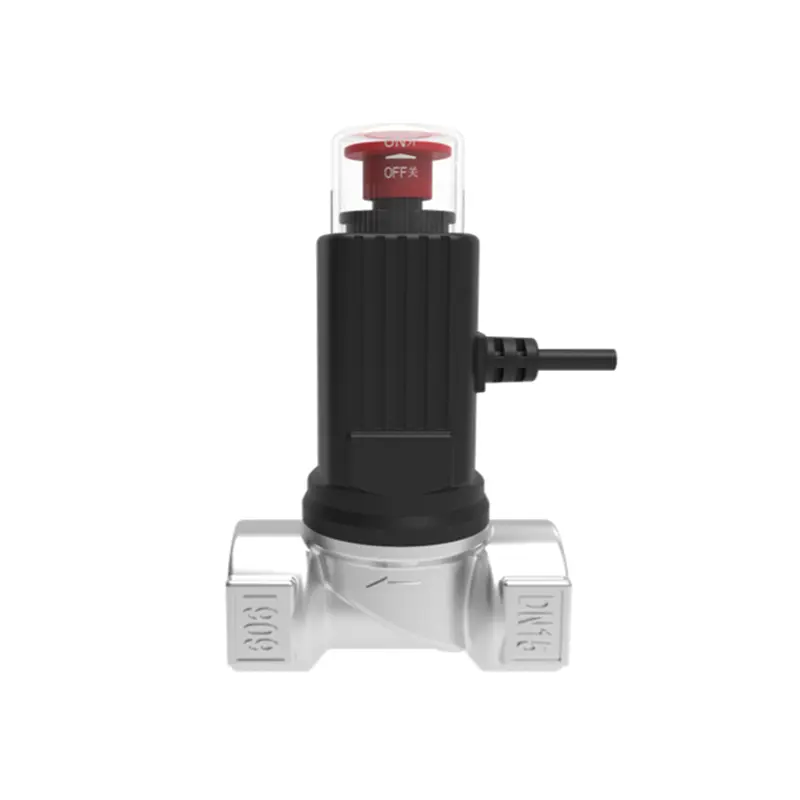
This valve is a normally open shut-off valve with a holding control mode. It remains open without power during normal operation and can automatically close upon receiving a shut-off signal. After closing, it can be manually opened and will automatically close again upon receiving another shut-off signal.
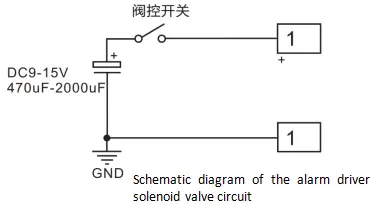
When a leakage accident occurs, the alarm system sounds an alert, instantly providing a DC pulse voltage to the solenoid valve. The coil is energized, driving the valve to quickly close, cutting off the gas source and entering a self-locking state.
When a gas leak occurs, the alarm's capacitor continuously releases a 3-second DC pulse voltage, energizing the coil, closing the valve to cut off the gas supply, and entering a self-locking state.
The interaction of instantaneous electromagnetic force of the coil, permanent magnetic force, and spring force is used to achieve pulse drive, automatic valve closing, and manual valve opening self-holding functions.
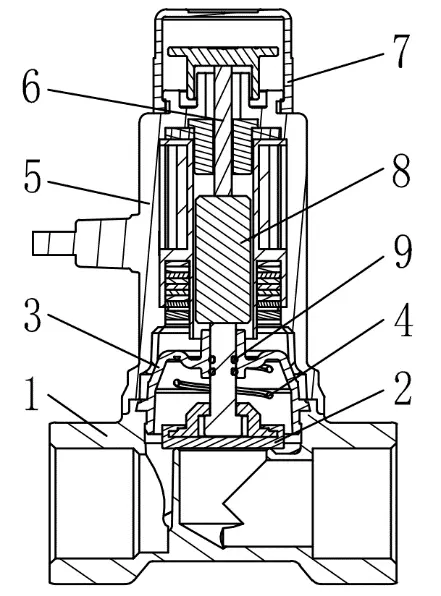
| Serial Number |
Area Name |
| 1 |
Valve body |
| 2 |
Diaphragm |
| 3 |
Valve cover |
| 4 |
Spring |
| 5 |
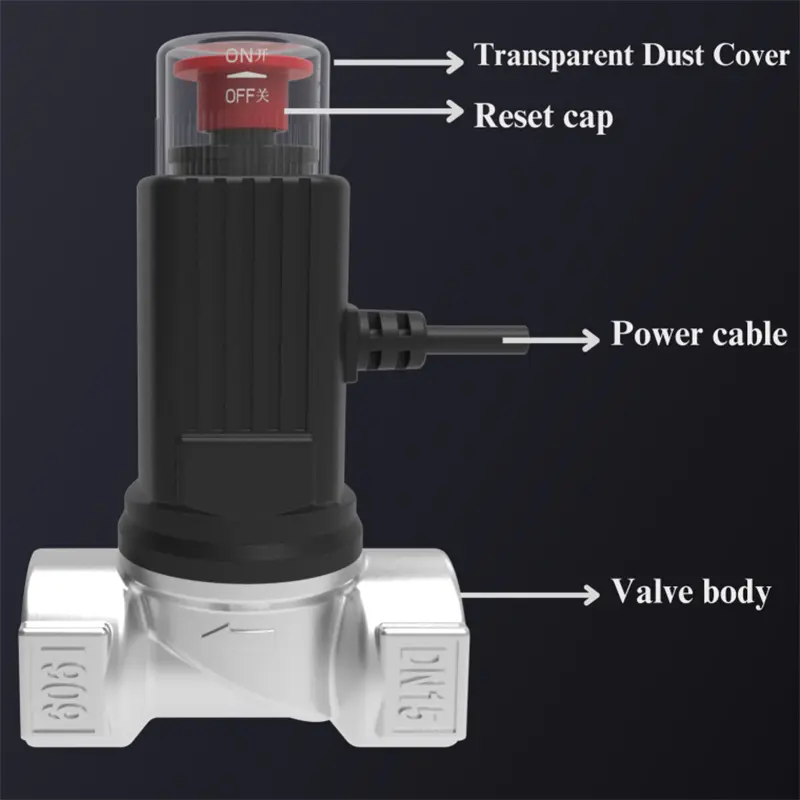
Actuator |
| 6 |
Reset Device |
| 7 |
Dust cover |
| 8 |
Moving iron core |
| 9 |
Sealing ring |

Frequently Asked Questions
Q What is the operational state of the valve during daily normal conditions?
The valve is a normally open shut-off valve that functions without continuous power consumption during standard operation, ensuring steady and uninterrupted gas flow.
Q How is the valve triggered to shut off in an emergency?
When gas leakage is detected, the alarm system emits an alert and instantly applies a DC pulse voltage to the solenoid coil, generating electromagnetic force to immediately close the valve.
Q What is the purpose of the self-locking feature?
Once the valve is closed upon receiving an alert signal, it enters a self-locking state to prevent unauthorized or accidental re-opening, maintaining safety until the environment is secured.
Q Can the valve be reopened automatically after a shut-off?
No, the valve requires manual intervention via the reset device to be reopened, ensuring personnel inspect and resolve the leak source before restoring gas supply.
Q What mechanical components enable the self-holding action?
The self-holding mechanism relies on the coordinated interaction between the coil's instantaneous electromagnetic force, internal permanent magnetic force, and spring force.








