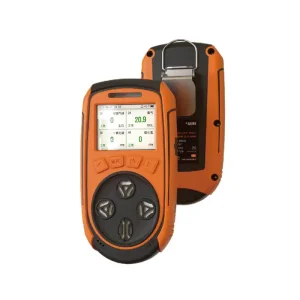
Carbon Monoxide ($CO$) remains one of the most toxic, insidious chemical threats in modern industrial manufacturing, commercial property management, and residential gas delivery networks. Often referred to as the "silent killer," CO is a colorless, odorless, and tasteless gas produced by the incomplete combustion of carbonaceous fuels such as natural gas, propane, coal, and heavy fuel oils.
Global regulatory frameworks—including EN 50291 (Europe), UL 2034 / UL 2075 (North America), and mandatory GB 15322 directives—strictly dictate alarm response windows based on cumulative time-weighted average (TWA) concentration exposure curves.
Unlike combustible hydrocarbons measured in %LEL (Lower Explosive Limit), toxic CO concentrations trigger irreversible physiological harm at parts-per-million (PPM) thresholds. Continuous monitoring is vital for steel metallurgy, chemical synthesis, and enclosed logistics.
For international buyers and procurement engineers, sourcing wholesale CO detectors directly from a certified original equipment manufacturer (OEM) ensures unit repeatability, zero-point stability, and seamless integration with localized emergency shut-off valves.
Selecting the appropriate sensing element depends on operational temperature ranges, relative humidity stability, target gas specificity, and background cross-sensitivity mitigation.
| Sensing Technology | Operating Principle | PPM Detection Range | Cross-Sensitivity Risks | Ideal Application Profile |
|---|---|---|---|---|
| Electrochemical (EC) | Catalytic oxidation of CO at the working electrode generating proportional nano-ampere current. | 0 – 1,000 PPM (High Accuracy) | Low ($H_2$ cross-filtering required in synthesis plants) | Residential, Commercial HVAC, Boiler Rooms, Underground Garages. |
| Non-Dispersive Infrared (NDIR) | Infrared absorption spectroscopy measuring light attenuation at the specific 4.67 µm CO absorption wavelength. | 0 – 5,000+ PPM (High Concentration) | Zero (Immune to chemical poisoning & silicone contamination) | Heavy Industrial Processing, High-Moisture Flue Gas, Mining Tunnels. |
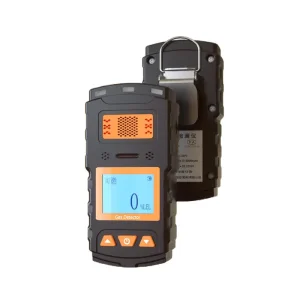
| Metal Oxide Semiconductor (MOS) | Resistance change in tin dioxide ($SnO_2$) film caused by oxygen adsorption-desorption dynamics. | 10 – 500 PPM (Broad Detection) | Moderate (Sensitive to humidity fluctuations & volatile organics) | Cost-effective OEM consumer electronics, portable handheld pens. |
Every Shield electrochemical sensor module integrates an embedded NTC thermistor. Our proprietary firmware continuously calculates temperature coefficients to eliminate baseline drift between -20°C and +50°C environments.
Industrial chemical plants often release trace hydrogen ($H_2$) or alcohol vapors. Shield CO sensor heads feature a multi-layer chemical filter media that neutralizes interfering gases before they interact with the working electrode.
Our microcontrollers automatically pulse the internal sensor circuitry to check electrolyte impedance and electrode continuity every 24 hours, flagging sensor aging or internal fault codes long before failure occurs.
A standalone gas detector is only as effective as the active isolation system it commands. Shield manufactures fully integrated safety chains that instantly bridge hazardous detection with automated physical shut-off.
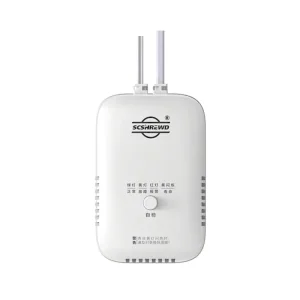
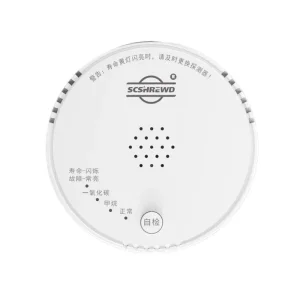
Wall-mounted point detectors or wide-area bus sensors analyze ambient carbon monoxide levels in real time, converting PPM concentration into digital signals.
Crossing pre-set thresholds (e.g., Low Alarm 35 PPM, High Alarm 100 PPM) triggers on-device multi-tone buzzers (>85dB) and high-luminance LED strobe arrays.
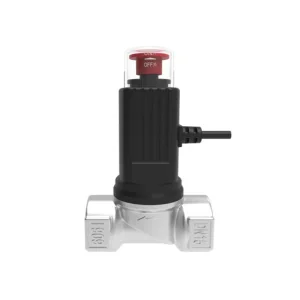
Relay contacts output a instantaneous pulse signal to electromagnetic shut-off valves (such as the Shield JYFJS-011 series), isolating gas lines within milliseconds.
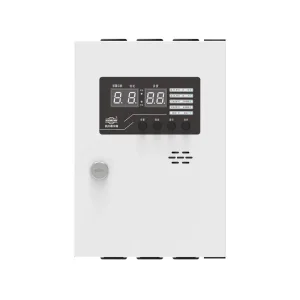
RS485 Modbus-RTU loops transmit telemetry back to Shield Gas Alarm Control Panels or central Building Management Systems (BMS) for cloud logging.
Carbon Monoxide behavior is governed by vapor density ($CO$ relative vapor density = 0.967, virtually equal to ambient air). Successful installation requires strategic placement tailored to specific operational dynamics.
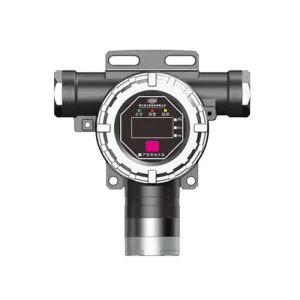
In thermal power stations, hotel boiler rooms, and commercial HVAC mechanical zones, incomplete combustion of natural gas creates elevated CO risks. Shield fixed point-type detectors are mounted 1.5 meters from floor level near burner units to detect localized accumulation.
Automobile exhaust fumes in multi-level subterranean parking structures generate toxic CO build-ups. Multi-channel controller systems dynamically cycle ventilation blowers based on real-time PPM concentrations, reducing facility energy costs while maintaining safety.
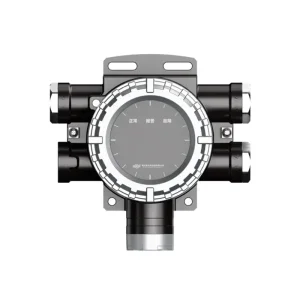
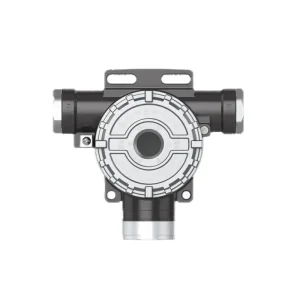
Blast furnace gas and synthesis gas lines contain up to 30% CO concentration. These harsh environments require IP66 explosion-proof cast-aluminum enclosures (Ex d IIC T6 Gb certified) equipped with hydrophobic membrane filters to protect sensor electrodes.
As a certified high-tech enterprise based in Chengdu, China, Sichuan Shield Technology Co., Ltd. operates state-of-the-art SMT assembly lines, automated zero-point calibration gas chambers, and rigorous burn-in testing facilities.
Every detector undergoes multi-point calibration in controlled temperature/humidity gas chambers using NIST-traceable CO reference gas standards.
Full customization available for private-label distributors: local language alarm text, tailored relay trip logic, custom enclosure colors, and branded packaging.
100% of manufactured PCBA boards undergo 72-hour high-temperature thermal cycling and vibration testing to ensure zero out-of-box defects.
Complete export documentation including CE, 3C, RoHS, UN38.3 battery shipping approvals, and custom tariff compliance assistance for global partners.
The industrial gas safety sector is undergoing rapid digital transformation. Shield’s R&D engineering roadmap focuses on smart sensor miniaturization, edge computing analytics, and zero-maintenance operational life cycles.
Transitioning from traditional hardwired loop cables to low-power long-range wireless connectivity. Future Shield CO detectors support self-healing mesh networks for rapid retrofit installation across vast industrial complexes.
By executing machine learning models directly on edge microcontrollers, next-gen devices analyze sensor aging curves, ambient humidity shifts, and seasonal thermal variations to dynamically adjust zero-point baseline stability.
Replacing traditional liquid/gel electrolytes with planar solid-state ionic conductors. This breakthrough eliminates risks of electrolyte drying in arid climates or leakage under high ambient pressure fluctuations, extending sensor life to 8+ years.
In-depth engineering insights provided by Sichuan Shield Technology's senior safety application directors.
Whether you are an established safety equipment distributor looking to expand your private-label portfolio or an EPC contractor specifying explosion-proof gas detectors for major industrial facilities, Shield delivers certified engineering, factory-direct pricing, and dependable long-term support.