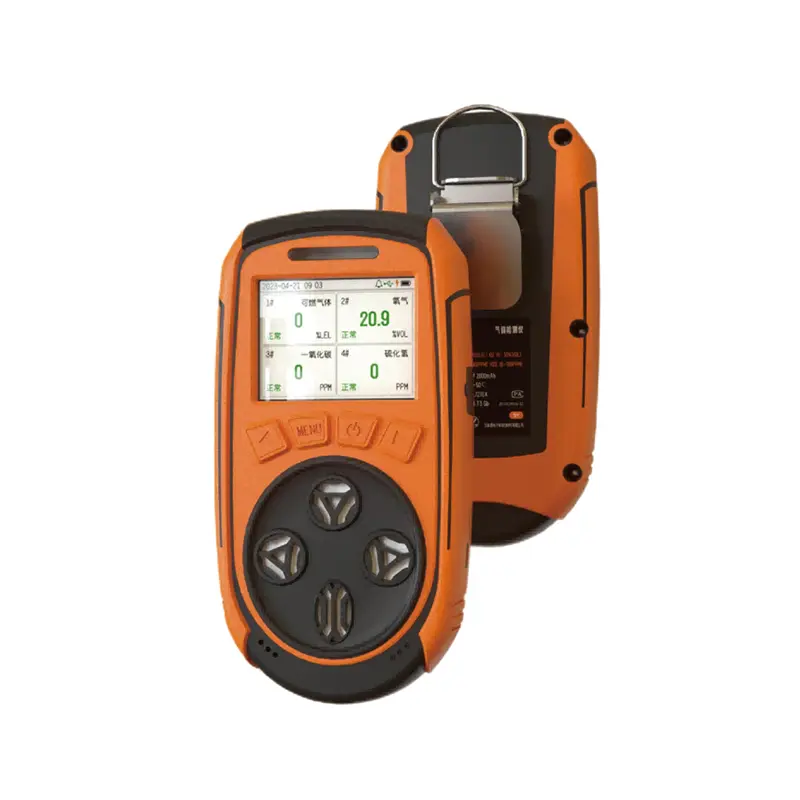
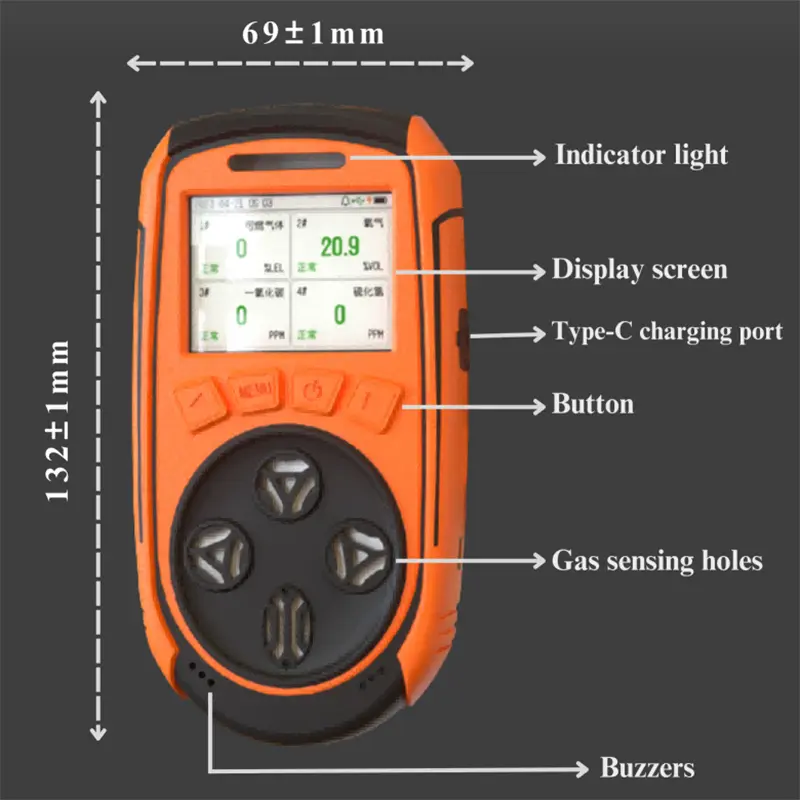
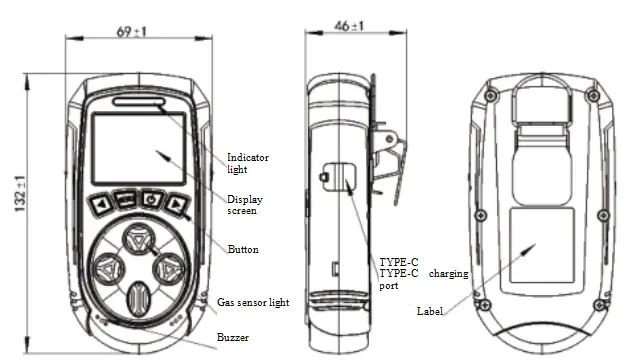
The appearance and structure of the equipment are shown in the following diagram:
🧩
The device mainly consists of components such as the casing, circuit board, battery, display screen, and sensors.
Frequently Asked Questions
Q
What are the main components of the BTYQ-SD3011 leak detector?
The BTYQ-SD3011 leak detector is composed of several key components including the casing, circuit board, battery, display screen, and sensors. These components work together to ensure reliable and accurate gas leak detection.
Q
How many buttons does the BTYQ-SD3011 device have, and what are their functions?
The device is equipped with four buttons: Left, Menu, Power, and Right. These buttons allow users to navigate the menu, power the device on or off, and adjust settings as needed.
Q
What do the three indicator lights on the device represent?
The three indicator lights represent the device's operational status: the Normal indicator shows the device is functioning correctly, the Alarm indicator signals a gas leak has been detected, and the Fault indicator alerts the user to a device malfunction or error.
Q
What is the working principle of the electrochemical type leak detector?
The electrochemical type detector works by triggering a chemical reaction when target gas molecules come into contact with the sensor's electrodes. This reaction generates an electrical signal proportional to the gas concentration, enabling precise detection of toxic or harmful gases.
Q
How does the catalytic combustion type detection work?
The catalytic combustion type detector operates by oxidizing combustible gas on a catalytic bead, which generates heat. The resulting temperature change alters the electrical resistance of the sensor, which is then measured and converted into a gas concentration reading.
Q
What types of gases can the BTYQ-SD3011 detect?
Based on its dual working principles — electrochemical and catalytic combustion — the BTYQ-SD3011 is capable of detecting a range of gases including toxic gases (via electrochemical sensing) and combustible/flammable gases (via catalytic combustion sensing), making it suitable for diverse industrial and safety applications.