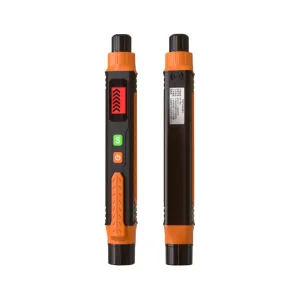
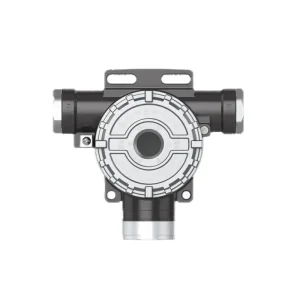
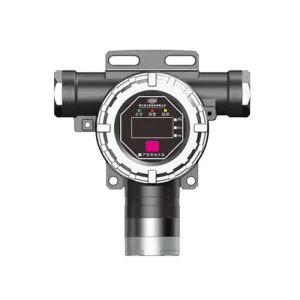
Explore our flagship OEM/ODM detector units, smart solenoids, and industrial safety monitoring series manufactured for worldwide distribution.
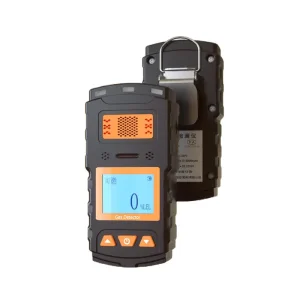
Understanding the fundamental chemistry, life expectancy curves, and signal conditioning algorithms behind professional-grade OEM Carbon Monoxide (CO) alarms.
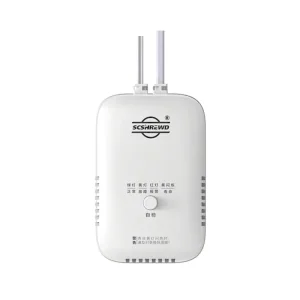
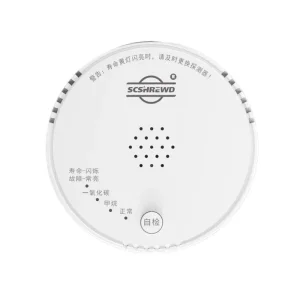
Carbon Monoxide (CO) is a colorless, odorless, and tasteless toxic gas generated by the incomplete combustion of carbon-containing fuels. Unlike combustible gases (such as Methane or LPG) which present immediate deflagration risks measured in Lower Explosive Limit (%LEL) percentages, Carbon Monoxide represents a cumulative physiological hazard measured in Parts Per Million (PPM). When evaluating reliable OEM Monoxide Detectors Suppliers & Factories, B2B buyers and OEM brand owners must prioritize core sensing fidelity over basic enclosure aesthetics.
Modern professional carbon monoxide detectors rely primarily on electrochemical sensing cells. Inside an electrochemical cell, CO molecules diffuse through a porous membrane and undergo oxidation at a working electrode (anode):
Working Electrode (Oxidation): CO + H₂O → CO₂ + 2H⁺ + 2e⁻
Counter Electrode (Reduction): ½ O₂ + 2H⁺ + 2e⁻ → H₂O
Net Cell Reaction: CO + ½ O₂ → CO₂
The resulting micro-ampere electrical current generated by this redox reaction is directly proportional to the CO gas concentration. Premium OEM manufacturers implement low-noise transimpedance amplifiers combined with temperature-compensated Microcontroller Units (MCUs) to convert this analog micro-current into precise PPM readings. Cheap, substandard detectors often use semiconductor sensors that suffer from extreme cross-sensitivity to humidity, ethanol, and household cleaning chemicals, leading to unacceptable false alarms or dangerous non-responses.
Global standards (UL 2034, EN 50291) require precise delay timers. A true OEM safety factory programs multi-stage alarm algorithms that trigger only when CO toxicity exceeds physiological thresholds, eliminating nuisance trips.
Utilizing microampere-level electrochemical cells enables battery-operated residential CO detectors to achieve 10-year sealed lifetime operations without replacement, satisfying modern green regulations.
Advanced OEM models continually test sensor impedance, circuit continuity, and battery voltage. Automatic failure warnings prevent silent device deaths in critical residential or commercial facilities.
Why sourcing monoxide detectors directly from top-tier Chinese manufacturing clusters yields unmatched quality control, cost efficiency, and speed-to-market.
Selecting the right factory partner in China involves analyzing the complete industrial cluster ecosystem. Sichuan Shield Technology Co., Ltd. and allied specialized gas safety manufacturers in Chengdu and surrounding industrial parks offer a vertically integrated supply chain. From raw SMT surface-mount technology board assembly to automated robotic gas calibration, direct factory manufacturing eliminates multiple intermediary markups while upholding rigorous international quality management systems (ISO 9001, ISO 14001, and ISO 45001).
| Manufacturing Stage | In-House OEM Factory Process | Quality Assurance (QA) Metric | B2B Buyer Benefit |
|---|---|---|---|
| 1. SMT & PCB Assembly | Automated high-speed SMT placement with lead-free reflow soldering and 3D AOI inspection. | Zero-defect soldering joints; IPC-A-610 Class 2 compliance. | High reliability against thermal strain and electronic component vibration. |
| 2. Sensor Screening | 100% pre-aging and baseline stabilization in zero-air clean chambers for 72+ hours. | Baseline drift < ±2 PPM over initial burn-in period. | Eliminates early-life sensor failures and field returns. |
| 3. Multi-Point Calibration | Robotic automated gas injection chambers utilizing NIST-traceable standard CO gas concentrations. | Calibrated at 30 PPM, 70 PPM, 150 PPM, and 400 PPM levels. | Strict adherence to global response time standards. |
| 4. System Linkage Test | Integrated testing with solenoid shut-off valves, wireless relay modules, and IoT controllers. | 100% signal transmission success rate over RS485 & RF link. | Plug-and-play field installation for complex commercial gas safety projects. |
By leveraging China's robust electronics supply ecosystem, OEM brands can customize plastic molds, firmware protocols, and enclosure protection ratings (up to IP66 and ATEX/IECEx explosion-proof standards for industrial monitors) within short lead times. Factory-direct sourcing enables flexible Minimum Order Quantities (MOQs) for custom branding while maintaining economies of scale for large-scale utility rollouts.
A detailed engineering breakdown of regional safety standards required for North American, European, Australian, and Asian market entry.
Exporting monoxide detectors globally requires strict adherence to localized safety certification benchmarks. A competent OEM supplier must engineer both hardware and firmware to satisfy varying concentration-time threshold curves specified by international standards bodies.
Requires non-alarm status at 30 PPM for up to 30 days, alarm response between 60–89 minutes at 70 PPM, 10–29 minutes at 150 PPM, and 4–15 minutes at 400 PPM.
EN 50291-1 governs domestic premises (no alarm < 50 PPM for 120 mins; alarm within 60-90 mins at 50 PPM; <3 mins at 300 PPM). Part 2 covers caravans, motor homes, and boats.
Mandatory 3C certification for commercial/industrial gas safety devices, enforcing tight calibration limits and anti-explosion construction for harsh industrial sites.
Enforces strict wireless transmission compliance for smart RF/Zigbee/Z-Wave connected carbon monoxide alarms used in residential builds.
Our engineering team provides full firmware customization options. OEM partners can specify custom micro-controller code to adapt sound levels (>85dB at 3 meters), LED indicator blink codes, localized voice prompt languages, and relay output behaviors (latching vs. non-latching mode for solenoid shut-off valves).
Evaluating vendor capability beyond price: Lead times, lifetime failure rates, customized tooling, and warranty backstopping.
When sourcing carbon monoxide detectors from foreign manufacturers, procurement managers must evaluate several technical and operational indicators to safeguard their brand reputation:
High-grade sensors maintain calibration within ±5% per year. Direct factories utilize automated thermal chambers to stress-test sensors against temperature swings from -20°C to +50°C before shipping.
Every single unit should feature a unique QR code or laser-etched serial number detailing sensor batch code, calibration date, inspector ID, and firmware version for 100% field traceability.
From full-color retail blister packaging to white-label industrial user manuals and custom housing colors, direct factory partnerships ensure seamless market landing.
How Next-Generation Monoxide Alarms are Merging with IoT Building Automation and Multi-Gas Sensing Architectures.
The global gas safety market is rapidly transitioning from isolated standalone buzzers to connected intelligent safety networks. Key innovations dominating current B2B OEM inquiries include:
Combining dual sensor elements (e.g., electrochemical CO cell + catalytic bead or infrared Methane sensor) into a single compact housing reduces installation costs for property developers by 40% while covering dual hazards.
Modern residential and commercial complexes mandate real-time push notifications to smartphone apps and centralized facility dashboards, allowing property managers to respond instantly to gas leaks.
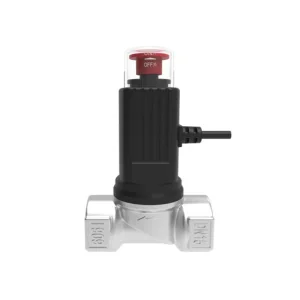
Integrating carbon monoxide detectors directly with emergency electromagnetic shut-off valves (such as the JYFJS-011 series) and exhaust fan relays guarantees immediate physical isolation of fuel supply lines.
Where and how carbon monoxide detectors must be deployed across residential, commercial, and industrial facilities.
Because carbon monoxide has a vapor density similar to air (0.967 relative to air), detectors should be wall-mounted approximately 1.5 meters above the floor and 1 to 3 meters horizontally away from fuel-burning appliances such as gas water heaters, fireplaces, and furnaces.
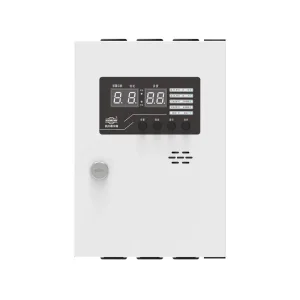
Vehicle exhaust and heavy gas boilers create high localized CO concentrations. Multi-point RS485 bus-type detectors (such as the SD2100E series) linked to gas alarm control panels automatically activate jet ventilation fans when ambient levels reach 35 PPM.
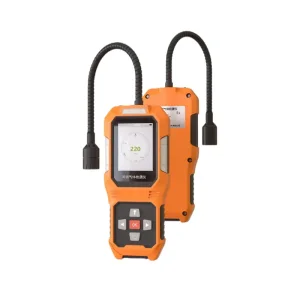
Maintenance personnel working in chemical processing facilities, steel plants, or utility vaults require rugged, handheld 4-in-1 portable gas detectors featuring high-decibel acoustic buzzers, vibrating wrist alerts, and bright LED flashing strobes.
Expert insights compiled by our lead gas detection engineers to solve real procurement and field integration challenges.
Browse additional portable gas pens, point-type industrial detectors, and control systems available for wholesale and custom factory orders.