Factory-direct OEM/ODM gas measurement hardware and fast-acting shutdown units engineered for critical industrial and commercial safety applications.
In modern industrial process management, energy distribution networks, and smart city infrastructure, point-type gas detectors represent the fundamental front-line defense against catastrophic vapor releases, unexpected toxic exposures, and sudden explosive hazards. Unlike open-path optical line-of-sight monitoring systems designed for vast open expanses, point-type gas detectors monitor target atmospheric samples directly at high-risk focal points—such as pump seals, valve manifolds, chemical metering skids, storage tanks, and boiler burner assemblies.
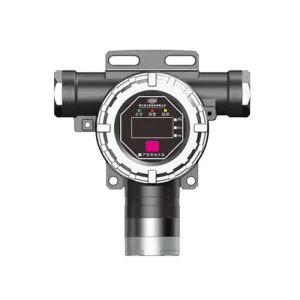
Selecting an established OEM Gas Detector Point Type Supplier requires more than evaluating unit costs; it demands a deep technical audit of sensor physics stability, enclosure explosion-proof ratings (e.g., Ex d IIC T6 Gb), signal transmission integrity, and compliance with international functional safety standards (such as IEC 61508 / SIL2). This comprehensive engineering guide outlines the operational fundamentals, China manufacturing cluster advantages, OEM/ODM integration protocols, and macro technology trends that define next-generation industrial gas monitoring.
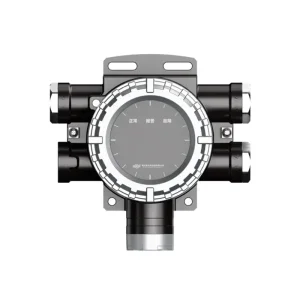
Ideal for lower explosive limit (%LEL) measurement of methane, LPG, propane, and hydrogen. Utilizes platinum wire coils embedded in active/reference ceramic beads. Features rugged shock resistance and low ambient temperature tolerance.
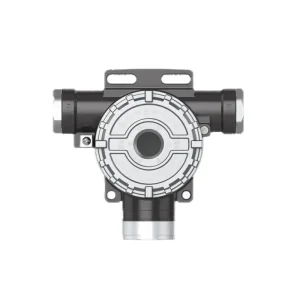
Non-dispersive infrared sensing provides fail-safe hydrocarbon gas detection without oxidation poison risk (silicones or sulfides). Offers exceptionally long calibration life (>5 years) and immune operation in zero-oxygen environments.
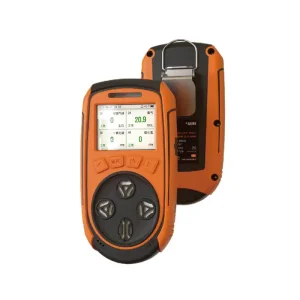
High-selectivity measurement for target toxic gases (CO, H2S, NH3, CL2, SO2) in PPM concentration ranges, as well as volumetric %VOL Oxygen monitoring. Features ultra-low baseline noise and fast T90 dynamic response times.
Over the past two decades, China—specifically high-tech manufacturing hubs like Chengdu in Sichuan—has evolved from a contract assembly location into a global innovation powerhouse for intelligent industrial instrumentation. Strategic OEM partnering with China-based factories like Sichuan Shield Technology Co., Ltd. delivers distinct technical and economic competitive advantages to international brand owners, engineering procurement firms (EPCs), and safety equipment distributors.
From aluminum/stainless steel die-casting and precision SMT PCB assembly to specialized explosion-proof potting and multi-gas automatic calibration rigs, internal vertical integration eliminates third-party markups and minimizes lead times.
Flexible firmware development allows rapid implementation of customer-specified Modbus communication registers, custom alarm threshold logic (e.g., dual-stage 20% LEL / 50% LEL), private label OLED interface screens, and OEM housing colors.
100% of manufactured point-type transmitters undergo temperature compensation profiling (-40°C to +70°C), thermal shock testing, zero-drift burn-in cycles, and verified gas response testing against certified reference standard gas mixtures.
When procurement managers and lead safety engineers evaluate point-type gas detection hardware for enterprise projects, compliance with rigorous mechanical, electrical, and performance standards is mandatory. A failure in gas detection equipment directly threatens human life, environmental safety, and asset integrity.
| Engineering Parameter | Industrial Point Detector Specification | Commercial / Residential Point Detector |
|---|---|---|
| Explosion-Proof Rating | Ex d IIC T6 Gb / Ex tD A21 IP66 | Non-Explosion Proof / Flame Retardant ABS (UL94-V0) |
| Target Gas Coverage | CH4, C3H8, H2, CO, H2S, O2, NH3, VOCs | Natural Gas (Methane), LPG, Carbon Monoxide |
| Signal Output Options | 4-20mA, RS485 Modbus-RTU, Bus-Type 2-Wire, HART | Relay Contact Output, Valve Pulse Linkage Signal |
| Ingress Protection | IP66 / IP67 Heavy Metallic Casting | IP52 / Indoor Wall Mount Configuration |
| Sensor Element Technology | Poison-Resistant Catalytic Bead, NDIR, Electrochemical | Semiconductor / Cost-Effective Catalytic Sensor |
| Operating Temperature | -40°C to +70°C (Process Specific) | -10°C to +55°C |
| Safety Interlock Capability | Dual SPDT Relays for Shut-Off Valve & Ventilation Fan | Direct Drive Pulse Output for Solenoid Valve (JYFJS-011) |
A point-type gas detector cannot guarantee site safety in isolation. Complete site protection requires an integrated, multi-layered hardware topology consisting of three distinct operational tiers: Detection, Centralized Supervision, and Immediate Physical Isolation.
In a standard installation—such as an industrial boiler room or chemical dispensing hub—point-type combustible gas detectors (e.g., GTYQ-SD2100A or SD2130 series) continuously monitor the localized ambient air. If gas concentration breaks through the pre-set Low Alarm (e.g., 20% LEL), the local detector activates visual strobe alarms while transmitting digital or analog telemetry back to a centralized Gas Alarm Controller (SD8001 Series) situated in a non-hazardous control room.
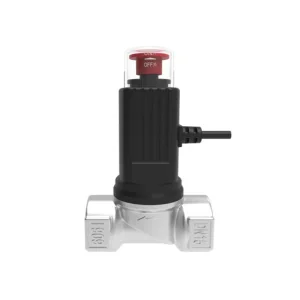
Should concentrations rise above the High Alarm limit (e.g., 50% LEL), the controller or detector’s internal relay contacts instantly drop power to the pipeline's Electromagnetic Solenoid Shut-off Valve (JYFJS-011 Series). This triggers a mechanical spring-assisted closure in less than 1 second, physically cutting off the gas supply at the facility boundary. Crucially, Shield’s JYFJS-011 series valves require a manual pull-reset on site, ensuring gas flow cannot resume until safety personnel inspect the piping network and resolve the root cause of the leak.
Point-type gas detectors analyze local atmospheric conditions with high sampling rates, zero-point temperature drift tracking, and digital filtering to prevent false trips caused by humidity variations.
Multi-channel gas controllers consolidate data across hundreds of point sensors, mapping channel tags, relay logic triggers, sounders, and secondary DCS/PLC communications via RS485 Modbus.
Rapid-response solenoid emergency shut-off valves halt gas inflow mechanically. Die-cast aluminum alloy housings and anti-corrosion seals guarantee leak-tight lockouts under extreme pressure conditions.
The global gas detection market is undergoing a rapid transition from standalone safety hardware toward interconnected Industrial IoT (IIoT) Safety Ecosystems. Modern gas utilities, petrochemical producers, and commercial property managers no longer view detectors as simple local alarms; they require real-time cloud data visibility, predictive sensor lifecycle telemetry, and unified facility risk management.
Integration of NB-IoT, LoRaWAN, and 4G communication modules into point-type gas detectors allows long-distance wireless deployment in municipal valve pits, remote pipelines, and unpowered gas stations without expensive trenching and cable laying.
By monitoring micro-voltage sensor baseline shifts and ambient temperature humidity trends, smart firmware predicts remaining sensor lifespan, warning safety officers when calibration or sensing cell replacement is required before a failure occurs.
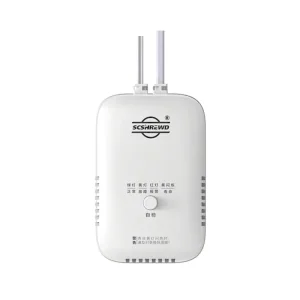
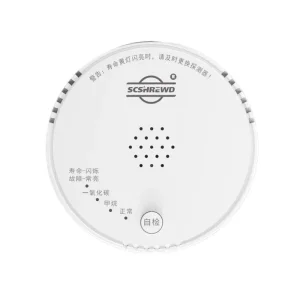
Combines combustible gas sensing (%LEL CH4) and carbon monoxide monitoring (PPM CO) in a single compact housing. Highly recommended for commercial kitchens, residential apartment complexes, and gas boiler rooms to lower overall hardware installation costs.
Point-type gas detectors are deployed across vastly diverse working environments, each presenting unique mechanical, atmospheric, and operational challenges. Below are representative engineering deployments configured by Shield’s OEM engineering team:
Operating Challenge: High relative humidity (>95% RH), water splash, and potential oxygen deficiency combined with explosive methane gas pockets.
Shield Engineering Configuration: Stainless steel point-type detectors equipped with hydrophobic porous dust shields, IP67 waterproof junction boxes, and dual %LEL Methane + %VOL Oxygen electrochemical sensors linked to local battery-backed controllers.
Operating Challenge: High airborne grease concentrations, localized heat spikes near cooktops, and heavy traffic by non-technical staff.
Shield Engineering Configuration: Wall-mounted SD6200 / SD6103K series combustible gas detectors installed 30cm below ceiling level (for Natural Gas), paired directly with JYFJS-011 aluminum alloy emergency shut-off valves installed on incoming main gas risers.
Operating Challenge: Off-gas emissions (Hydrogen, CO) preceding thermal runaway events in lithium-ion battery enclosures.
Shield Engineering Configuration: Ultra-fast response electrochemical Hydrogen (H2) point sensors combined with NDIR Carbon Monoxide detectors linked via RS485 Modbus directly into the BESS fire suppression control unit for automated inerting gas release.
Explore the complete family of Shield fixed gas transmitters, commercial alarms, and emergency isolation valves built to OEM factory specifications.
Clear, authoritative engineering answers to common inquiries from safety directors, system integrators, and OEM buyers.
A point-type gas detector measures gas concentration at a single specific location in space by allowing natural atmospheric diffusion through a specialized sensor sintered disc. Unlike sample-draw (pumped) systems that pull remote air through tubing or open-path optical systems that project an infrared beam across hundreds of meters, point detectors provide low-cost, continuous localized protection directly where gas leaks are most likely to occur (such as flanges, valves, or pumps).
%LEL (Lower Explosive Limit) measures the percentage of the minimum concentration of a combustible gas in air required for ignition (e.g., 100% LEL Methane is ~5.0% Methane by volume). PPM (Parts Per Million) measures trace concentrations of highly toxic gases (1 PPM = 0.0001% volume). %VOL (Percentage by Volume) measures high-concentration volumetric gas fractions, predominantly used for Oxygen monitoring (normal air is 20.9% VOL O2) or high-purity gas pipelines.
Shield point-type detectors and central gas controllers feature onboard programmable SPDT relays or pulse driver outputs. When gas levels surpass the High Alarm setpoint, the relay closes or outputs a instantaneous 12V/24V pulse to the electromagnetic solenoid valve coil (e.g., JYFJS-011 series). The solenoid unleashes internal spring tension to slam the gas line shut in under 1 second. The valve remains mechanically locked until manually reset by a safety supervisor.
Shield offers turnkey OEM/ODM services including private-label enclosure silkscreening, custom aluminum powder-coating colors, customized firmware startup screens, pre-configured Modbus RS485 slave address register maps, localized user manuals, custom alarm thresholds matching regional standards (e.g., BS EN 50194 or GB 15322), and branded export packaging.
Industry standards typically mandate bump testing or span calibration every 6 to 12 months, depending on operating environmental harshness, exposure to potential sensor poisons (silicones, lead, or sulfur compounds), and local safety regulations. Infrared (NDIR) sensors maintain calibration stability much longer (up to 2-3 years) compared to standard catalytic bead sensors.