Structure and Function Comparison Table
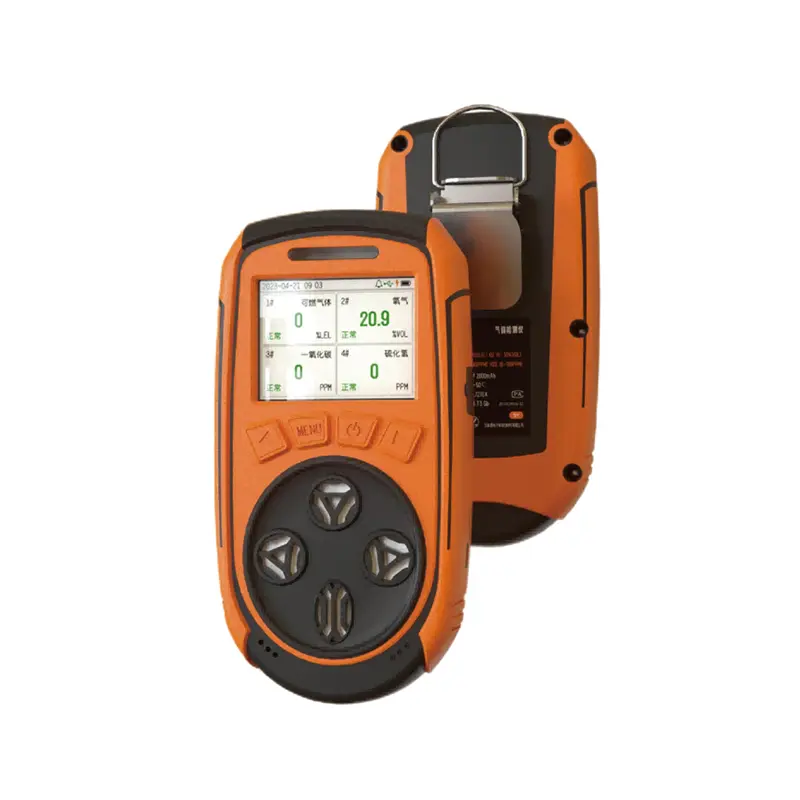
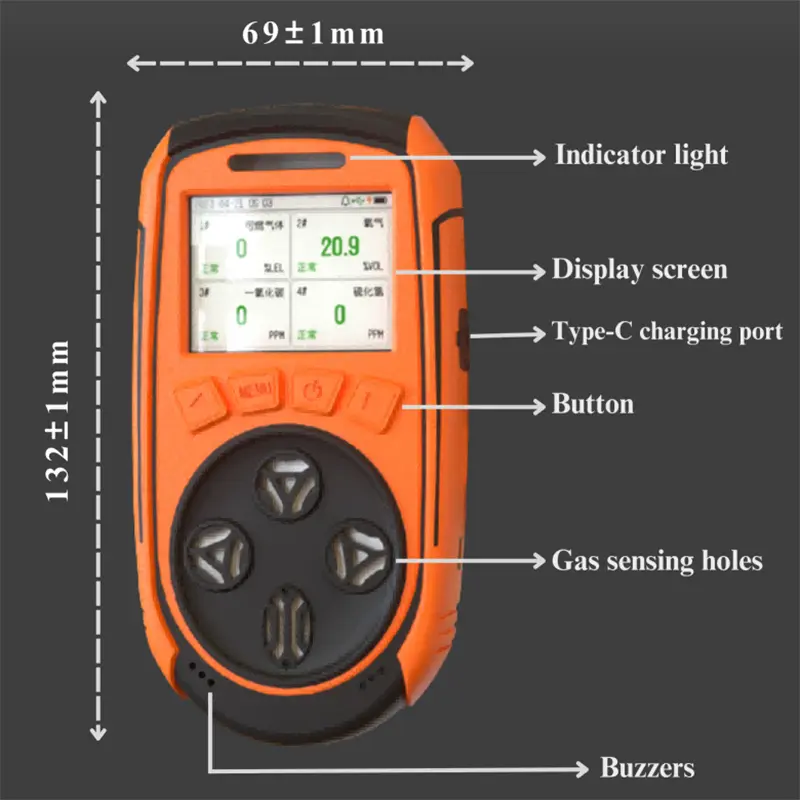
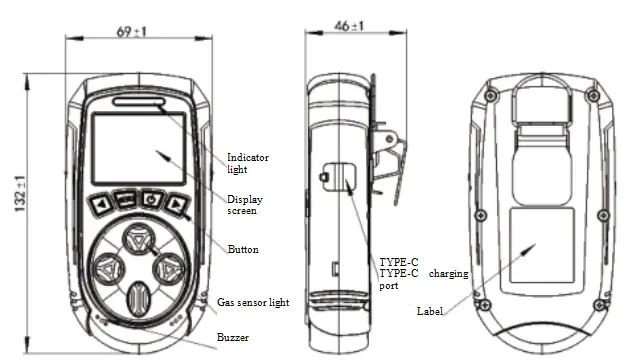
The appearance and structure of the equipment are shown in the following diagram:
🔘
The device has four buttons, namely left, menu, power, and right.
💡
The device has three indicator lights, namely normal, alarm, and fault indicators.
Frequently Asked Questions (FAQ)
Q
What are the main components of the BTYQ-SD3011 leak detector?
The device is composed of key components including the casing, circuit board, battery, display screen, and sensors, ensuring reliable detection and user-friendly operation.
Q
How many buttons does the BTYQ-SD3011 have and what are their functions?
The device features four buttons: left, menu, power, and right. These buttons allow users to navigate menus, power the device on or off, and adjust settings as needed.
Q
What do the three indicator lights on the device represent?
The three indicator lights represent the current status of the device: the normal light indicates proper operation, the alarm light signals a gas leak detection alert, and the fault light indicates a device malfunction or error.
Q
What working principles does the leak detector use?
The BTYQ-SD3011 supports two working principles: electrochemical type, which detects gas via electrode chemical reactions, and catalytic combustion type, which detects combustible gases through heat generated during catalytic oxidation.
Q
What types of gases can the electrochemical and catalytic combustion sensors detect?
Electrochemical sensors are typically used for toxic gases such as CO, H₂S, and O₂. Catalytic combustion sensors are designed for flammable and combustible gases such as methane, propane, and hydrogen.
Q
Is the BTYQ-SD3011 suitable for both indoor and outdoor use?
Yes, thanks to its robust casing design and reliable sensor technology, the BTYQ-SD3011 is suitable for a wide range of environments, including industrial facilities, commercial buildings, and outdoor applications where gas leak monitoring is required.