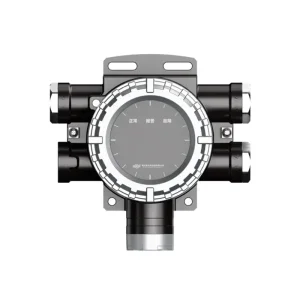
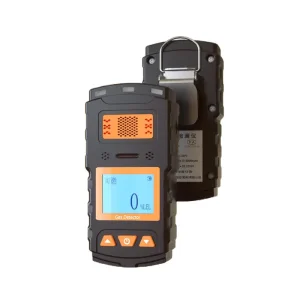
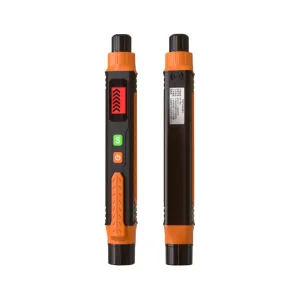
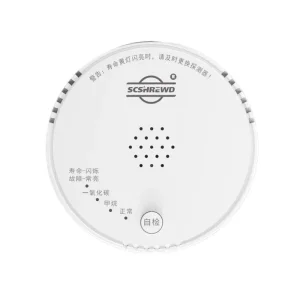
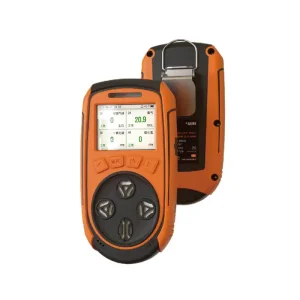
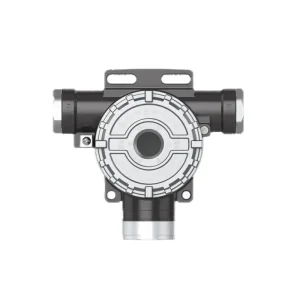
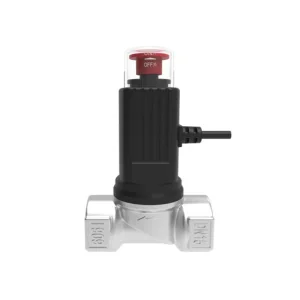
Explore our precision-engineered gas alarm controllers, industrial point-type detectors, and automated solenoid shut-off systems built in our automated manufacturing facility.
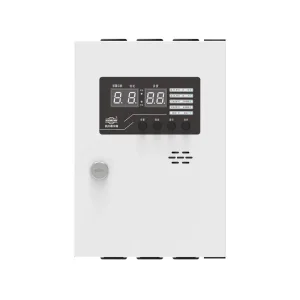
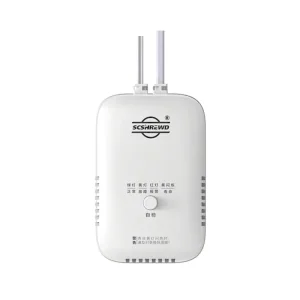
Sulphur Dioxide ($\text{SO}_2$) is one of the most prevalent, hazardous, and regulated toxic gases across global heavy industry. As a major byproduct of fossil fuel combustion, non-ferrous metal smelting, paper pulp bleaching, sulfuric acid manufacturing, and food processing, accurate real-time monitoring of $\text{SO}_2$ is a strict operational standard mandated by international regulatory bodies such as OSHA, NIOSH, ACGIH, and EU-OSHA.
In industrial environments, $\text{SO}_2$ presents severe detection engineering challenges. It is highly reactive, soluble in moisture to form corrosive sulfurous acid ($\text{H}_2\text{SO}_3$), and frequently coexists with cross-interfering gases such as Hydrogen Sulfide ($\text{H}_2\text{S}$), Nitrogen Dioxide ($\text{NO}_2$), and Carbon Monoxide ($\text{CO}$). Consequently, procurement engineers and original equipment manufacturers (OEMs) demand specialized sensing architectures capable of high selectivity, thermal stability, fast $T_{90}$ response times (< 30 seconds), and rugged, explosion-proof enclosures.
Advanced multi-electrode electrochemical cells incorporating catalytic chemical filters to eliminate cross-talk from $\text{H}_2\text{S}$, $\text{NO}_2$, and alcohols, ensuring zero false alarms in complex chemical plants.
Integration of specialized PTFE hydrophobic membranes and internal heated sample lines preventing moisture condensation and acid formation inside the optical or electrochemical chamber.
Embedded NTC thermal sensors coupled with AI-driven polynomial compensation algorithms to maintain span stability across extreme working temperatures from -40°C to +70°C.
Selecting the appropriate sensor engine is the critical foundation of any OEM gas detection project. Depending on whether the intended deployment focuses on trace leak detection (ppm/ppb level), high-concentration flue gas monitoring, or personal safety, different core sensing principles must be integrated into the detector architecture.
| Sensing Principle | Detection Range | Typical Application | Key Advantages | Technical Limitations |
|---|---|---|---|---|
| Electrochemical (EC) | 0 – 20 ppm / 0 – 100 ppm | Personal Portables, Fixed Ambient Safety | Linear output, low power consumption, high specificity for low ppm. | Sensor drying out in extremely low humidity; finite lifespan (2–3 years). |
| UV Fluorescence | 0 – 500 ppb / 0 – 50 ppm | Environmental Monitoring, Stack Testing | Ultra-high sensitivity, non-destructive optical detection, zero chemical wear. | Higher cost, larger physical footprint, requires optical sampling pump. |
| Non-Dispersive Infrared (NDIR) | 0 – 1,000 ppm / 0 – 10% Vol | High-Concentration Flue Gas, FGD Outlets | Immune to chemical poisoning, long lifespan (5+ years), high range stability. | Requires narrow-band IR filters due to water vapor ($\text{H}_2\text{O}$) absorption overlaps. |
| Metal Oxide Semiconductor (MOS) | 0 – 500 ppm | Rough Industrial Leak Alarms | Low unit cost, robust in harsh physical environments, long thermal life. | Non-linear response, high cross-sensitivity, higher heating power requirement. |
As a turnkey OEM/ODM factory, Sichuan Shield Technology customizes sensor conditioning boards, signal amplifiers, and digital MODBUS RTU / 4-20mA HART transmitters specifically optimized for electrochemical or optical sensor cells based on your target market requirements.
The international demand for high-reliability gas detection has driven major global importers, gas utilities, and EPC contractors to partner directly with advanced Chinese manufacturing hubs. Sichuan Shield Technology’s Chengdu production facility represents the apex of modern industrial instrumentation manufacturing, combining complete component integration with rigorous quality assurance systems.
High-speed Surface Mount Technology (SMT) lines ensure zero-defect production of gas transmitter motherboards, MCU control units, and signal processing circuitry.
Every OEM $\text{SO}_2$ detector undergoes multi-point temperature and gas concentration calibration using traceable standard gas mixtures ($\text{SO}_2$ in Nitrogen balance) in dynamic environmental test chambers.
Custom enclosure design (die-cast aluminum or 316L stainless steel), custom firmware protocol programming, private-label silk screening, and bespoke packaging delivered with short lead times.
Deploying a Sulphur Dioxide detector requires careful analysis of the specific micro-environment, gas temperature, dust load, and sampling mechanics. Below are four key industrial scenarios where Shield OEM solutions deliver reliable gas safety monitoring.
Environment: High moisture, ambient fly ash, and elevated temperatures surrounding wet/dry scrubbing systems.
Engineering Setup: Fixed point-type $\text{SO}_2$ detectors featuring sample-draw pump systems, integrated water-dust filters, and heated sampling lines. Signals link via RS485 MODBUS back to the central control room (Shield 8001AB Series Controllers) to monitor scrubber extraction efficiency and leak rates.
Environment: Enclosed barrel storage, fermentation cellars, and fruit preservation chambers utilizing gas-phase $\text{SO}_2$ as an antioxidant and antimicrobial agent.
Engineering Setup: Wall-mounted ambient electrochemical $\text{SO}_2$ detectors (0–10 ppm range) linked to local audible/visual strobe alarms and automated emergency exhaust ventilation fans to prevent operator asphyxiation and acute poisoning.
Environment: Severe acid gas concentration, high ambient vibration, and corrosive off-gas streams during sulfide ore roasting.
Engineering Setup: Heavy-duty Ex d IIC T6 explosion-proof point detectors housed in 316L stainless steel enclosures. Multi-point detection grids wired to local shut-off valves and DCS safety instrumented systems (SIS).
International buyers, system integrators, and distributors evaluating OEM factories for Sulphur Dioxide detection equipment should use the following engineering matrix to specify order requirements:
| Specification Category | Standard Configuration Options | OEM / ODM Customization Capacity |
|---|---|---|
| Measuring Ranges | 0-10 ppm, 0-20 ppm, 0-50 ppm, 0-100 ppm, 0-500 ppm | Bespoke sub-ppm ranges (0-2 ppm) or high-concentration flue ranges (up to 5,000 ppm). |
| Signal Outputs | 4-20mA Analog, RS485 MODBUS RTU, 2-Stage Relay Outputs | Wireless IoT modules (HART, LoRaWAN, NB-IoT, 4G Cat-1), Wi-Fi cloud data sync. |
| Explosion-Proof Rating | Ex d IIC T6 Gb / Ex tD A21 IP66 | Custom marking for local region standards (ATEX, IECEx, UL/CSA compliance testing support). |
| Enclosure & Hardware | ADC12 Die-Cast Aluminum with epoxy powder coat | 316L Stainless Steel for marine/offshore environments; custom branding and colorways. |
| Sampling Methods | Natural Diffusion | Integrated micro-membrane sampling pump (0.5 L/min flow rate) with inline dust/water trap. |
To uphold E-E-A-T (Experience, Expertise, Authoritativeness, and Trustworthiness) standards across international supply chains, Sichuan Shield Technology enforces strict Standard Operating Procedures for every batch of $\text{SO}_2$ detectors shipped globally.
All assembled detection heads undergo a minimum 72-hour continuous electrical burn-in accompanied by thermal cycling to settle sensor electrolytes and eliminate initial electronic component drift.
Using gravimetrically prepared, NIST-traceable standard $\text{SO}_2$ calibration gas, technicians perform zero gas adjustment (pure $\text{N}_2$) and multi-point span verification at 20%, 50%, and 80% of full scale.
Cast enclosures are hydrostatically leak-tested and IP-rated against dust and water jet immersion, guaranteeing harsh outdoor field survival under torrential rain and dust storms.
Select from our complete line of industrial point-type gas alarms, portable personal multi-gas monitors, and automated control hardware.