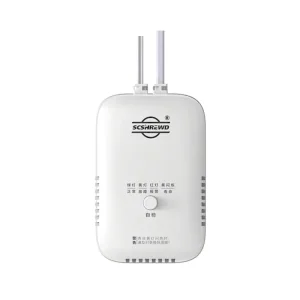
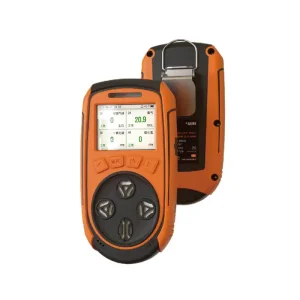
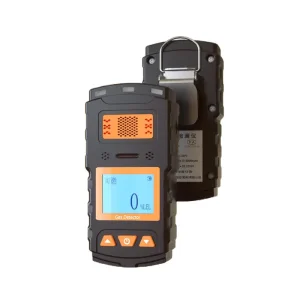
Direct factory manufacturing of household, industrial point-type, and portable gas detection instruments.
Strategic Insights for EPC Contractors, Utility Operators, and Industrial Equipment OEM Importers
As municipal energy grids globally transition from pure Methane ($CH_4$) to Hydrogen-blended Natural Gas ($H_2$ blending up to 20%), traditional detection infrastructures face severe cross-sensitivity and response time challenges. Modern ODM leak detection manufacturers must supply dual-sensor arrays capable of differentiating lower explosive limits across dynamic gas compositions without false alarms.
Global regulatory enforcement—such as China's mandatory 3C certification, European EN 50194 residential standards, ATEX/IECEx explosion-proof directives, and US NFPA guidelines—demands absolute reliability. Industrial facilities are transitioning from isolated alarm buzzers to SIL-2 certified automated shut-off systems linked directly to emergency isolation valves (e.g., JYFJS-011 series).
Procurement teams no longer seek standalone sensors; they require networked IoT gas safety nodes. Integrating Modbus RS485 bus topologies, LoRaWAN, NB-IoT, and 4-20mA analog loops enables real-time central supervisory monitoring (via controllers like the SD8001 series) across petrochemical tank farms, commercial complexes, and underground utility vaults.
Understanding Sensor Selection Physics for OEM/ODM Customization & Mission-Critical Installations
At Sichuan Shield Technology Co., Ltd., our engineering philosophy centers on matching the precise molecular sensing technology to the operational environmental hazards. Gas detection instruments are not one-size-fits-all products; selecting between Catalytic Combustion (Pellistor), NDIR (Non-Dispersive Infrared), Electrochemical, and Semiconductor MOX sensors dictates system longevity, calibration frequency, and total cost of ownership (TCO).
| Sensing Principle | Target Gas Spectrum | Primary Advantages | Environmental Limitations | Ideal Deployment Scenario |
|---|---|---|---|---|
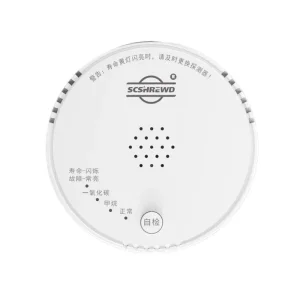
| Catalytic Combustion (Pellistor) | Combustible Gases (Natural Gas, LPG, Methane, Propane) | Linear output to 100% LEL, low unit cost, high reliability, proven industrial track record. | Vulnerable to silicone/sulfur poisoning; requires >10% atmospheric Oxygen to operate. | Household gas alarms (SD6101/SD6200), boiler rooms, commercial kitchen shut-off networks. |
| Non-Dispersive Infrared (NDIR) | Hydrocarbons ($CH_4, C_3H_8$), Carbon Dioxide ($CO_2$), Refrigerants | Immune to chemical poisoning, operates in zero-oxygen environments, 10+ year operational lifespan. | Higher initial capital cost; cannot measure non-infrared absorbing gases such as Hydrogen ($H_2$). | Petrochemical refineries, anaerobic digesters, inert gas purging pipelines, offshore platforms. |
| Electrochemical Sensors | Toxic Gases ($CO, H_2S, NH_3, CL_2$) and Oxygen ($O_2$) monitoring | Extreme micro-ppm sensitivity, low power drain, compound-specific selectivity. | Limited operational life (2-3 years), subject to electrolyte drying in high-temperature environments. | Portable 4-in-1 multi-gas detectors (BTYQ-Z4), confined space entry inspections, chemical storage. |
| Semiconductor (Metal Oxide - MOX) | Broad-spectrum Combustible & Volatile Organic Compounds (VOCs) | Ultra-high sensitivity to trace leaks, miniature form factor, highly cost-effective for mass consumer market. | Non-linear response, humidity sensitive, susceptible to cross-sensitivity from alcohol/cleaning agents. | Compact pen-type leak detectors (JLY-50A series), entry-level residential gas safety units. |
From Embedded Circuit Design to Automated Gas Chamber Calibration and Global Shipping
Our in-house R&D engineering facility in Shuangliu District, Chengdu, delivers full-turnkey hardware customization. We design high-noise-immunity PCBs equipped with ARM Cortex microcontrollers, ESD/surge protection, and dual-threshold alarm relay circuits capable of driving external solenoid shut-off valves and ventilation blowers simultaneously.
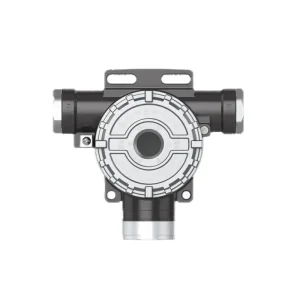
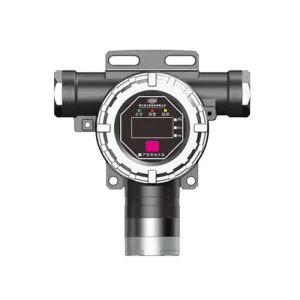
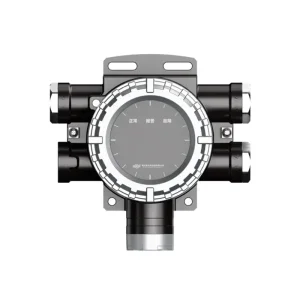
For industrial point-type detectors (such as the SD2100E and SD2130 series), we manufacture heavy-duty cast aluminum alloy and stainless steel housings rated Ex d IIC T6 Gb and IP66/IP67 waterproof. We provide custom mold tooling, color matching, laser-etched branding plates, and specialized mounting brackets tailored to client site specifications.
Quality assurance is paramount. Every instrument produced in our factory passes through automated multi-gas calibration chambers where zero-point stability, full-span sensitivity, and temperature-drift algorithms are verified against standard reference gases (NIST-traceable mixtures). 100% of units undergo 72-hour continuous burn-in aging prior to dispatch.
Combining Point Detectors, Control Panels, and Emergency Solenoid Valves for Total Risk Prevention
A standalone detector without immediate isolation mechanisms leaves facilities exposed to catastrophic ignition events. Sichuan Shield Technology specializes in unified active-defense systems. When a point detector (e.g., GTY-SD2130) or household unit (SD6103K) registers gas concentrations reaching the low alarm set point (typically 20% LEL), the local system initiates audible/visual strobe warnings. If concentrations reach the high alarm set point (50% LEL), the master control unit triggers an instant high-energy pulse to drive the electro-magnetic solenoid shut-off valve (JYFJS-011 series) closed within <0.5 seconds, isolating the gas pipeline before an explosive atmosphere can form.
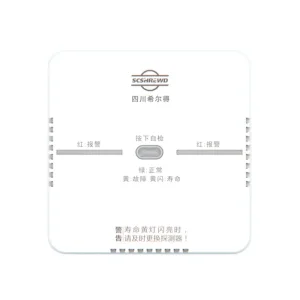
Standardized household kits pairing the SD6101 or SD6200 series detector with brass/aluminum solenoid valves. Features automatic valve closure, manual reset security, and optional smart home Zigbee/Tuya cloud connectivity.
Bus-type or standalone point detectors installed near gas meters and cooking lines, linked to multi-channel SD8001A wall-mounted controllers. Instantly cuts main gas solenoid valves upon steam or gas leak detection.
Flameproof explosion-proof detectors integrated via 4-20mA or RS485 Modbus to PLC/DCS supervisory systems. Provides continuous localized monitoring in harsh, corrosive environments with IP67 protection.
Explore our ODM/OEM catalog of household gas alarms, commercial point detectors, and portable multi-gas monitors.
Ensuring Seamless International Market Entry for Importers and System Integrators
Our manufacturing complex maintains ISO 9001:2015 Quality Management and ISO 14001 Environmental Management certifications. Applicable gas safety devices carry China's mandatory 3C (CCC) certification, confirming rigid adherence to national fire prevention standards.
Shield assists global OEM customers with target market compliance. We prepare full technical construction files (TCF), EMC test reports, and explosion-proof documentation required for CE mark, ATEX zone certifications, and UL safety standards across Europe, the Americas, and the Middle East.
We provide comprehensive after-sales technical backing, including multilingual engineering documentation, sensor replacement modular kits, remote troubleshooting support, and localized partner training programs to maintain operational uptime.
Expert Engineering Answers to Direct Buyer & Specification Inquiries
%LEL (Lower Explosive Limit): Used for combustible gases ($CH_4, C_3H_8$). It measures the percentage of the minimum gas concentration in air required to sustain combustion. (e.g., 100% LEL for Methane = 5.0% VOL).
PPM (Parts Per Million): Used for measuring trace amounts of highly toxic gases ($CO, H_2S$) where tiny concentrations pose health risks (1% VOL = 10,000 PPM).
%VOL (Percentage by Volume): Used for macro-level concentration monitoring, such as Oxygen ($O_2$) baseline levels in ambient air (typically 20.9% VOL) or inert gas purging evaluation.
When the gas detector registers gas concentrations exceeding its programmed alarm set point (e.g., 20% LEL), it closes an internal dry-contact relay or delivers a 24V DC power pulse to the solenoid valve's driver coil. This instantly triggers the mechanical latch mechanism in the valve (such as the JYFJS-011 series), shutting off the gas supply. For ultimate safety, our solenoid valves feature a manual reset mechanism—meaning gas flow cannot resume automatically until a technician inspects the area and physically resets the valve knob.
Industrial point-type combustible gas detectors using catalytic sensors generally require calibration validation every 6 to 12 months, depending on exposure to environmental dust, humidity, and trace chemical vapors. Instruments utilizing NDIR (Infrared) sensing technology exhibit superior zero-point stability and often operate reliably with 2- to 3-year calibration intervals. We provide automated calibration accessories and software tools for client field operations.
For standard white-label OEM branding (custom packaging, logo printing, localized manuals), minimum order quantities start at 500 units with typical lead times of 2 to 3 weeks. Full ODM projects involving custom plastic enclosure molds, modified circuit architecture, or specialized communication protocols follow a structured New Product Introduction (NPI) workflow: prototype engineering (3-4 weeks), tooling & sample validation (4 weeks), followed by mass production.
Contact Sichuan Shield Technology's senior sales engineers for product catalogs, factory audit reports, and technical OEM proposals.