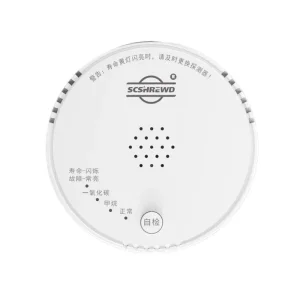
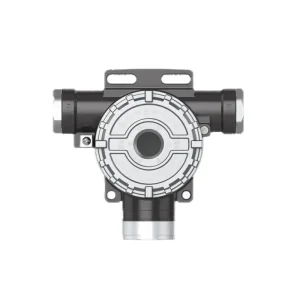
Explore our flagship LPG, methane, and multi-gas monitoring series built for commercial, residential, and heavy industrial applications.
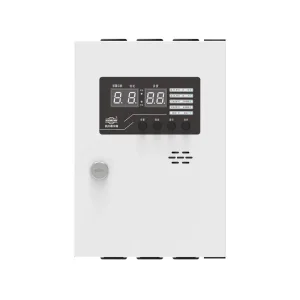
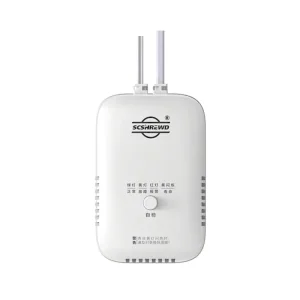
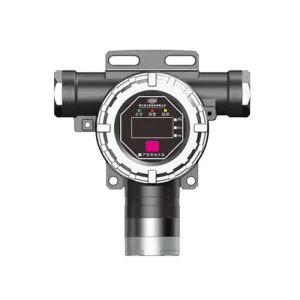
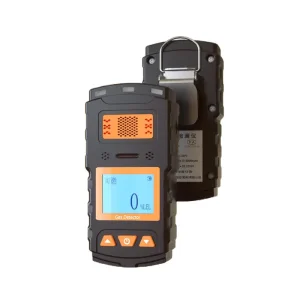
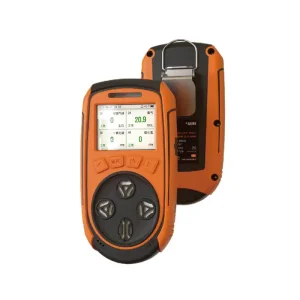
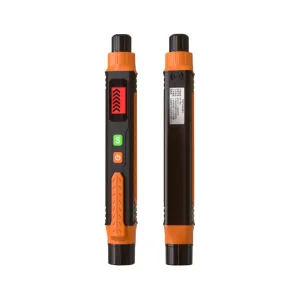
A rigorous analysis of sensor technology, risk mitigation, and procurement standards for global industrial buyers, EPC contractors, and gas utility operations.
Liquefied Petroleum Gas (LPG)—primarily composed of propane (C3H8) and butane (C4H10)—serves as a crucial energy vector across residential heating, commercial catering, industrial processing, and petrochemical applications. However, due to its physical characteristics, LPG poses severe safety hazards if unmanaged. Unlike natural gas (methane), which is lighter than air and dissipates rapidly upward, LPG vapor is approximately 1.5 to 2.0 times heavier than air. In leak events, LPG sinks, pools in low-lying areas, trenches, and floor pits, creating explosive gas-air mixtures that linger silently.
Selecting a High-Quality LPG Gas Detector Supplier & Factory is not merely a matter of component procurement; it is a critical life-safety investment. Modern gas detection infrastructure demands zero-drift accuracy, ultra-fast response times (t90 < 10 seconds), robust false-alarm filtering, and automated emergency isolation via emergency solenoid gas shut-off valves. As a premier China high-tech manufacturer, Sichuan Shield Technology Co., Ltd. engineered over 80 marketable gas safety devices, bridging advanced sensor R&D with global regulatory compliance.
Core Technical Insight: The Lower Explosive Limit (LEL) for LPG (Propane/Butane) is approximately 1.8% to 2.1% by volume in air. Industrial and domestic LPG safety standards mandate that pre-alarm thresholds must trigger at 10% LEL to 20% LEL, initiating immediate audible-visual alerts and automatic valve shutdown hours before an explosive concentration can form.
Utilizing high-stability catalytic bead and Non-Dispersive Infrared (NDIR) optical sensors designed specifically to prevent poison degradation from silicone, sulfur, and heavy hydrocarbons.
Direct pulse-signal output to electromagnetic shut-off valves (JYFJS-011 series). Features manual mechanical reset requirements ensuring gas flow cannot resume until the hazard is verified resolved.
Supports RS485 Modbus-RTU, 4-20mA analog loop, and wireless LoRaWAN / NB-IoT protocols, linking hundreds of point detectors seamlessly into centralized Shield 8001AB control panels.
Understanding the physics of detection: Choosing between Catalytic Combustion, Semiconductor, and Infrared (NDIR) sensors for your specific environment.
Choosing the right sensing element determines long-term operating cost, calibration frequency, and resistance to environmental contamination. Below is an engineering comparison matrix designed to guide procurement teams and systems integrators in selecting optimal LPG detection hardware.
| Sensor Technology | Operating Principle | Key Strengths | Potential Limitations | Optimal Application Scenario |
|---|---|---|---|---|
| Catalytic Combustion (Pellistor) | Catalytic oxidation of LPG on an active bead causes temperature shift and electrical resistance change. | Excellent linearity up to 100% LEL; highly accurate for flammable gas mixtures; cost-effective. | Vulnerable to silicone/sulfur poisoning; requires ambient oxygen (>10% O2) to operate. | Industrial chemical plants, commercial boiler rooms, gas filling stations. |
| Non-Dispersive Infrared (NDIR) | LPG molecules absorb specific infrared light wavelengths (3.3μm to 3.4μm C-H bond absorption). | Immune to sensor poisoning; operates in zero-oxygen environments; extremely long life (>10 years). | Higher initial capital expenditure; affected by extreme dust/condensation without optical filters. | Offshore platforms, harsh petrochemical refineries, unventilated storage vaults. |
| Planar Semiconductor (MOS) | LPG adsorption alters the electrical conductivity of a heated Metal Oxide Semiconductor layer. | Ultra-high sensitivity to micro-leaks; low manufacturing cost; compact form factor. | Non-linear output response; susceptible to humidity cross-sensitivity and alcohol/solvents. | Residential kitchens, multi-family housing apartments, OEM smart appliances. |
Vertical integration, massive production scale, and advanced SMT manufacturing deliver unmatched cost-performance and reliability.
From SMT circuit board placement, plastic injection molding, and explosion-proof enclosure casting to sensor gas chamber calibration, Shield controls 100% of the manufacturing chain in Chengdu.
Eliminating human error, our automated multi-point standard gas calibration chambers test every single detector against precise propane/butane concentrations before factory release.
Tailored housing colors, localized multi-language packaging, custom alarm relay outputs, and branded user documentation for global distributors and original equipment manufacturers.
Ensuring seamless deployment across European, North American, Middle Eastern, and Southeast Asian regulatory frameworks.
Gas safety standards vary significantly across international jurisdictions. A high-quality supplier must engineer hardware that adapts to local electrical codes, voltage inputs, gas composition variations, and explosion-proof classification mandates.
Compliance with EN 50194 (electrical apparatus for detecting combustible gases in domestic premises) and EN 50270 (EMC for gas detection). ATEX Zone 1 & Zone 2 certifications for industrial detectors.
Adherence to UL 1484 standards for residential gas alarms and UL 2075 for gas monitoring. Support for 110V/60Hz power grids and NPT conduit connections.
Heavy-duty heat-resistant enclosures designed for ambient operating temperatures reaching +65°C. Sealed IP66/IP67 dust protection against desert sand ingress.
Mandatory China 3C Certification and compliance with GB 15322 & GB 3836 explosion-proof standards for industrial point-type gas detectors.
How Shield solves core purchasing pain-points for EPC engineering firms, municipal utilities, real estate developers, and safety distributors.
Primary Demand: Full CAD design support, certified explosion-proof drawings, 4-20mA / Modbus system integration flexibility, and guaranteed batch consistency for multi-phase infrastructure contracts.
Primary Demand: Sleek aesthetic designs for residential kitchens, low false-alarm rates to prevent tenant panic, automated shut-off valve bundles, and cost-effective bulk unit pricing.
Primary Demand: Low MOQ OEM branding, fast shipment turnover, high margin structure, complete factory test reports, and dedicated technical after-sales training.
Specific installation rules governing detector positioning, height off the floor, and valve interlocks for LPG systems.
Because LPG is heavier than air, wall-mounted household detectors (SD6101/SD6200) must be installed within 0.3 meters above the floor and within 1.5 meters from the LPG gas cylinder or cooktop. Interlocked directly with an automatic shut-off valve.
High-temperature and oil-smoke environment. Utilizes IP65 point-type detectors (SD2100E) fitted with water/grease repellent filters, mounted low to the floor near gas distribution manifolds and commercial woks.
Explosion-proof Ex d IIC T6 Gb rated detectors (SD2100A series) mounted around filling carousels, tank farm perimeter fences, and pump rooms, wired directly to central Shield 8001AB control panels.
Moving from passive alarm sounders to proactive predictive maintenance clouds and intelligent risk forecasting.
Wireless LPG detectors operating on ultra-low power, transmitting gas readings directly to cloud dashboards without expensive site conduit trenching.
Embedded microprocessors analyze background temperature and humidity changes, algorithmically filtering out ambient fluctuations to virtually eliminate false alarms.
Push notifications send instant SMS and app alerts to homeowners and facility managers the second micro-concentration leaks are detected.
Expert answers from our engineering directors regarding selection, installation, calibration, and sourcing.
Comprehensive solutions ranging from household alarms to portable multi-gas detectors and heavy industrial point-type systems.