Explore our engineering-grade combustible, toxic, and environmental gas detection portfolio manufactured to global compliance standards.
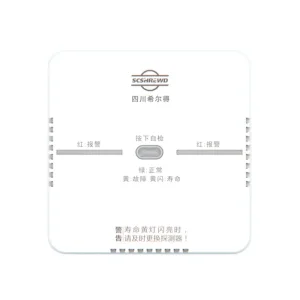
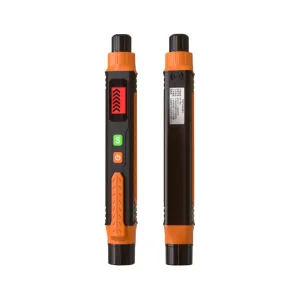
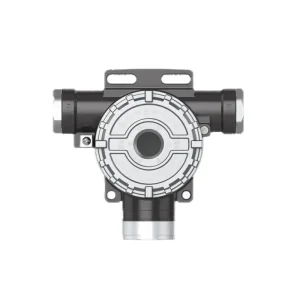
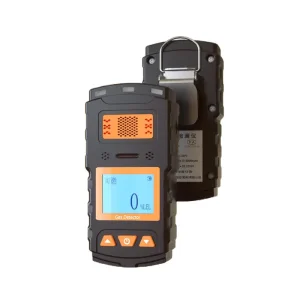
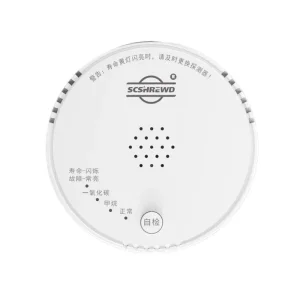
Carbon dioxide ($CO_2$) is a colorless, odorless gas that serves as a primary marker for Indoor Air Quality (IAQ), occupant health, and industrial process safety. While naturally present in Earth’s atmosphere at roughly 415 to 420 parts per million (PPM), elevated indoor or industrial concentrations pose severe physiological risks ranging from cognitive fatigue to fatal asphyxiation. Precision gas detection equipment calibrated against specific threshold levels is mandatory across commercial HVAC systems, agricultural greenhouses, breweries, cold chain storage, and energy facilities.
A critical engineering mistake in gas monitoring procurement is confusing ambient trace monitoring with high-concentration safety containment. Carbon dioxide detection relies on two distinct measurement scales based on operational intent:
Non-Dispersive Infrared (NDIR) sensors are the gold standard for carbon dioxide monitoring due to $CO_2$’s strong spectral absorption peak at 4.26 micrometers ($\mu m$). Unlike electrochemical sensors which suffer from cross-sensitivity to volatile organic compounds (VOCs) and limited operational lifespans (2–3 years), high-grade NDIR optics offer 15+ year operational lifespans with zero degradation from sulfur or siloxane exposure.
| Target Level Range | Typical Application | Primary Sensor Technology | Critical Safety Action |
|---|---|---|---|
| 400 - 1,000 PPM | Commercial Offices, Schools, Green Buildings | Single-Beam NDIR (Auto-Background Calibration) | Trigger Demand-Controlled Ventilation (DCV) fans |
| 1,000 - 5,000 PPM | Enclosed Classrooms, High-Density Workspaces | Dual-Beam NDIR Optical Chamber | Audio-Visual Alarm & Max HVAC fresh air intake |
| 5,000 - 30,000 PPM (3% VOL) | Breweries, Commercial Kitchens, Mushroom Farms | Industrial Point-Type NDIR Transmitters | Activate local exhaust ventilation & warn personnel |
| > 3% VOL - 100% VOL | Cryogenic CO2 Storage, Gas Pipeline Chambers | Explosion-Proof Stainless Steel NDIR Units | Trip Solenoid Shut-off Valves & Facility Lockout |
International building codes (such as ASHRAE 62.1, EN 13779, and China’s GB/T 18883 standards) increasingly demand real-time carbon dioxide tracking tied to building management systems (BMS). Global EPC contractors are procuring unified detector arrays that communicate via Modbus RS485 or BACnet protocols.
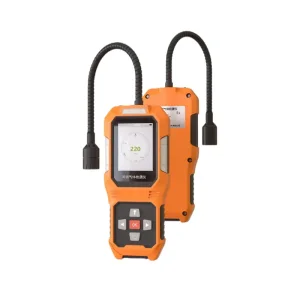
Importers and distributors no longer seek isolated sensor modules. The global sourcing trend prioritizes turnkey gas safety ecosystems—combining fixed point-type gas detectors, central alarm controllers, portable gas leak detectors, and solenoid automatic shut-off valves under one OEM manufacturer.
Industrial facility procurement teams require multi-gas awareness. In boiler rooms and residential developments, carbon dioxide levels are monitored alongside combustible gases (Methane/Natural Gas, LPG) and Carbon Monoxide ($CO$) to detect both gas leaks and incomplete combustion risks.
To meet this global demand, top-tier Chinese manufacturers and OEM suppliers have invested heavily in automated optical testing chambers, surface-mount technology (SMT) lines, and computerized gas calibration rigs. Buying directly from qualified factory suppliers allows global B2B clients to secure certified, high-accuracy gas monitors while cutting out regional broker markups.
True industrial safety requires more than standalone visual warnings. When carbon dioxide or combustible gas thresholds exceed programmed action levels, an automated closed-loop defense architecture must trigger within milliseconds.
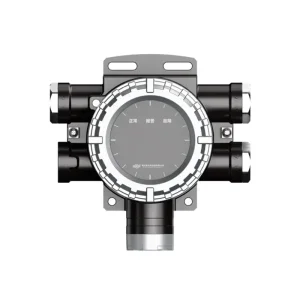
Fixed point-type detectors (e.g., SD2100A / SD2130 series) constantly sample air density, transmitting 4-20mA or RS485 signals to control networks.
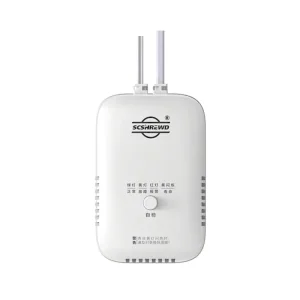
Gas alarm controllers (such as SD8001A/B series) process multi-channel detector inputs, activating local siren strobes and BMS warning logs.
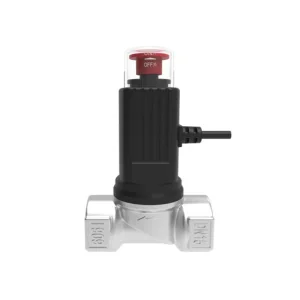
Linkage output relays instantly energize solenoid shut-off valves (e.g., JYFJS-011 aluminum alloy series), physically cutting off upstream gas supply.
To prevent secondary re-ignition or accidental re-pressurization, solenoid valves require manual mechanical intervention before resetting gas flows.
In commercial kitchens, boiler rooms, and gas distribution stations, alarms alone fail to prevent catastrophic events if personnel are absent. Integrating point detectors with automated electromagnetic valves guarantees localized isolation even during off-hours power or supervisory outages.
As smart cities, green building initiatives, and industrial IoT (IIoT) mature, carbon dioxide detector suppliers are advancing past primitive optical modules. The next decade of gas safety technology is shaped by four technological developments:
Single-beam NDIR sensors rely on software assumptions for background calibration, making them prone to long-term optical drift. Dual-beam architectures introduce an independent reference wavelength (typically 3.91 $\mu m$) that does not absorb gas. This compensates for light source aging, mirror contamination, and dust accumulation without user intervention.
Micro-Electro-Mechanical Systems (MEMS) technology is downsizing industrial NDIR optical paths into ultra-compact surface-mounted packages. This enables portable pen-type leak detectors (like the JLY-50A series) and compact multi-gas monitors to deliver lab-grade accuracy inside rugged field personnel tools.
Next-generation gas detectors embed machine learning algorithms directly on edge microcontrollers. By analyzing sensor signal drift curves, ambient temperature fluctuations, and humidity spikes, the system predicts sensor end-of-life weeks in advance and notifies maintenance teams via cloud dashboards.
Sichuan Shield Technology Co., Ltd. operates as a certified national high-tech enterprise, maintaining strict adherence to international safety metrics, standardized calibration protocols, and industrial manufacturing certifications.
Products hold China Mandatory Certification (3C) alongside ISO9001 quality management standards. Full traceability is maintained for every sensor optical assembly leaving the production floor.
Continuous technology accumulation has yielded 40+ patents across optical gas chamber design, anti-interference gas alarm algorithms, and high-pressure solenoid valve actuators.
We engineer tailored target gas configurations, custom alarm setpoints, private-label branding, localized user documentation, and market-specific compliance packages for overseas buyers.
Review additional models across our portable leak detector pens, multi-gas monitors, industrial transmitters, and automatic valves.