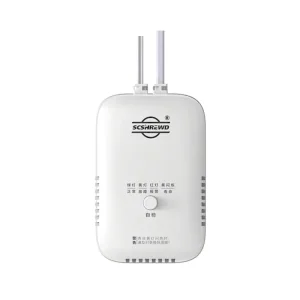
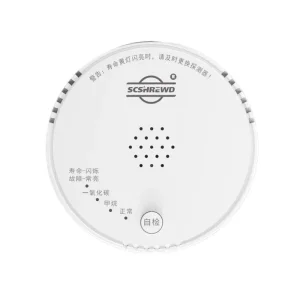
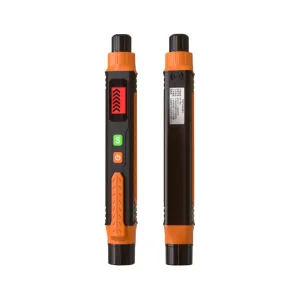
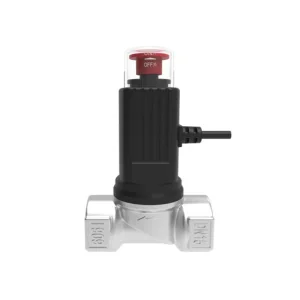
Industrial-grade detection hardware engineered with high-precision catalytic bead and NDIR infrared sensors for critical infrastructure monitoring.
The Grand Duchy of Luxembourg represents one of Europe's most technologically advanced industrial ecosystems. Operating at the heart of the European Union, Luxembourg's economic engine relies heavily on high-value steel manufacturing (headquartered in Luxembourg City and operational hubs in Esch-sur-Alzette and Belval), chemical processing, advanced logistics, and an rapidly expanding network of Tier-IV data centers (such as facilities in Betzdorf, Contern, and Roost). As Luxembourg aggressively pursues decarbonization under the EU Green Deal and its own National Hydrogen Strategy, industrial facilities are upgrading their safety infrastructure to handle traditional hydrocarbon gases alongside clean energy vectors such as Green Hydrogen ($H_2$), Synthetic Natural Gas (SNG), and Bio-Methane.
In high-density industrial and commercial environments across Luxembourg, gas safety governance is governed strictly by Directive 2014/34/EU (ATEX Workplace and Equipment Directives), IEC/EN 60079 series standards, and local mandates overseen by the Inspection du Travail et des Mines (ITM). Industrial facilities require fixed point-type combustible gas detectors capable of continuous, zero-drift monitoring in hostile environments—from blast furnace gas recovery units to commercial boiler rooms and backup diesel fuel tank vaults for financial institution data centers.
Unlike open-path or area gas detectors, Point-Type Combustible Gas Detectors deliver highly localized, pinpoint accuracy in micro-environments where explosive gas accumulation occurs prior to atmospheric diffusion. In spaces such as gas valve chambers, turbine enclosures, pipe galleries, and commercial kitchen manifolds, point-type sensors provide immediate lower explosive limit (%LEL) detection, triggering localized solenoid valve shut-offs before an flammable vapor cloud reaches minimum ignition energy (MIE).
A resilient industrial safety system relies on a seamless three-tier architecture: Detection (Sensors) $\rightarrow$ Supervision (Gas Alarm Controller) $\rightarrow$ Isolation (Solenoid Shut-Off Valve). Understanding the hardware mechanics behind each component ensures compliance with EN 60079-29-1 and maximizes uptime across industrial installations in Luxembourg.
Utilizes poison-resistant catalytic pellistors for general hydrocarbons ($CH_4, C_3H_8, C_4H_10$) and Non-Dispersive Infrared (NDIR) sensors for inert atmospheres, high-concentration hydrocarbons, and volatile organic environments with zero sensor poisoning risk.
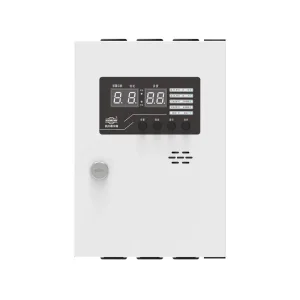
Serves as the nerve center. Processes 4-20mA analog loops or digital RS485 Modbus RTU communications from up to 128 point-type detectors. Features programmable low/high alarm thresholds ($20\% LEL / 50\% LEL$) with dry-contact relay outputs.
High-duty aluminum alloy magnetic solenoid valves (e.g., JYFJS-011 series). Triggers in <1 second upon controller signal to physically isolate gas pipelines. Requires manual override reset to prevent accidental gas restoration.
| Sensor Technology | Target Gases | Key Advantages | Environmental Immunity | Typical Luxembourg Application |
|---|---|---|---|---|
| Poison-Resistant Catalytic Bead (Pellistor) | Methane, LPG, Hydrogen, Solvents | Low initial cost, linear response across $0-100\% LEL$, works in $-40^\circ C \text{ to } +70^\circ C$. | Requires $>10\% O_2$. Vulnerable to silicone and sulfur poisoning if unprotected. | Esch-sur-Alzette metallurgical workshops, commercial gas boiler rooms. |
| Non-Dispersive Infrared (NDIR) | Methane, Propane, Butane, Carbon Dioxide | Immune to chemical poisons, operates in $0\% O_2$ inert gas purged pipes, extended 10+ year lifespan. | Not affected by siloxanes or $H_2S$. (Note: Cannot directly detect $H_2$). | Chemical distribution facilities, high-density data center fuel vaults. |
| Electrochemical Cell (Point Toxic/O2) | Carbon Monoxide, $H_2S, NH_3, O_2$ Deficiency | PPM level accuracy, ultra-low power consumption, precise threshold monitoring. | Requires humidity control ($15-90\% RH$), periodic sensor head replacement (2-3 yrs). | Underground utility vaults, logistics cold storage ($NH_3$). |
Sichuan Shield Technology Co., Ltd. operates a state-of-the-art manufacturing facility in Chengdu, China, specializing in the R&D, sensor calibration, explosion-proof casting, and assembly of gas safety systems. For system integrators, gas utility companies, and safety equipment distributors in Luxembourg, partnering directly with an established original equipment manufacturer (OEM/ODM) offers unmatched competitive advantages:
From aluminum alloy die-casting for flameproof enclosures ($Ex\ d\ IIC\ T6\ Gb$) to surface-mount technology (SMT) for controller PCBs, every production step is maintained under ISO 9001 quality management systems. Individual sensor modules undergo multi-point environmental chamber burn-in and target gas calibration.
We provide full customization for European buyers: customized firmware supporting Modbus register mapping, custom alarm setpoints, private labeling, localized multi-lingual user manuals (French, German, English), and tailored physical mounting brackets suited for European DIN-rail and wall-mount standards.
Our direct-from-factory business model eliminates unnecessary intermediary markups, allowing engineering, procurement, and construction (EPC) contractors in Luxembourg to secure premium-grade safety equipment with maximum ROI, full traceability, and long-term spare part availability.
Industrial applications vary significantly across the cantons of Luxembourg. Below is a detailed breakdown of localized deployment frameworks designed by Shield Technology engineers:
Challenge: High-temperature environments near electric arc furnaces and rolling mills, combined with emerging green hydrogen ($H_2$) blending pipes.
Solution: Explosion-proof point-type combustible gas detectors equipped with hydrogen-specific catalytic sensors, linked directly to Shield 8001AB Gas Alarm Controllers located in remote control cabins. Automatic triggering of high-capacity ventilation and solenoid valve cut-off prevents catastrophic flash fires.
Challenge: Mega data center hubs operating massive diesel/natural gas backup generator fleets require zero-fault gas monitoring in generator halls and pipe vaults.
Solution: NDIR-based point combustible gas detectors installed near gas turbine inlets and fuel manifolds. Communicates over RS485 Modbus RTU into Building Management Systems (BMS), ensuring early warning without false positive trips.
Challenge: High-volume natural gas usage in commercial kitchens, high-rise hotel boilers, and district heating plants.
Solution: Wall-mounted commercial point-type gas detectors interlocked with JYFJS-011 aluminum alloy emergency shut-off valves. Compact, aesthetically discreet, providing audible-visual warning and instantaneous automatic valve isolation during pressure drops or pipeline rupture.
Challenge: Transshipment warehouses handling compressed flammable gas cylinders, solvents, and refrigerated liquids ($NH_3$).
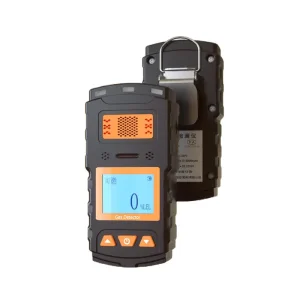
Solution: Multi-point distributed network combining point-type combustible detectors with portable 4-in-1 inspection units (SD3001/JLY series) for logistics personnel conducting daily facility audits.
The industrial gas safety sector is undergoing rapid technological convergence driven by Industrial IoT (IIoT), artificial intelligence predictive analytics, and green transition mandates. Key vectors shaping equipment procurement include:
Expert engineering answers to common procurement, compliance, and installation questions for the Luxembourg market.
Contact our engineering export team today to receive detailed technical datasheets, CAD dimensional drawings, and factory-direct OEM pricing for point gas detectors, controllers, and solenoid valves.
Send Inquiry NowExplore our full lineup of household detectors, portable gas leak detectors, explosion-proof point detectors, and emergency electromagnetic shut-off valves.