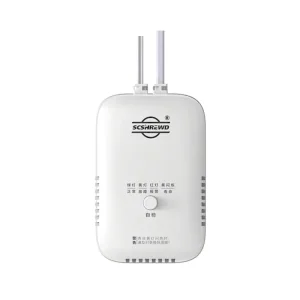
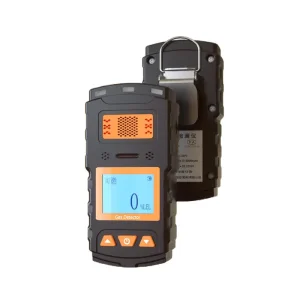
Factory-direct OEM/ODM monitoring hardware engineered for continuous flammable gas tracking and automated linkage isolation.
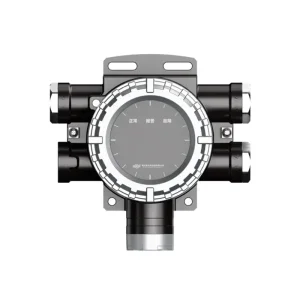
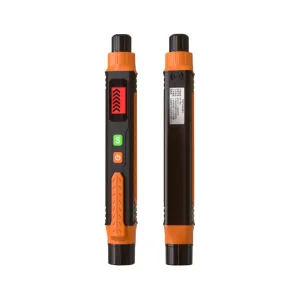
Transitioning from passive alarms to intelligent, closed-loop monitoring networks in modern residential and commercial kitchens.
In global gas safety engineering, the humble gas stove and commercial cooking range represent one of the most critical risk vectors for unignited fuel gas accumulation. Natural gas (composed predominantly of methane, CH4) and Liquefied Petroleum Gas (LPG, a mixture of propane C3H8 and butane C4H10) are the dominant thermal energy sources in municipal, commercial, and residential kitchens. However, structural vibration, thermal expansion cycling, rubber hose degradation, unlit burner activation, and flameout due to liquid boil-overs frequently lead to hazardous fugitive gas leaks.
Historically, gas safety relied heavily on passive odorization (using ethyl mercaptan) to alert occupants. Modern safety standards—such as EN 50194, NFPA 54, and China's GB 15322—require an active, high-reliability automated architecture. A modern Gas Stove Monitor functions not merely as an audible buzzer, but as a centralized risk-mitigation hub. It combines precision chemical sensing, digital signal filtering, alarm controller telemetry, and direct actuation of electromagnetic shut-off valves (such as the JYFJS-011 series) to isolate the gas supply prior to reaching the Lower Explosive Limit (%LEL).
Detects volatile hydrocarbon concentrations at 3% to 10% LEL, triggering preventive interventions hours before hazardous concentrations form.
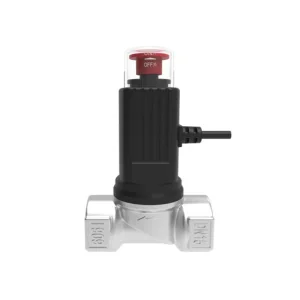
Pulse-driven electromagnetic valves instantly drop line pressure and seal main supply lines upon receipt of alarm linkage signals.
Seamless integration via RS485 Modbus, Wi-Fi, LoRaWAN, or NB-IoT for centralized building energy and safety management systems.
Regulatory imperatives and manufacturing mandates driving enterprise adoption of gas detection and safety hardware.
The global demand for specialized gas stove monitors and commercial kitchen gas safety networks is undergoing rapid expansion, driven by stringent regulatory frameworks enforced by municipal authorities, insurance underwriters, and occupational safety agencies. Commercial food processing centers, hotel kitchens, school cafeterias, and high-density multi-family residential complexes are now legally mandated to install certified gas detection equipment with active emergency shut-off mechanics.
Technical Information Gain Note: Unlike consumer-grade single-station alarms, commercial gas stove monitors must withstand aggressive environmental stressors, including airborne grease vapor, elevated humidity (10% to 95% RH non-condensing), ambient temperature swings (-10°C to +55°C), and cross-sensitivity from cooking ethanol, vinegar, or cleaning agents.
As a specialized manufacturer based in Chengdu, China, Sichuan Shield Technology Co., Ltd. (Shield) directly addresses these market challenges. By maintaining vertical integration across sensor housing machining, SMT board assembly, automated gas calibration chambers, and terminal valve casting, Shield provides global B2B buyers, distributors, and EPC contractors with industrial-grade reliability at factory-direct wholesale economies of scale.
Comparing catalytic combustion, planar semiconductor, and NDIR optical sensing modes for gas stove and stove pipe monitoring.
Utilizes a platinum-coated ceramic bead (pellistor) operating on a Wheatstone bridge circuit. Ideal for high-accuracy linear %LEL measuring of Methane (CH4) and LPG in industrial stove installations.
Engineered for high sensitivity and long operational lifespan (>5 years) in residential kitchen gas stove alarms. Excellent performance against thermal drift and ambient humidity fluctuations.
Non-Dispersive Infrared technology offers poison-resistant hydrocarbon monitoring without requirement for oxygen, paving the way for next-generation smart gas stove networks.
A premier gas stove monitoring infrastructure operates through a structured 4-phase mitigation hierarchy:
Tailored gas safety layouts designed for diverse commercial, residential, and industrial environments.
Target Gases: Methane (Natural Gas) or Propane/Butane (LPG).
Mounting Height: For Natural Gas, 0.3m–1.0m below ceiling (gas rises). For LPG, 0.3m above finished floor (gas sinks).
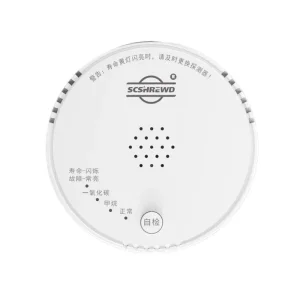
Hardware Setup: SD6101 / SD6103K Series Household Gas Detectors paired with DN15/DN20 Electromagnetic Shut-off Valves.
Value Proposition: Protects property developers and tenants from unattended cooking flameouts or line leaks.
Target Gases: High-volume CH4/LPG supply lines feeding commercial stove manifolds.
Mounting Height: Zone-based fixed point detection near burner banks and gas meter stations.
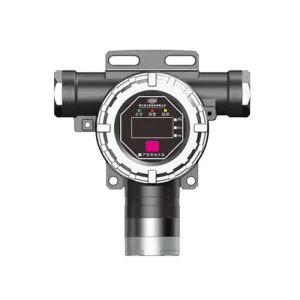
Hardware Setup: GTY-SD2130 or SD2100E Point-Type Industrial Gas Detectors connected to SD8001 Multi-Channel Alarm Controllers and DN50–DN100 Flanged Valves.
Value Proposition: Fully complies with commercial health, safety, and fire code regulations.
Target Gases: Combustible fuels and thermal oil gas trains.
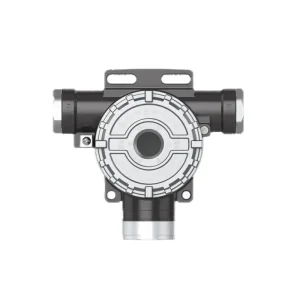
Environment: High wash-down areas requiring IP66 flameproof (Ex d IIC T6 Gb) enclosures.
Hardware Setup: SD2100A Explosion-Proof Detectors integrated directly into facility Supervisory Control and Data Acquisition (SCADA) systems via 4-20mA or RS485 Modbus.
Value Proposition: Prevents catastrophic plant downtime and ensures regulatory compliance.
Target Gases: High-pressure natural gas supply distribution.
Deployment: Mobile field inspection crew patrols and continuous fixed telemetry.
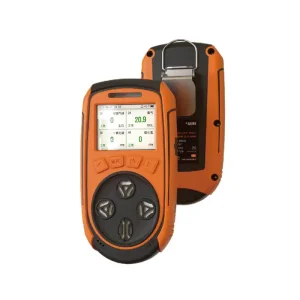
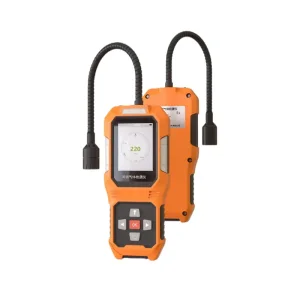
Hardware Setup: BTYQ-Z4 4-in-1 Multi-Gas Detectors and JLY-50A High-Sensitivity Gas Leak Detection Pens.
Value Proposition: Enables rapid pinpointing of hairline fractures in stove fittings and gas meter unions.
Rigorous international compliance and white-label manufacturing services for global gas equipment suppliers.
Navigating global regulatory landscapes requires strict adherence to regional electromechanical and fire safety certifications. Sichuan Shield Technology maintains full compliance protocols across every product classification:
All applicable Shield industrial and residential combustible gas alarms are awarded China's mandatory 3C certification and National Explosion-Proof Electrical Product Quality Supervision verification (Ex d IIC T6 Gb).
Shield operates an ISO9001:2015 certified production line in Shuangliu District, Chengdu. Every gas stove monitor undergoes 100% aging tests, zero-point stability checks, and automated gas chamber sensitivity validation.
Full white-label services available for global gas distributors: silk-screen logo printing, custom enclosure colorways, localized multilingual manuals, custom alarm thresholds (%LEL), and regional radio frequencies.
Pioneering smart gas detection, hydrogen-blend compatibility, and edge AI predictive leak analytics.
As municipal gas grids blend hydrogen into natural gas networks (up to 20% H2), Shield is advancing dual-calibration sensor chips optimized for lightweight hydrogen diffusion dynamics.
Embedded microcontrollers utilize machine learning models to analyze gas rise curves, distinguishing real Methane leaks from cooking seasoning fumes or alcohol sprays with 99.8% precision.
Developing micro-electromechanical systems (MEMS) combustible sensors that cut power consumption by 80%, enabling battery-operated long-life wireless gas stove monitors.
Explore our full range of gas alarm controllers, point-type detectors, handheld inspection pens, and shut-off valves.
Engineering considerations for buyers, system integrators, and safety officers.