Explore our wholesale catalog of point-type, portable, and household safety gas detectors engineered for continuous operational reliability.
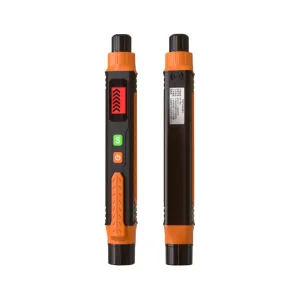
OEM Portable Gas Detector Pen JLY-50A Series - High-Quality Equipment from China Suppliers & Factory Factory, Factories
View Details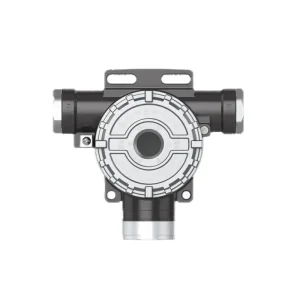
High-Quality China SD2100A Series Industrial and Commercial Gas Detectors - Reliable Suppliers and Factory Quality Solutions Manufacturers, Suppliers
View Details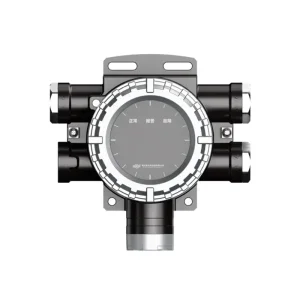
Wholesale Industrial and Commercial Gas Detector SD2130 Series from China Suppliers and Factory for Real-Time Combustible Gas Detection Manufacturer, Manufacturers
View Details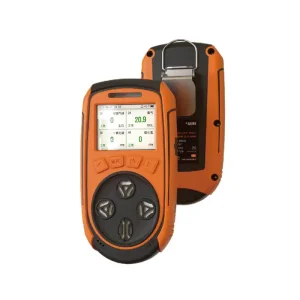
Wholesale China BTYQ-Z4 Series 4 in 1 Portable Gas Detector - Reliable Suppliers & Factory for Industrial Safety Monitoring Manufacturers, Suppliers
View Details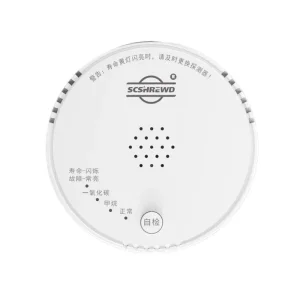
OEM China Household Combustible Gas Detector Shield SD6103K Series - Reliable Safety Solution from Trusted Suppliers and Factory Supplier, Factories
View Details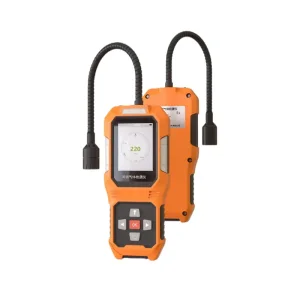
OEM Portable Gas Leak Detector JLY-CP100 Series - China Suppliers & Factory for Industrial Safety Monitoring Manufacturers, Supplier
View Details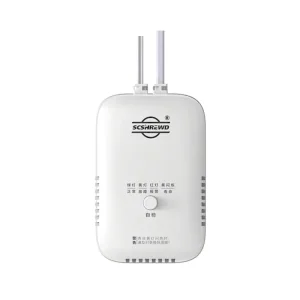
OEM China SD6101 Series Household Combustible Gas Detector - Reliable Safety Solutions from Top Suppliers and Factory Manufacturer, Manufacturers
View Details
Wholesale Portable Gas Detector Pen JLY-50A Series - Reliable China Suppliers and Factory for Industrial Safety Monitoring Manufacturers, Factories
View DetailsA Comprehensive Engineering Guide to Flue Gas Oxygen Measurement, Stoichiometric Combustion Tuning, and Enterprise Procurement Strategies.
In thermal power stations, petrochemical refinery heaters, pulp and paper recovery boilers, and municipal heating plants, combustion efficiency depends on maintaining an optimal Air-to-Fuel Ratio ($\lambda$). Complete combustion requires mixing fossil fuels (natural gas, heavy fuel oil, pulverized coal, biomass) with stoichiometric oxygen. However, real-world burners cannot achieve perfect microscopic mixing; thus, burners operate with a slight amount of "excess air."
If excess air is insufficient ($\lambda < 1.0$), incomplete combustion occurs, leading to elevated carbon monoxide ($\text{CO}$), soot formation, unburned hydrocarbons ($\text{UHC}$), severe explosion hazards, and atmospheric pollution. Conversely, if excess air is excessive ($\lambda \gg 1.15$), the boiler draws in cold ambient air, which heats up and escapes through the stack as sensible heat loss in dry flue gas. This parasitic thermal loss forces forced-draft (FD) and induced-draft (ID) fans to consume unnecessary electrical power while drastically increasing fuel consumption.
Every additional 10% of excess air increases flue gas heat stack loss by approximately 0.5% to 1.0%, directly raising operational expenses (OPEX).
Real-time oxygen monitoring acts as an essential safeguard against fuel-rich trips, burner flameouts, and catastrophic flue duct re-ignition events.
Tight $\text{O}_2$ regulation minimizes thermal $\text{NO}_x$ generation in high-temperature zones while satisfying global Continuous Emission Monitoring System (CEMS) mandates.
When engineering procurement teams, EPC (Engineering, Procurement, and Construction) contractors, and plant utility directors select a **Wholesale Boiler O2 Analyzer Supplier**, procurement decisions extend far beyond initial unit price. The total cost of ownership (TCO) over a 10-year boiler lifecycle involves sensor cell longevity, tolerance to corrosive chemical gases ($\text{SO}_x, \text{HCl}, \text{NO}_x$), speed of response ($T_{90}$), ease of in-situ calibration, and hazardous area compliance.
Evaluating primary gas sensing technology routes for boiler combustion oxygen control applications.
| Technology Route | Primary Operating Principle | Typical Response ($T_{90}$) | Max Flue Temperature | Maintenance & Calibration | Best Suited Application |
|---|---|---|---|---|---|
| In-Situ Zirconia Oxide Probe | High-temperature Nernstian electrochemical cell generating mV potential across concentration gradients. | < 2 seconds | Up to 1400 °C (with ceramic sampling tubes) | Low. Periodic auto-single point air calibration on site. | Direct boiler flue gas oxygen trim, utility power boilers, industrial process heaters. |
| Tunable Diode Laser (TDLS) | Optical absorption spectroscopy measuring narrow-band laser light attenuation along optical path. | < 1 second | Up to 1500 °C | Very low maintenance. No moving parts or consumable sensor element. | Ultra-clean or highly toxic/corrosive industrial stacks, rapid transient burner control. |
| Extractive Paramagnetic | Oxygen molecules attracted into magnetic fields, deflecting glass dumbbell or pressure sensor. | 10 - 30 seconds (sampling delay) | Requires sample gas cooling to ambient (< 50 °C) | Medium to High. Requires complex sample conditioning filters, chillers, and pumps. | Continuous Emissions Monitoring Systems (CEMS) shelter racks, clean laboratory gas analysis. |
| Extractive Electrochemical | Liquid/gel electrolyte cell consuming oxygen at working electrode generating proportional current. | 15 - 45 seconds | Requires ambient temperature sample gas (< 45 °C) | High. Sensor cell depletes over time and requires replacement every 12-24 months. | Portable combustion efficiency diagnostic tools, temporary flue testing pens. |
The solid-electrolyte Zirconia ($\text{ZrO}_2$) element, stabilized with Yttria ($\text{Y}_2\text{O}_3$), acts as an oxygen-ion conductor when heated above 650°C (1202°F). When reference air (20.95% $\text{O}_2$) is supplied to the inner electrode and flue gas bathes the outer electrode, oxygen ions migrate through the crystal lattice. This ion transfer generates an electromotive force (EMF) strictly governed by the **Nernst Equation**:
Because cell voltage increases exponentially as oxygen concentration drops, zirconia cells exhibit maximum sensitivity at very low oxygen levels (0.1% to 3.0% $\text{O}_2$), precisely where fuel-lean stoichiometric combustion control takes place. This inherent physical property makes high-grade zirconia probes the gold standard for global industrial boiler installations.
Customized gas analysis and combustion safeguard architecture tailored to demanding plant environments.
Utility boilers running coal, natural gas, or heavy fuel oil require continuous oxygen measurement at flue economizer outlets to maintain 1.5% to 3.0% $\text{O}_2$ setpoints, cutting megawatt fuel costs dramatically.
Crude oil distillation units, cracking furnaces, and thermal oxidizers demand explosion-proof (ATEX/IECEx Zone 1) certified oxygen transmitters with flame arrestors to prevent ignition in hazardous gas environments.
In process heaters and incinerators handling corrosive vapor streams, oxygen analyzers utilize heated sampling systems or specialized Hastelloy C-276 probe materials to resist acid dew point condensation.
Black liquor recovery boilers and wood-pellet biomass boilers face intense fly ash fouling. Oxygen probes equipped with integrated blowback air purge systems ensure uninterrupted sensing in heavy particulate flows.
Navigating Environmental Mandates, Hydrogen Fuel Transition, and Industry 4.0 Smart Boiler Integration.
Industrial boiler operators globally must strictly comply with regional environmental enforcement standards. In the United States, the Environmental Protection Agency (EPA) enforces **40 CFR Part 60/75** for continuous continuous emission monitoring. In Europe, the **Industrial Emissions Directive (IED 2010/75/EU)** and Large Combustion Plants (LCP) BREF standards mandate strict limits on stack gas losses and harmful emissions. Likewise, China's **GB 13223** and **GB 13271** standards demand stringent NOx and SO2 emission controls for power plant and industrial boilers.
Achieving compliance requires combining high-precision oxygen trim with low-NOx burners (LNB) and flue gas recirculation (FGR) systems. If oxygen levels drift too low, unburned carbon monoxide spikes exponentially, violating emission caps and wasting energy. If oxygen levels are too high, thermal NOx spikes while stack efficiency tanks.
As global thermal generation transitions toward carbon neutrality, industrial boiler oxygen monitoring technology is evolving along three key vectors:
Technical answers to common engineering, procurement, and installation questions regarding boiler oxygen analyzers and safety detectors.
Factory-direct gas detectors, industrial point sensors, and emergency shut-off solutions manufactured for global B2B distribution.
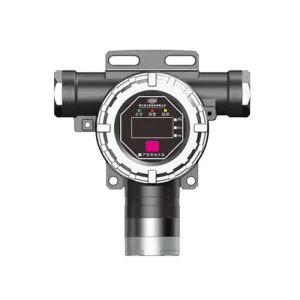
High-Quality China Gas Detector Shield SD2100E Series - Reliable Suppliers & Factory for Industrial Safety Solutions Manufacturer, Suppliers
View Details
OEM Household Combustible Gas Detector SD6200 Series - Reliable Safety Solution from China Suppliers and Factory Manufacturer, Factories
View Details
ODM 4 in 1 Portable Gas Detector BTYQ-Z4 Series - China Suppliers & Factory for Safety Monitoring Solutions Suppliers, Factories
View Details
ODM China SD2100A Industrial and Commercial Gas Detector – Reliable Suppliers and Factory for Safety Solutions Manufacturer, Manufacturers
View Details
ODM Industrial and Commercial Gas Detector Shield SD2100E Series - Reliable China Suppliers and Factory Solutions Supplier, Factory
View Details
OEM China SD6101 Series Household Combustible Gas Detectors - Reliable Safety Solutions from Trusted Suppliers and Factory Manufacturers, Factories
View Details
ODM Industrial and Commercial Gas Detector SD2100A Series - China Suppliers and Factory for Reliable Gas Monitoring Factory, Factories
View Details