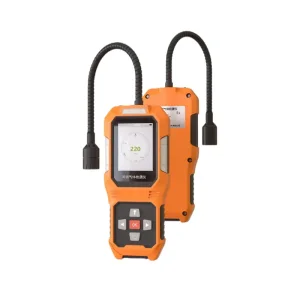
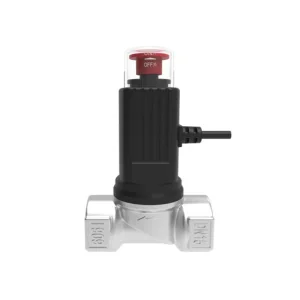
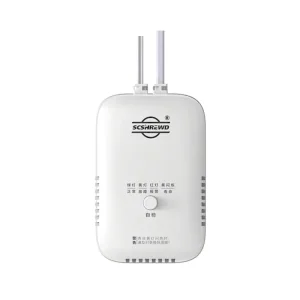
Factory-direct industrial point-type and smart residential gas safety systems certified for immediate deployment.
Macroeconomic drivers, stringent workplace safety mandates, and the shift toward digitalized IoT gas safety management.
The global market for combustible gas detection equipment is experiencing an unprecedented surge, projected to reach over USD 4.8 Billion by 2030 at a CAGR of 6.8%. Key catalyst drivers include international safety mandates such as EN 50194, UL 1484, GB 15322, ATEX Directive 2014/34/EU, and OSHA standard 29 CFR 1910.119. Today's industrial procurement officers require more than standalone detectors—they demand integrated, failure-proof safety ecosystems engineered by direct ODM manufacturing partners with deep technical competence.
Modern industrial gas monitoring is rapidly transitioning from passive alarm units to intelligent, connected IoT Nodes. Modern ODM combustible gas detectors now feature integrated MCU signal conditioning, RS485 Modbus RTU, LoRaWAN, NB-IoT, and wireless Mesh networks. This shift allows central utility control rooms, refinery supervisors, and facility managers to gain real-time visibility into micro-ppm and %LEL gas concentration gradients before catastrophic ignition events occur.
Selecting the optimal sensor architecture based on target gas matrix, environmental poisoning risks, and lifetime operational budget.
| Sensing Mechanism | Target Gases | Response Speed (T90) | Poisoning Susceptibility | Typical Lifespan | Primary Industrial Application |
|---|---|---|---|---|---|
| Catalytic Bead (Pellistor) | CH4, LPG, H2, C3H8, Hydrocarbons | < 10 to 15 seconds | High (Silicones, H2S, Lead) | 3 - 5 Years | Industrial Plants, Boiler Rooms, Refineries |
| NDIR (Infrared Optical) | Methane, Hydrocarbons, CO2 | < 20 seconds | Immune (Zero Poisoning) | 8 - 10+ Years | Offshore Rigs, High H2S Areas, Silo Vaults |
| MEMS Semiconductor | Natural Gas, Methane, LPG | < 5 seconds | Moderate (Volatile Solvents) | 5 - 8 Years | Smart Household Alarms, Compact IoT Devices |
| Electrochemical | Toxic Gases (CO, H2S, O2) | < 30 seconds | Low (Cross-sensitivity risks) | 2 - 3 Years | Personal 4-in-1 Portable Patrol Monitors |
Pellistor sensors utilize a platinum wire coil embedded in a ceramic bead coated with a palladium/platinum catalyst. When combustible gases oxidize exothermically on the active bead, the electrical resistance changes proportionally to the gas concentration in air, delivering pinpoint 0-100% LEL accuracy.
Non-Dispersive Infrared sensors operate via dual-wavelength absorption photometry. Since infrared gas detection relies on narrow-band IR light absorption (e.g., 3.3 µm for C-H bonds), the sensor is completely immune to airborne contaminants like silicone vapors, sulfur compounds, or oxygen deficiency.
Shield ODM detectors integrate on-board thermal microprocessors running dynamic zero-point calibration algorithms. This eliminates false alarms caused by humidity spikes or ambient temperature swings ranging from -40°C to +70°C in harsh working environments.
Customized sensor placement, enclosure IP ratings, and mechanical installation guidelines for targeted global industries.
Gas Matrix: Methane (Natural Gas) or Liquefied Petroleum Gas (LPG/Propane).
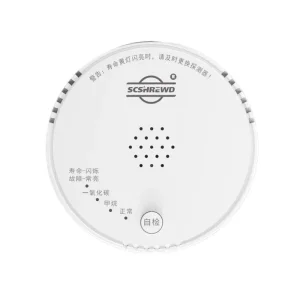
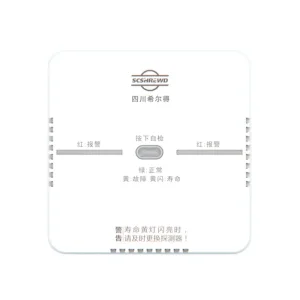
Engineering Rule: Methane is lighter than air (relative density ~0.55); detectors (such as the SD6200 or SD6103K series) must be mounted on walls within 0.3m below the ceiling. For LPG (density ~1.55), sensors are positioned 0.3m above the floor. Units directly trigger an electromagnetic solenoid valve to cut off domestic supply.
Gas Matrix: High humidity, airborne grease, and elevated ambient heat.
Engineering Rule: Detectors installed in commercial dining kitchens require oil-mist mesh covers and IP65 dust/water resistance. System linkages automatically activate roof exhaust blowers while cutting off gas train solenoids simultaneously.
Gas Matrix: Heavy Hydrocarbon Vapors, Pentane, Hexane, Hydrogen Gas.
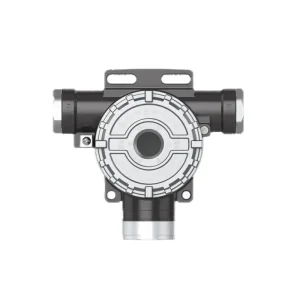
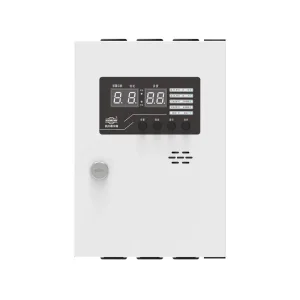
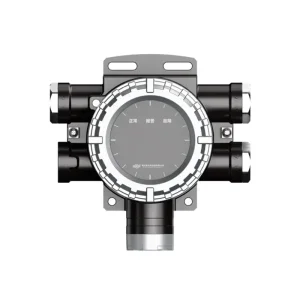
Engineering Rule: Heavy explosion-proof cast aluminum enclosures (Ex d IIC T6 Gb) rated IP66/IP67 are mandatory. Bus-type point detectors (SD2100E series) communicate via 4-wire RS485 back to a control room SD8001A gas controller.
Gas Matrix: Biogas, Methane accumulation, Toxic H2S, Oxygen Depletion.
Engineering Rule: Confined space entry requires portable multi-gas detectors (BTYQ-Z4 4-in-1 series) paired with fixed monitoring units. Displays require high-contrast OLED illumination readable in pitch-black underground vaults.
Gas Matrix: High pressure Natural Gas lines, Blast Furnace Gas, Carbon Monoxide.
Engineering Rule: Dual-channel detection combining %LEL combustible sensors and ppm CO toxic sensors connected directly to emergency shutdown (ESD) circuits.
A closed-loop safety ecosystem engineered by Sichuan Shield Technology Co., Ltd. from gas detection to automatic physical isolation.
High-stability point gas detectors (SD2100A, SD2130, SD6101 series) continuously sampling gas concentrations, providing digital filtering and local visual alarms on site.
Centralized Gas Alarm Controllers (Shield 8001AB / SD8001 series) monitor channel health, log historical fault/alarm events, and interface with plant DCS/SCADA via RS485 Modbus.
High-speed solenoid shut-off valves (JYFJS-011 series) execute instant pulse-off pipeline closure. Physical manual reset ensures gas flow cannot restart until site engineers verify leak mitigation.
From custom PCB schematic development and mold tooling to private labeling and global regional compliance.
As a specialized gas safety technology manufacturer based in Chengdu, China, Sichuan Shield Technology Co., Ltd. provides global B2B clients with comprehensive OEM/ODM customization capabilities:
Every gas detector leaving our facility undergoes rigorous multi-stage quality assurance checks:
Next-generation advancements driving smart energy transition and intelligent industrial monitoring.
Transitioning from single-element detectors to MEMS micro-arrays embedded with machine learning algorithms capable of distinguishing target fuel gases from background interfering solvents like ethanol, cooking fumes, or cleaning agents.
Developing micro-power pulsed NDIR optical chambers that operate continuously for over 10 years on built-in lithium batteries, eliminating complex field wiring in municipal pipe networks.
Integrating 5G and NB-IoT telemetry to upload real-time gas dispersion mapping into cloud-based Digital Twin facility dashboards for automated predictive risk modeling and asset management.
In-depth technical answers curated by Sichuan Shield Technology's senior gas safety engineering team.
%LEL (Lower Explosive Limit) refers to the lowest concentration percentage of a combustible gas in air that can produce a flash of flame in the presence of an ignition source (e.g., Methane LEL is 5.0% VOL, so 100% LEL = 5.0% Methane by volume). PPM (Parts Per Million) is used for measuring trace toxic gas concentrations (1% VOL = 10,000 PPM). %VOL (Percentage by Volume) represents the total volumetric percentage of gas in a given air sample (commonly used for Oxygen monitoring or high-concentration gas pipelines).
A gas detector only emits sound-and-light warnings. If personnel are away from the site during a leak, the gas accumulation will continue. Linking the detector output to an electromagnetic solenoid valve (such as the Shield JYFJS-011 series) ensures the pipeline fuel supply is physically cut off in less than 3 seconds, preventing catastrophic fire or explosion accidents.
Per international standards (including EN 60079-29-2), catalytic gas detectors should undergo routine span calibration every 6 to 12 months using certified standard target gas. In environments with suspected silicone vapors or high sulfur concentrations, calibration intervals should be shortened to quarterly inspections.
Depending on the destination market, key certifications include China 3C (CCC) mandatory certification, ATEX Directive / IECEx for European explosion-proof environments, UL 1484 / UL 2075 for North American residential and commercial projects, and CE EMC compliance. Shield assists OEM/ODM partners in completing required destination testing documentation.
We provide full turn-key ODM customization including housing design, private label branding, firmware communication protocol modification (Modbus, Tuya IoT, Zigbee), customized alarm threshold presets, specialized gas calibration curves, and complete packaging engineering.
Explore our complete safety ecosystem including alarm controllers, emergency valves, and handheld monitors.
Recognized as a high-tech enterprise, specialized "SRDI" (Specialized, Refined, Distinctive, and Innovative) manufacturer based in Chengdu, China. Integrating R&D, production, engineering sales, and field maintenance service for gas detection, explosion-proof instrumentation, and solenoid shut-off valves.
Our product engineering strictly complies with national standard GB 15322, China 3C certification, and international ATEX/IECEx explosion-proof criteria. Partner with us today for direct factory supplier pricing and dedicated OEM engineering support.
Location: 502, Zone 7, Haolang Technology Park, 2666 Airport Road 4, Shuangliu District, Chengdu, Sichuan, China
Direct Line: +86-28-81511655
Technical Support Email: [email protected]
Request Engineering Consultation