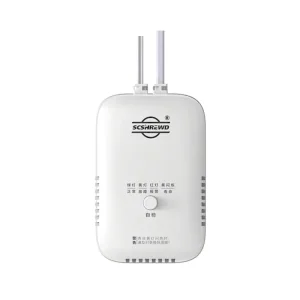
Factory-direct ODM/OEM gas alarm units and solenoid shut-off valves certified for global supply chains.
Analyzing global LPG/Butane hazards, international safety protocols, and advanced manufacturing strategies for scalable safety deployment.
Butane (n-butane and isobutane) is a heavy hydrocarbon gas widely utilized in Liquefied Petroleum Gas (LPG) blends, commercial kitchen fuel, aerosol propellants, and eco-friendly HVAC refrigerants (R600a). Unlike methane (natural gas), which is lighter than air and dissipates upward, butane has a vapour density of 2.05 relative to air. In the event of a micro-leak, butane pools along floors, cable trenches, pit basements, and confined spaces. This creates an invisible, highly flammable vapour cloud with a extremely low Lower Explosive Limit (LEL) of just 1.8% by volume (18,000 ppm).
Sichuan Shield Technology Co., Ltd. addresses these micro-environmental challenges through OEM/ODM turnkey production. By integrating proprietary sensor calibration algorithms, flameproof Ex d IIC T6 enclosures, and rapid solenoid valve interlocks, our factory produces butane detection systems that bridge the gap between low-cost mass residential alarms and ultra-reliable industrial monitoring station networks.
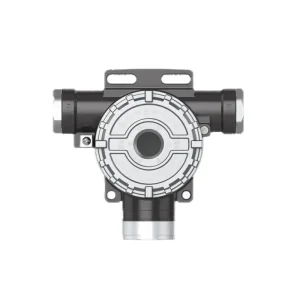
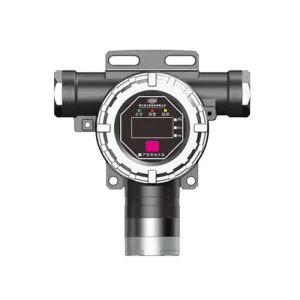
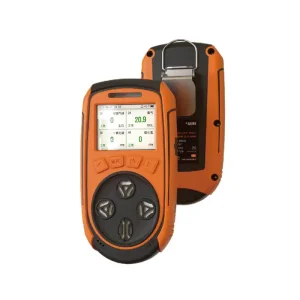
Our ODM explosion-proof point gas detectors (SD2100 series) feature heavy-duty die-cast aluminum enclosures engineered to withstand internal explosions without igniting ambient hazardous atmospheres in Zone 1 and Zone 2 environments.
Factory customisation allows client selection between high-precision Catalytic Bead sensors (cost-effective, rapid LEL response) and NDIR Optical Infrared Sensors (poison-resistant, long lifespan exceeding 10 years, zero-oxygen operation).
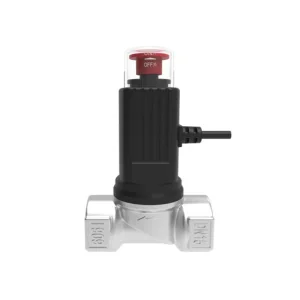
Every detector seamlessly interfaces with Shield’s JYFJS-011 electromagnetic gas shut-off valves. Upon alarm trip (e.g., 15% LEL), the controller fires a 20ms pulse to instantaneously isolate the main gas pipeline.
Market drivers, regulatory mandates, and supply chain strategies driving ODM gas detection manufacturing globally.
Multi-unit restaurant groups and hotel chains mandate centralized combustible gas monitoring. Systems require multi-channel gas alarm controllers (SD8001 series) linked with local audible-visual alarms and emergency cut-off solenoids to satisfy commercial property insurance terms.
Bulk butane storage farm operations require continuous boundary line monitoring. Bus-type point detectors (SD2100E) with RS485 Modbus RTU communication enable daisy-chain cabling across thousands of meters, returning real-time %LEL levels back to SCADA systems.
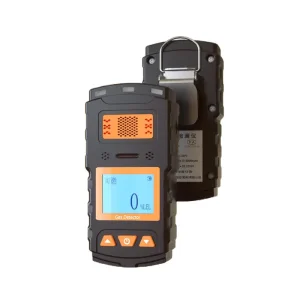
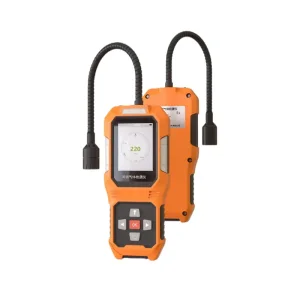
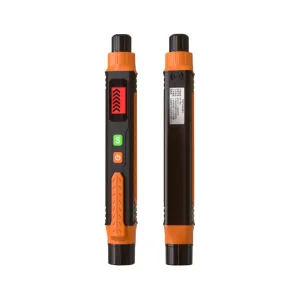
As standard fluorinated refrigerants are phased out globally, R600a (pure isobutane) is now standard in modern refrigeration. Industrial HVAC assembly factories require high-sensitivity portable leak detectors (JLY-CP100 / JLY-50A pen series) to audit charging lines.
Selecting the optimal sensor module is a vital step in the ODM procurement process. Our Chengdu facility builds custom firmware tailored to each physical mechanism:
| Technology Principle | Target Range (% LEL) | Typical Lifespan | Key Advantages | Environmental Sensitivity |
|---|---|---|---|---|
| Catalytic Bead (Pellistor) | 0 - 100% LEL | 3 - 5 Years | Linear response to hydrocarbon gases; excellent cost-efficiency; field-proven reliability. | Susceptible to silicone, lead, and sulfur poisoning; requires >10% O2 to operate. |
| Non-Dispersive Infrared (NDIR) | 0 - 100% LEL or Vol% | 8 - 10+ Years | Immune to chemical poisons; operates in zero-oxygen/inert gas; ultra-stable zero baseline. | Higher initial component cost; impacted by severe optical condensation if non-heated. |
| MEMS Semiconductor | 0 - 25% LEL (PPM level) | 2 - 4 Years | Ultra-compact size; exceptionally low power consumption; ideal for battery portable pens. | Cross-sensitive to humidity, ethanol vapor, and cleaning solvents; non-linear output. |
Understanding how Shield integrated gas controllers, point sensors, and shut-off valves form a failsafe protection loop.
A true commercial gas safety installation must never rely on audible warnings alone. Humans may be absent, or ambient workplace noise may drown out alarms. Shield’s engineering framework mandates three synchronized layers:
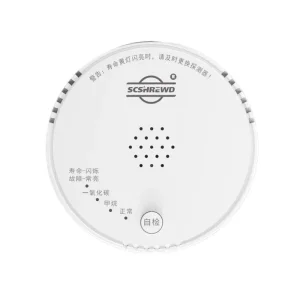
Household detectors (SD6200 / SD6103K) or explosion-proof point detectors (SD2130 / SD2100A) continuously sample ambient air. Integrated microcontrollers process digital sensor signals, applying drift compensation for ambient temperature changes.
Field signals stream to central Gas Alarm Controllers (SD8001A / SD8001B) via 4-20mA or RS485 Bus lines. The controller continuously checks pre-set thresholds (e.g., Low Alarm at 15% LEL, High Alarm at 30% LEL), managing fault diagnostic loops.
Upon reaching high-alarm limits, the controller triggers a high-current pulse to the electromagnetic shut-off valve (JYFJS-011 series). The valve trips closed in under 1 second. Crucially, the valve features a manual reset stem—preventing dangerous automatic gas restoration before a technician inspects the piping.
Empowering global gas safety brands, utility distributors, and engineering contractors with flexible factory customization.
Custom plastic injection molding for residential desktop/wall-mount units, private-label branding, customized LCD/LED interface layouts, color choices, and custom packaging artwork produced to client specifications.
Tailored alarm thresholds (e.g., custom set points for regional gas codes), localized multi-language LCD text display, wireless IoT integration (Tuya Wi-Fi, Zigbee, NB-IoT, LoRaWAN), and custom Modbus register mapping.
Every detector unit off our Chengdu assembly line undergoes multi-point standard gas calibration inside automated temperature chambers, ensuring batch-to-batch repeatability and zero out-of-box calibration drift.
High-speed Surface Mount Technology lines assemble lead-free PCBs using industrial-grade microcontrollers.
Raw gas sensor elements undergo 72+ hours of powered burn-in to stabilize chemical and electrical properties.
Units are injected with target standard reference gases (N2 baseline, Butane 10% LEL, 25% LEL) to write digital curve coefficients.
Thermal cycling testing from -20°C to +55°C ensures stable baseline readings across changing climate zones.
Functional high-voltage and low-voltage pulse testing verifies 100% successful trip signals to solenoid shut-off valves.
Outgoing Quality Control verifies batch labels, customized packaging, manual sheets, and certificate serial numbers.
Deployment rules engineered to optimize physical gas capture based on liquid gas fluid dynamics.
Mounting Height: Within 0.3 meters above the floor level.
Distance from Stove: 1.0m to 2.0m lateral distance from the gas burner or cylinder location.
Engineering Reason: Butane escaping from cylinder valves or stove connections sinks quickly to floor level. Ceiling mounting will fail to detect dangerous concentrations until the room is filled with flammable gas.
Mounting Height: 0.2m to 0.5m above lowest floor point / pit ground.
Protection Radius: 3.5m to 7.5m radius per point detector depending on airflow velocity.
Engineering Reason: In storage sheds, butane pools in floor corners. Detectors must feature IP65 splash resistance and Ex d flameproof rating to prevent moisture or dust ingress from washing activities.
System Config: Multi-point bus network with central display panel at security station.
Interlock Mechanism: Master shut-off valve installed outside the building entrance on main gas riser.
Engineering Reason: Fast localized shut-off prevents pipeline fire spread into main building infrastructure while sending alarm events to facility management systems.
Previewing upcoming advancements in smart gas sensing, AI diagnostics, and zero-power IoT monitoring.
Next-gen ODM firmware incorporates machine learning logic to distinguish between rapid true gas leaks and slow sensor background drift or transient ethanol exposure (cooking wine false alarms), reducing nuisance alarms by over 90%.
Innovations in MEMS micro-hotplate substrates enable battery-powered continuous butane monitoring detectors operating up to 5 years on a lithium battery pack, eliminating hardwired 220V installation requirements in older buildings.
Native MQTT / NB-IoT protocol integration allows municipal gas utility companies to aggregate thousands of distributed household gas alarm states into a unified digital twin emergency management dashboard.
Expert insights on gas detection physics, regulatory standards, calibration, and ordering procedures.
Explore additional models from our comprehensive catalog of gas alarms, controllers, and valve hardware.