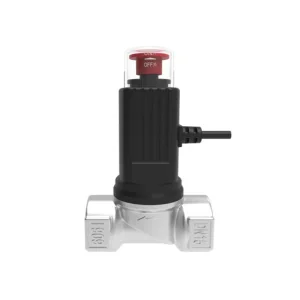
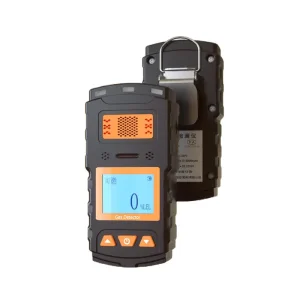
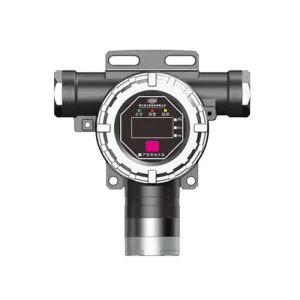
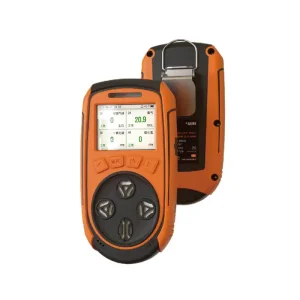
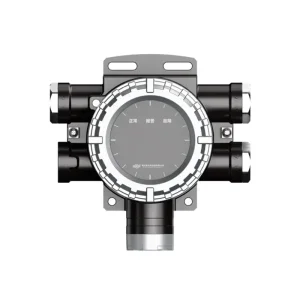
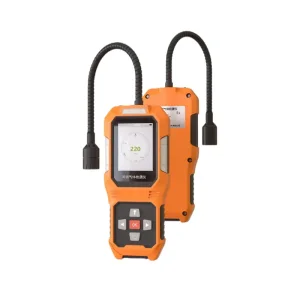
Explore our core industrial point-type detectors, intelligent alarm controllers, and safety valves engineered for maximum site protection.
Carbon monoxide (CO) remains one of the most insidious chemical hazards across modern industrial environments. Often termed the "Silent Killer," toxic CO gas is completely colorless, odorless, and tasteless, making human perception impossible without highly accurate, real-time electronic gas detection instrumentation. In industrial settings, carbon monoxide is primarily generated through incomplete combustion of carbon-based fuels, toxic chemical reactions, gasification processes, and metallurgical operations.
Globally, strict regulatory mandates enforced by international bodies—such as OSHA (Occupational Safety and Health Administration) in North America, EU-OSHA and EN 50545-1 standards across Europe, and GB standards in Asia-Pacific—have shifted industrial safety management from reactive emergency response to proactive, real-time risk mitigation. Standard occupational exposure limits strictly mandate action levels:
50 ppm averaged over an 8-hour work shift (TWA - Time Weighted Average). Exposure above this threshold triggers mandatory structural ventilation or worker evacuation.
25 ppm limit over an 8-hour shift, with a ceiling limit of 200 ppm. Designed to eliminate subtle cognitive decline and acute cardiopulmonary distress among operators.
100 ppm – 400 ppm requiring immediate automated audible/visual alarms and interlocked solenoid valve closures to prevent irreversible biological toxicity.
Information Gain Insight: Modern industrial safety standards demand that Carbon Monoxide detectors do not operate in isolation. Modern industrial safety architecture requires seamless integration between point-type CO detectors, central multi-channel controllers, local supervisory SCADA systems, and fast-acting emergency gas shut-off valves (such as the JYFJS-011 series).
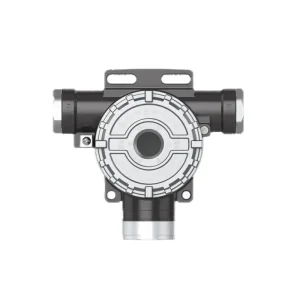
As a leading China manufacturer and supplier, Sichuan Shield Technology designs point-type industrial carbon monoxide detectors (such as the SD2100A and SD2100E series) and portable multi-gas units engineered for harsh industrial environments. Selecting the correct sensor chemistry and transmission protocol is essential to achieving long term reliability without false alarms.
| Sensing Parameter | Electrochemical Sensing (Industrial Standard) | NDIR / Optical Infrared Sensing | Catalytic Bead (Combustible Focus) |
|---|---|---|---|
| Primary Target Gas | Toxic Carbon Monoxide (CO), H2S, Toxic Gases | Carbon Dioxide (CO2), Hydrocarbons | Methane, LPG, Combustible %LEL Gases |
| Measurement Units | PPM (Parts Per Million) — High Precision | PPM or % VOL | % LEL (Lower Explosive Limit) |
| Response Time (T90) | < 15 – 30 Seconds (Ultra Fast) | < 30 – 45 Seconds | < 20 – 30 Seconds |
| Cross-Sensitivity | Low (Filtered against H2 with dual-electrode) | Immune to chemical poisoning | High risk of silicon/sulfur poisoning |
| Lifespan & Calibration | 3 – 5 Years (Annual Calibration) | 5 – 7 Years (Low Drift) | 2 – 3 Years |
Our industrial point-type detectors utilize high-stability, micro-electro-mechanical electrochemical sensor cells. When carbon monoxide molecules diffuse through the porous membrane of the sensor, an oxidation reaction occurs at the working electrode:
CO + H2O → CO2 + 2H+ + 2e-
This reaction generates an electrical current proportional to the precise concentration of CO in parts per million (PPM). Our embedded microprocessors process this signal via advanced AI temperature-compensation algorithms, eliminating environmental thermal drift across extreme operating conditions from -40°C to +70°C.
Global B2B buyers, EPC contractors, and fire safety equipment importers increasingly rely on OEM/ODM partners in China for their industrial gas detection requirements. Sichuan Shield Technology’s state-of-the-art facility in Chengdu delivers exceptional manufacturing capabilities:
By controlling sensor testing, PCB surface-mount technology (SMT), explosion-proof casting design (Ex d IIC T6), and final assembly under one roof, we eliminate intermediate markup while guaranteeing strict component traceability and rapid lead times.
Every single industrial CO detector and portable alarm unit undergoes rigorous gas response testing inside computer-controlled environmental calibration wind tunnels, ensuring zero false-positive drift and compliance with international standards before shipment.
Holding China’s mandatory 3C certification alongside over 40 technical patents, Shield provides complete engineering documentation, CE compliance support, and custom OEM branding programs for global gas safety distributors.
With over 80 marketable gas detection and valve models, our production lines easily scale from small batch custom engineering orders to continuous high-volume supply for municipal gas transformation and property development projects.
Industrial carbon monoxide hazards vary significantly depending on the operational environment. Implementing targeted gas safety hardware ensures maximum protection and regulatory compliance across diverse sectors:
Primary Hazard: High-concentration toxic CO gas generated during blast furnace smelting and coal gasification processes.
System Deployment: Explosion-proof point-type CO detectors (GTYQ-SD2100A series) with RS485 Modbus communication linked to central control room displays.
Primary Hazard: Flue gas back-drafting and incomplete natural gas/coal combustion releasing deadly CO into mechanical spaces.
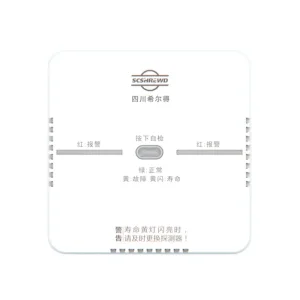
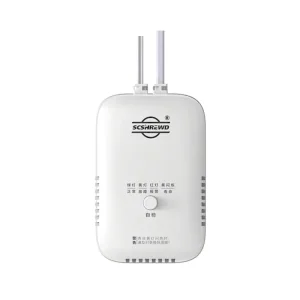
System Deployment: Bus-type point detectors paired with aluminum alloy electromagnetic shut-off valves (JYFJS-011) to cut gas supply instantly upon alarm.
Primary Hazard: Vehicle exhaust accumulation in enclosed parking complexes causing high CO concentration build-up.
System Deployment: Commercial CO monitoring stations integrated with fresh-air HVAC exhaust fans to maintain air safety while conserving energy.
When procuring industrial carbon monoxide detectors for international EPC engineering tenders or multi-site industrial replacement programs, procurement directors must evaluate critical hardware parameters:
The industrial safety industry is rapidly evolving toward intelligent IoT ecosystem integration. Future-proof gas safety architecture relies on several technological advancements:
Wireless bus detectors equipped with LoRaWAN, NB-IoT, or 4G telemetry upload continuous concentration trends to cloud dashboards, empowering remote safety managers to detect trace gas micro-leaks before catastrophic incidents occur.
AI-driven diagnostic algorithms constantly monitor sensor cell electrolyte resistance and signal-to-noise ratios, alerting technicians automatically when a sensor module requires recalibration or replacement.
Hot-swappable pre-calibrated sensor cartridges dramatically reduce field maintenance costs, allowing operators to complete sensor changeouts in minutes without re-wiring or bench calibration.
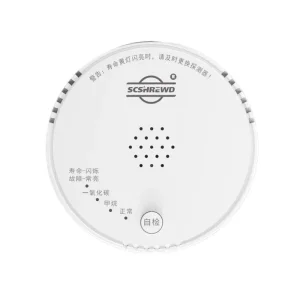
Complete your site safety architecture with our range of portable multi-gas detectors, 4-in-1 inspection units, and stand-alone alarms.
Clear, engineering-backed answers to the most common questions asked by B2B buyers, facility engineers, and system integrators: