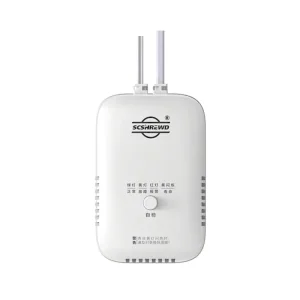
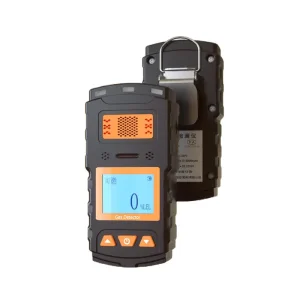
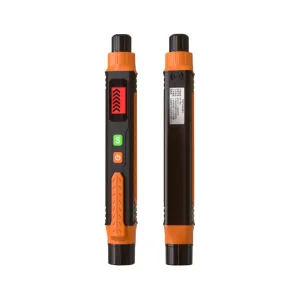
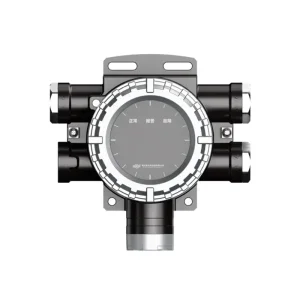
Explore our factory-direct range of fixed, portable, and household gas detection systems engineered for extreme chemical environments and regulatory compliance.
An authoritative guide for EHS directors, plant engineers, procurement managers, and system integrators seeking zero-defect n-Hexane vapor monitoring systems.
Information Gain Key Insight: n-Hexane (C₆H₁₄) presents a dual risk profile: extreme combustibility at higher concentrations (Lower Explosive Limit of 1.1% v/v) and severe neurotoxicity at sub-explosion exposure levels (OSHA PEL of 50 ppm). Standard combustible gas detectors calibrated against Methane or Propane often fail to respond accurately to Hexane due to significant molecular response factor discrepancies. Precision sensor selection and cross-sensitivity calibration are critical for human life safety and plant asset preservation.
n-Hexane is a straight-chain alkane widely utilized as an industrial solvent in vegetable oil extraction (soybean, canola, sunflower), adhesive formulation (footwear, leathercraft), pharmaceutical crystallization, and semiconductor degreasing. Due to its volatile nature (boiling point ~69°C / 156.2°F), it rapidly vaporizes at room temperature, creating insidious risk profiles in industrial environments.
With a molecular vapor density of approximately 2.97 (Air = 1.0), evaporated Hexane does not disperse upward into ambient atmosphere. Instead, it sinks rapidly to floor levels, collecting in cable trenches, drainage sumps, elevator pits, and unventilated low-lying machinery zones. Fixed detectors placed at human breathing height (1.5m) will frequently fail to detect initial leaks, allowing dangerous lower explosive limits to accumulate undetected at ground level.
n-Hexane possesses a flash point of -22°C (-7.6°F) and an extremely low explosive limit threshold. The 100% LEL corresponds to just 11,000 ppm (1.1% volume in air). A minor spark from non-explosion-proof electrical switchgear, static discharge from synthetic clothing, or localized friction heat can trigger catastrophic deflagration across solvent recovery areas.
Beyond explosion prevention, Hexane presents severe chronic neurotoxicity. Metabolized in the human liver to 2,5-hexanedione, prolonged exposure damages peripheral nerves, causing sensorimotor neuropathy. Occupational exposure limits strictly mandate 8-hour Time-Weighted Averages (TWA) between 50 ppm (OSHA PEL) and 20 ppm (ACGIH TLV), requiring trace ppm detection systems alongside %LEL safety loops.
Achieving reliable Hexane detection demands matching the exact sensing principle to the physical environment. Using an incorrect sensor type results in frequent false alarms, premature sensor poisoning, or catastrophic failure during inert gas purge cycles.
| Evaluation Parameter | NDIR (Non-Dispersive Infrared) | Pellistor / Catalytic Bead | PID (Photoionization Detector) |
|---|---|---|---|
| Primary Target Range | 0–100% LEL (Combustible safety) | 0–100% LEL (Combustible safety) | 0–1000 PPM (Toxic health screening) |
| Oxygen Requirement | Zero required (Operates in inert N₂ purges) | Requires minimum 10–12% O₂ to combust | Zero required |
| Poisoning Risk | Immune to Silicones, Lead, H₂S, Halogens | High vulnerability to silicone vapors/siloxanes | Lamp fouling from heavy organic condensation |
| Response Time (T90) | Fast (< 15 seconds with optical chamber) | Moderate (20–30 seconds) | Ultra-fast (< 5 seconds) |
| Operating Lifespan | 8 to 10+ Years (Dual-beam LED/IR source) | 2 to 3 Years (Filament degradation) | 3 to 5 Years (UV lamp replacement ~1yr) |
| Calibration Stability | Exceptional (Minimal zero-drift over years) | Requires quarterly span calibration | Requires frequent zero/span alignment |
Hexane molecules contain rich carbon-hydrogen (C-H) bonds that strongly absorb infrared light at the 3.4 μm spectrum. NDIR detectors measure optical absorption directly without chemical reaction. Because industrial solvent processes often purge lines with Nitrogen (O₂ deficient environment) or contain silicone release agents, NDIR sensors guarantee continuous protection where Catalytic Pellistors fail completely due to oxygen starvation or filament poisoning.
n-Hexane has an ionization potential (IP) of 10.13 eV. A 10.6 eV krypton UV lamp inside a PID sensor easily ionizes Hexane molecules, allowing real-time monitoring down to 0.1 ppm resolution. This makes PID technology the preferred choice for industrial hygienists conducting perimeter fenceline leak detection or plant floor personal protection in shoe adhesives manufacturing.
Deploying gas safety systems globally requires strict adherence to localized hazardous area certifications and safety loop functional safety performance. As an engineering-driven manufacturer, Shield integrates multi-regional regulatory compliance into every transmitter and sensor housing design.
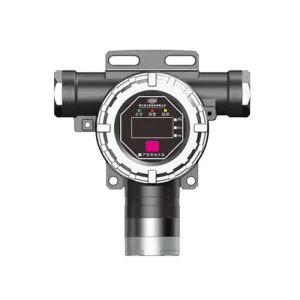
Our fixed industrial Hexane detectors are housed in heavy-duty die-cast aluminum or 316 stainless steel enclosures certified for Ex d IIC T6 Gb (ATEX Zone 1 & Zone 2). Flame arrestors engineered from sintered stainless steel prevent internal ignition propagation to external explosive vapor atmospheres.
For critical solvent extraction plants, gas detection systems must interface with Safety Instrumented Systems (SIS). Shield controllers and transmitters feature dual-redundant dry contact relays rated for SIL-2 compliance, capable of automatically triggering emergency isolation valves (ESD) and explosion-proof ventilation blowers within milliseconds of alarm activation.
Products are engineered to satisfy UL 2075 / Class I, Div 1, Groups B, C, D requirement criteria alongside China's mandatory CCCF / GB 15322.1-2019 fire safety standards. Every unit undergo strict 3C certified factory calibration routines before international export shipping.
Operating out of Chengdu’s high-tech industrial manufacturing ecosystem, Sichuan Shield Technology Co., Ltd. offers global buyers an unbeatable combination of deep technical integration, rapid manufacturing scalability, and rigorous quality assurance.
From sensor optical path design and firmware algorithm development to automated Surface Mount Technology (SMT) PCB assembly, we control 100% of the manufacturing pipeline. This eliminates reliance on third-party design houses, allowing rapid custom OEM sensor recalibrations for complex solvent mixtures.
Every Hexane detector produced in our facility undergoes automated multi-point temperature testing (-40°C to +70°C) and humified gas span calibration. Precision mass flow controllers (MFC) introduce certified n-Hexane test gases to verify response time (T90), zero stability, and alarm relay actuation performance.
We empower international distributors and EPC engineering contractors with flexible OEM/ODM options: custom enclosure branding, custom MODBUS RTU register mapping, specialized relay logic, pre-configured cable gland threads (NPT 3/4", M20x1.5), and multi-language software menu interfaces.
Precision safety engineering requires tailoring detector placement, sample extraction methods, and controller linkages to specific industrial solvent workflows.
In soybean, rapeseed, and rice bran oil processing plants, seed flakes are washed with commercial Hexane to dissolve fats. Extraction towers, desolventizer-toasters (DTDC), and distillation units operate under high thermal and solvent vapor stress. Recommended Setup: Fixed NDIR explosion-proof transmitters installed 0.3 meters above floor grade, linked via 4-20mA to a centralized 32-channel controller supervising automated shut-off solenoid valves.
Active Pharmaceutical Ingredient (API) reactors use Hexane for fractional crystallization. Vacuum pump exhausts and solvent recovery condenser units present potential fugitive emission points. Recommended Setup: Sample-draw pump-suction gas monitoring systems with hydrophobic inline filters to prevent solvent condensation from damaging internal optical sensing elements.
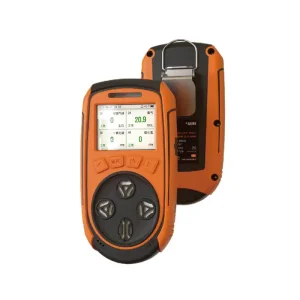
Manual application of Hexane-based quick-drying glues exposes assembly workers to chronic low-level vapor inhalation. Recommended Setup: Wall-mounted PID ppm trace detectors set at breathing level (1.5m) to continuously monitor workplace 8-hour TWA exposure limits, combined with lightweight 4-in-1 personal diffusion detectors (BTYQ-Z4 Series) worn by line operators.
When selecting a factory supplier for large-scale industrial projects, engineering procurement managers must evaluate suppliers against rigorous technical, operational, and financial parameters.
| Evaluation Criteria | Shield Factory Standard | Common Market Competitor Standard |
|---|---|---|
| Sensor Calibration Traceability | Certified NIST/CNAS traceable standard Hexane gas balance | Generic Propane surrogate calibration without response factor conversion |
| Ingress Protection Rating | IP66 / IP67 heavy-duty die-cast weatherproof housing | Basic IP65 plastic or low-grade metal housing |
| Signal Output Options | Simultaneous 4-20mA, RS485 Modbus RTU, and Dual 5A Relays | Single 4-20mA output only; relays cost extra |
| Warranty & Support | 24-Month direct factory warranty with lifetime technical support | 12-Month limited vendor warranty |
| Lead Time (Custom OEM) | 7 to 14 days standard shipping lead time | 6 to 10 weeks import agent lead time |
The industrial gas safety market is rapidly evolving beyond isolated alarm devices. Next-generation facilities require intelligent, interconnected sensor infrastructures that eliminate unmonitored blind spots and reduce routine maintenance overhead.
Retrofitting complex solvent refineries with hardwired signal conduits can exceed the cost of the hardware itself. Shield’s wireless gas monitoring nodes utilize LoRaWAN and NB-IoT communication protocols, offering battery-powered operations for up to 3 years in ATEX Zone 1 remote tank farm locations.
Embedded microprocessor algorithms continuously track ambient temperature, relative humidity, and sensor background noise. By dynamically adjusting zero-baseline drift, false alarm rates are reduced by 98.4%, while automated health diagnostics alert maintenance teams prior to optical chamber degradation.
Enterprise clients managing multi-facility international operations can unify telemetry data through Shield Cloud IoT platforms. Real-time gas concentrations, historical event logs, and calibration records can be accessed globally via encrypted REST APIs or SCADA system integrations.
Answers to complex real-world engineering questions encountered by procurement managers, safety consultants, and plant operators.
Because n-Hexane vapor has a relative density of 2.97 (nearly three times heavier than air), leaked vapors sink immediately toward the ground. Fixed detectors should be mounted 0.3 to 0.5 meters (12 to 20 inches) above the floor level, in close proximity to potential leak sources such as pumps, valves, extraction vessel flanges, and solvent recovery lines. Never install Hexane detectors near the ceiling unless high thermal convection currents are proven to draw vapors upward.
While cross-sensitivity calibration using a surrogate gas like Propane is possible via mathematical Relative Response Factors (RRF), direct calibration using certified n-Hexane balance air gas mixtures is strongly recommended for highest accuracy. If Propane must be used due to site availability, the detector's microprocessor must be configured with the specific optical/catalytic response factor multiplier (typically 1.4x to 1.8x depending on sensor design) to prevent dangerous under-reporting of true Hexane concentrations.
Vegetable oil extraction plants frequently process solvent vapors in oxygen-depleted process lines during nitrogen purging operations. Catalytic bead sensors require at least 10% oxygen by volume to function, making them totally blind in inert nitrogen atmospheres. Furthermore, solvent processing environments often contain trace siloxanes or organosilicon compounds used in anti-foaming agents, which permanently poison catalytic filaments. NDIR (infrared) sensors require zero oxygen to operate and are 100% immune to silicone poisoning.
%LEL (Lower Explosive Limit) measures explosion risk. 100% LEL for Hexane equals 11,000 ppm (1.1% v/v). Fixed safety alarms are typically set at 20% LEL (2,200 ppm) for Low Alarm and 40% LEL (4,400 ppm) for High Alarm. PPM (Parts Per Million) measures occupational toxic health exposure. OSHA limits worker exposure to 50 ppm TWA. If your safety objective is worker toxicity protection, use a high-sensitivity PID sensor (0-100 ppm). If your objective is plant fire/explosion protection, use an NDIR %LEL detector.
For NDIR-based fixed transmitters (such as our SD2100E and SD2130 series), zero stability is exceptionally high; field bump testing is recommended every 6 to 12 months, with full span calibration annually. For catalytic bead or portable PID units, quarterly calibration (every 90 days) is advised due to baseline drift and potential sensor window fouling in heavy organic solvent environments.
Yes. Sichuan Shield Technology Co., Ltd. provides full OEM/ODM services for overseas distributors and safety system integrators. This includes custom metal housing powder coating, custom laser-etched stainless steel nameplates, tailored software start-up screens, custom MODBUS RTU register maps, and dedicated packaging designs with low minimum order quantity (MOQ) requirements.
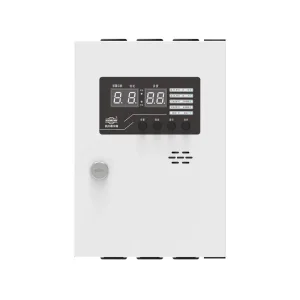
When a fixed Hexane detector senses gas concentration exceeding the pre-set low or high alarm threshold, it transmits a 4-20mA or RS485 signal to the centralized Gas Alarm Controller (such as the Shield 8001AB Series). The controller instantly actuates onboard heavy-duty 5A dry-contact relay switches, interrupting the power circuit to an electromagnetic solenoid shut-off valve installed on the solvent supply pipe, automatically isolating gas flow before ignition can occur.
Complete your facility safety architecture with our factory-direct industrial alarm controllers, explosion-proof point-type detectors, and portable multi-gas devices.