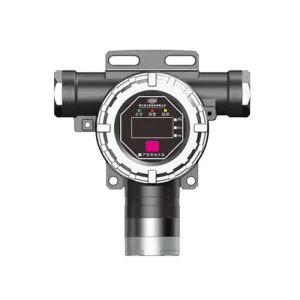
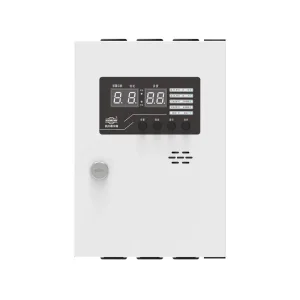
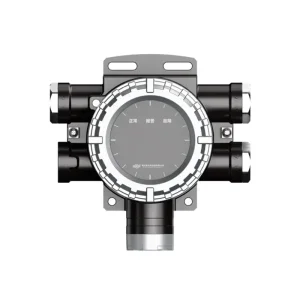
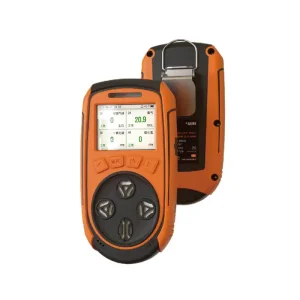
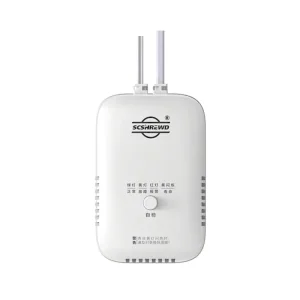
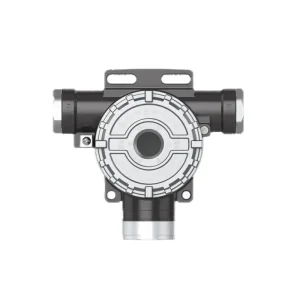
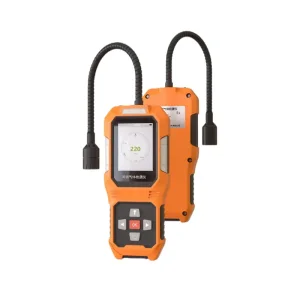
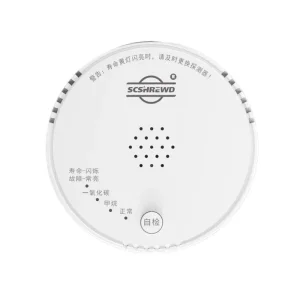
Explore our flagship gas detectors, alarm controllers, and safety valves engineered in our state-of-the-art manufacturing facility.
Understanding low-PPM detection physics, electrochemical cross-sensitivity mitigation, and environmental sample conditioning.
Chlorine Dioxide (ClO₂) is a powerful oxidizing biocide widely utilized in municipal water purification, food processing sanitization, pharmaceutical cleanroom decontamination, and paper pulp bleaching. Unlike chlorine gas, chlorine dioxide does not hydrolyze to form chlorinated organic compounds, making it the preferred chemical disinfectant globally. However, ClO₂ is exceptionally toxic and unstable—it cannot be compressed or transported in high-pressure cylinders, requiring on-site generation via precursor reactions (such as sodium chlorite and hydrochloric acid).
Because gaseous ClO₂ presents severe health hazards at extremely low concentrations—with an OSHA Permissible Exposure Limit (PEL) of 0.1 ppm (0.28 mg/m³) over an 8-hour Time-Weighted Average (TWA) and an ACGIH Short-Term Exposure Limit (STEL) of 0.3 ppm—industrial facilities demand fixed and portable Chlorine Dioxide Detectors capable of ppb-level sensitivity and ultra-fast response times.
Modern high-precision ClO₂ detection relies on specialized three-electrode micro-electrochemical sensors. Chlorine dioxide gas diffuses through a hydrophobic porous membrane into the working electrode (sensing electrode), undergoing an electrochemical reduction reaction:
ClO₂ + 4H⁺ + 5e⁻ → Cl⁻ + 2H₂O
The resulting electrical current is directly proportional to the partial pressure of ClO₂ in the ambient atmosphere. However, high-quality manufacturing facilities must account for cross-sensitivity matrix interferences. In environments where Chlorine (Cl₂), Ozone (O₃), Hydrogen Peroxide (H₂O₂), or Nitrogen Dioxide (NO₂) exist, conventional sensors experience measurement drift or false alarms. OEM factories address this through gold-plated catalyst electrodes, selective diffusion barriers, and onboard microprocessors running adaptive firmware compensation algorithms.
| Sensing Technology | Detection Range | Response Time (T90) | Cross-Sensitivity Profile | Optimal Industrial Application |
|---|---|---|---|---|
| 3-Electrode Electrochemical | 0 - 1.0 / 0 - 5.0 PPM | < 15 seconds | Low (with selective filters) | Pharmaceutical cleanrooms, Water treatment dosing rooms |
| Solid-State Semiconductor | 0 - 50 PPM | < 30 seconds | Moderate to High | Perimeter leak detection in heavy chemical storage |
| Optical Spectroscopic (UV/IR) | 0 - 100 PPM / % Vol | < 5 seconds | Zero cross-sensitivity | High-concentration ClO₂ generator process lines |
How localized manufacturing ecosystems deliver high-precision safety instrumentation with rapid scalability and cost transparency.
Direct access to world-class SMT assembly lines, die-cast aluminum explosion-proof enclosures, and precision MEMS sensor foundries allows our factory to drastically reduce lead times while maintaining strict cost control.
Every Chlorine Dioxide detector undergoes multi-point target gas calibration in computerized environment chambers. We verify zero stability, span concentration accuracy, and thermal compensation across -40°C to +70°C.
From custom enclosure color schemes and laser-etched branding to proprietary Modbus register mapping and customized firmware alarm logic, our engineering team provides turnkey OEM/ODM production runs.
Global procurement teams often face trade-offs between high unit pricing from Western instrument vendors and unverified quality from unaccredited suppliers. Sichuan Shield Technology bridges this gap by combining 18+ years of dedicated gas safety R&D with China's unrivaled industrial infrastructure. Operating out of specialized technology parks in Chengdu, our facility houses surface-mount technology (SMT) lines, environmental stress screening (ESS) stations, and automated test benches capable of producing over 500,000 detection units annually.
Seamless interoperability with Distributed Control Systems (DCS), Supervisory Control and Data Acquisition (SCADA), and emergency shut-off valves.
For international Engineering, Procurement, and Construction (EPC) contractors and plant safety officers, selecting a Chlorine Dioxide Detector Factory involves scrutinizing system connectivity and protocol compliance. Field devices must seamlessly relay low-level gas readings to control room panels without signal attenuation or latency.
Heavy-duty aluminum alloy or 316 stainless steel enclosures certified Ex d IIC T6 Gb, built to withstand internal explosions without igniting hazardous surrounding atmospheres.
Integrated vacuum suction pumps designed for duct extraction or enclosed tank monitoring where passive natural diffusion cannot reach the target sampling zone.
Infrared magnetic wand interface allowing site technicians to perform zero adjustments, span calibration, and threshold settings without opening the explosion-proof cover.
How smart sensors, predictive maintenance algorithms, and robust materials are shaping the next generation of gas detection.
Hot-swappable intelligent sensor modules store factory calibration parameters, serial numbers, and life span diagnostics on an onboard EEPROM chip. Maintenance personnel can replace depleted ClO₂ cells in seconds without field gas calibration.
Advanced AI firmware algorithms continuously monitor internal electrolyte impedance. The system alerts control room operators before sensor drying or sensitivity degradation leads to total failure, preventing unmonitored blind spots.
Chlorine dioxide is a violent oxidizer that degrades standard plastics and rubbers. Modern factories utilize specialized PTFE (Teflon) sensor caps, Viton seals, and passivated 316L stainless steel bodies to ensure zero chemical corrosion over years of exposure.
Tailored gas safety configurations across municipal water treatment, pharmaceutical sterilization, and industrial processing.
Challenge: ClO₂ generators produce concentrated disinfectant gas. Leaks in dosing rooms, chemical storage vaults, or pump stations pose immediate health threats to municipal utility workers.
Deployment: Wall-mounted point-type ClO₂ detectors with 0-1.0 ppm range installed 30 cm above the floor (ClO₂ is heavier than air) linked directly to emergency intake ventilation systems and automated shut-off solenoid valves.
Challenge: High-concentration gaseous ClO₂ (up to 30 ppm) is used for bio-decontamination of isolators and cleanrooms. Post-fumigation safety clearance requires verifying that ambient levels fall below 0.1 ppm before human entry.
Deployment: Dual-range sample-draw detectors operating alongside Portable Multi-Gas Monitors for rapid worker validation.
Challenge: Aqueous ClO₂ wash solutions used in fruit, vegetable, and poultry washing off-gas toxic vapors into indoor processing rooms with high relative humidity (up to 98% RH).
Deployment: Waterproof IP67-rated electrochemical detectors fitted with specialized hydrophobic splash guards and heated sensor manifolds to prevent moisture condensation on sensor membranes.
Ensuring your gas detection systems comply with regional standards and receive full technical backing worldwide.
Purchasing gas safety equipment requires strict adherence to international safety directives and local codes. As a high-tech specialized enterprise, Sichuan Shield Technology operates under stringent quality management frameworks including ISO9001:2015 (Quality), ISO14001:2015 (Environmental), and ISO45001:2018 (Occupational Health & Safety).
Our industrial and commercial point-type gas detectors and alarm controllers carry mandatory safety approvals:
To support our network of international distributors and EPC customers, our engineering department provides comprehensive technical transfer services:
Select from our extensive line of point-type detectors, portable leak locators, and residential safety monitors.
Detailed answers to complex procurement, calibration, and engineering questions answered by senior safety instrumentation specialists.