A Household Gas Leak Detector can provide an early warning when natural gas or liquefied petroleum gas escapes indoors. That warning matters because some leaks are difficult to notice, especially in a closed kitchen or utility room. A faint odor near a stove may be easy to dismiss. A detector offers another layer of awareness, not a guarantee of safety.
The right device depends on the gas supply and the product’s stated capabilities. Read its instructions carefully, since sensor type and recommended placement can vary. Keep the alarm unobstructed, test it as directed, and replace batteries or the unit when the manufacturer recommends. Small tasks are easy to postpone. That is part of the problem.
A gas detector is not the same as a carbon monoxide alarm. One may not detect what the other detects, so check the labels and consider each hazard separately. If an alarm sounds, leave the area and contact your gas supplier or local emergency services from a safe location. Do not rely on the detector to locate a leak or judge whether a room is safe. It cannot do that. Used properly, it can make a hidden danger easier to recognize, while routine checks and a clear response plan remain essential.
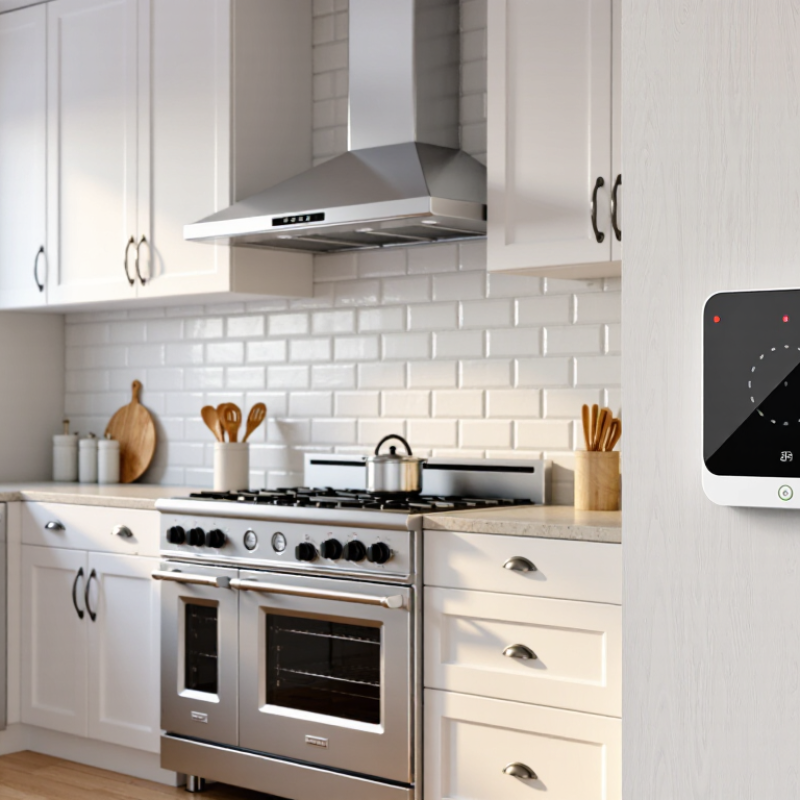
Why Do You Need a Household Gas Leak Detector?
A household gas leak detector is a device that monitors the air for combustible gas. It can alert you when the concentration around its sensor reaches a set level. Many models detect natural gas, which is mostly methane, or liquefied petroleum gas, such as propane. They do not all detect the same gases. Check the device’s specifications before choosing one. That distinction matters.
Inside the detector, a sensor responds to gas in the surrounding air. Depending on its design, it may measure changes in electrical resistance or another signal. When readings cross its alarm threshold, the unit sounds an alert. It does not locate the leak or tell you which appliance caused it. Placement also matters: natural gas tends to rise, while propane tends to collect lower down, but drafts and room layout can affect movement. Follow the detector’s installation instructions rather than guessing. A detector can add an important warning, but it cannot prevent a leak or replace regular appliance checks. It is easy to assume one alarm covers every risk; that assumption deserves a second look.
Household gas leak detectors sense combustible gases in the air and can alert occupants to a leak. This chart compares the approximate lower flammability limits (LFLs) of common fuel gases—the concentrations in air at which a gas can begin to burn if an ignition source is present. These values are not detector alarm thresholds; alarm settings vary by device.
A household gas leak detector can alert you when combustible gas builds up before its smell becomes obvious. Many household units are designed to detect methane, the main component of piped natural gas, or propane and butane used in some homes. These gases can ignite when they collect in an enclosed space. Small leaks may come from a loose connection, a damaged hose, or an appliance valve.
Not every detector senses every gas. Check the device specifications: a methane-only alarm may not detect propane, and vice versa. Carbon monoxide is a separate hazard produced by fuel-burning appliances that are not working or venting properly. A detector needs a carbon monoxide sensor to warn about it; a basic gas-leak alarm may not. They are not interchangeable.
Placement matters. Methane tends to rise, while propane tends to settle, but follow the detector’s instructions for the gas it covers and the room where it will be used. Avoid assuming one alarm covers the entire home. I used to think “gas detector” meant every dangerous gas; that assumption needs checking. If an alarm sounds, leave the area, avoid flames and electrical switches, and contact emergency services or your gas supplier from a safe location.
| Gas or Hazard | Common Household Sources | Detector Needed | What the Alarm Indicates | Important Limitations |
|---|---|---|---|---|
| Natural gas (primarily methane) | Gas lines, cooktops, ovens, boilers, and other natural-gas appliances | A combustible-gas detector specifically rated for natural gas or methane | Combustible gas has reached the detector’s alarm threshold, creating a potential fire or explosion risk. | Methane is lighter than air and often accumulates near ceilings. Follow the detector maker’s placement instructions; a carbon monoxide alarm does not detect methane. |
| Liquefied petroleum gas (LPG), such as propane or butane | Propane cylinders, LPG cookers, heaters, and portable appliances | A combustible-gas detector rated for the specific LPG or fuel in use | Unburned fuel may be present at an unsafe concentration and could ignite. | Propane and butane are heavier than air and can collect in low areas. Confirm that the detector is suitable for the fuel; not every gas detector senses every gas equally. |
| Carbon monoxide (CO) | Faulty or poorly vented fuel-burning appliances, fireplaces, generators, and vehicle exhaust entering an enclosed space | A certified carbon monoxide alarm | CO has reached a level or exposure duration that triggers the alarm. CO is poisonous and cannot be detected by smell. | CO is a combustion by-product, not unburned fuel. A combustible-gas leak detector generally does not replace a CO alarm; use both where relevant. |
| Unburned fuel from an appliance or gas connection | Loose fittings, damaged hoses, failed valves, or an appliance left on without ignition | A combustible-gas detector compatible with the appliance’s fuel | Fuel may be escaping even if no flame is present. Some fuel gases have an added odorant, but smell alone is not a reliable safety system. | Detector response depends on sensor type, condition, placement, and calibration. A detector may not identify the exact source of a leak. |
Safety note: If you smell gas or a gas alarm sounds, leave the area, avoid flames and electrical switches, and call your local emergency service or gas supplier from a safe location. Follow the detector manufacturer’s instructions and local safety guidance.
A gas leak can turn an ordinary kitchen into a serious hazard. Some leaks are obvious. Many are not. Natural gas is often given a sulfur-like odor, but a faint smell can be missed amid cooking smells or poor ventilation. A household detector adds another warning, especially overnight or when nobody is near the appliance. Choose a detector designed for the type of gas used, and follow its placement and testing instructions.
Leaking gas can cause headaches, dizziness, nausea, or confusion at high concentrations, partly by displacing oxygen. A leak also creates a fire and explosion risk if gas builds up and meets a spark. A detector does not prevent a leak or guarantee safety. It is one layer of protection, alongside appliance checks and good ventilation. It is easy to assume that a quiet detector means everything is fine. That assumption deserves a second look.
If an alarm sounds or you smell gas, leave the building promptly. Do not light flames or operate switches inside. Call emergency services or the gas utility from a safe location, and wait for guidance before returning.
Test the detector regularly and replace it according to its instructions. Small routines matter. A dead battery can leave a room unprotected.
A household gas leak detector can provide an early warning, but its location affects what it can sense. Reliable coverage starts with identifying your fuel type and following the detector’s installation instructions. Natural gas usually rises, while propane tends to collect near the floor. Placement matters.
For natural gas, install the detector high on a wall or near the ceiling, as directed by its manual. For propane, a low position may be appropriate. Keep it away from windows, doors, fans, and air-conditioning vents, where moving air can delay detection. Avoid placing it directly beside a stove, sink, or steamy bathroom. Not too close. Cooking fumes and moisture may trigger nuisance alarms or affect performance.
One detector may not cover every room, especially in a larger home or one with fuel-burning appliances in separate areas. It is easy to assume a hallway alarm reaches everywhere; walls and airflow can create blind spots. Follow the manufacturer’s guidance on spacing, and ask a qualified technician if the layout is unclear. Test the alarm and replace batteries as instructed. A gas detector does not detect carbon monoxide, so use a separate CO alarm where needed.
If the gas alarm sounds, leave the building and contact emergency services or your gas provider from outside.
When a household gas detector signals a leak, treat the alarm as real. Leave the building immediately, taking people and pets with you. Do not switch lights or appliances on or off, use a phone indoors, or search for the leak. A spark can ignite escaping gas. Get outside. Call emergency services or your gas utility from a safe location, then wait for professionals to say it is safe to return. Do not re-enter to silence or reset the detector.
Know what your alarm measures. A combustible-gas detector and a carbon monoxide alarm detect different hazards; carbon monoxide has no smell. The CDC estimates that unintentional carbon monoxide poisoning causes more than 400 deaths and 100,000 emergency department visits in the United States each year. If a CO alarm sounds, or anyone has headache, dizziness, or nausea, leave and seek urgent help. An alarm that stops is not proof the danger has passed. It is easy to hesitate when there is no odor, but don’t rely on smell alone.
Tips: Keep the detector’s instructions accessible, test it as directed, and replace it when its service life ends. Never ignore repeated alarms or assume a cooking appliance caused one. Tell responders where the detector signaled and whether anyone feels unwell.
It monitors nearby air for certain combustible gases. When readings reach its alarm threshold, it sounds an alert. It cannot stop a leak.
Some models detect natural gas, mainly methane. Others detect liquefied petroleum gas, such as propane. Check the specifications; detectors do not all sense the same gases.
Follow the device’s installation instructions. Natural gas tends to rise, while propane tends to collect lower down. Drafts and room layout can change how gas moves.
No. It warns about gas near its sensor, but it cannot locate a leak or identify the appliance causing it. That distinction matters.
Leaking gas can cause headaches, dizziness, nausea, or confusion at high concentrations. It can also create fire or explosion risks if it meets a spark. A faint odor may be missed.
Leave the building promptly. Do not light flames or operate switches inside. From a safe location, call emergency services or the gas utility, then wait for guidance before returning.
No. It adds a warning but cannot prevent leaks or replace appliance checks and good ventilation. A quiet detector is not proof that everything is fine.
Test it regularly and replace it according to its instructions. Check the battery, too. Small routines matter; a dead battery may leave a room unprotected.
A Household Gas Leak Detector monitors the air for combustible or harmful gases and sounds an alert when it senses a potentially dangerous concentration. Depending on its design, it may detect natural gas, propane, or carbon monoxide. Gas leaks can cause poisoning, breathing problems, fires, or explosions, so early warning helps protect people and property. A detector is a useful safety tool, but it does not replace regular appliance maintenance or good ventilation.
For reliable coverage, install detectors according to the manufacturer’s instructions, placing them near relevant fuel-burning appliances and sleeping areas as appropriate for the gas being monitored. Test the device regularly and replace batteries or the unit when needed. If an alarm sounds, leave the building promptly, avoid flames and electrical switches, and contact emergency services or a qualified gas professional from a safe location. Do not return until the area has been confirmed safe.

